I by IMD Book Club

Artificial intelligence
When uncertainty becomes an advantage
April 28, 2026 • by Murat Tarakci in I by IMD Book Club
Terence Mauri says leaders can turn disruption from a source of risk into a source of opportunity ...
Terence Mauri says leaders can turn disruption from a source of risk into a source of opportunity.
Speaking at a recent IMD Book Club discussion, Terence Mauri, the author of The Upside of Disruption, argued that uncertainty is now pervasive, having been cited 3,100 times on earnings calls and events in a recent quarter, the highest level in two decades.

The DARE framework
And leaders tend to add to this uncertainty, rather than reduce it, by adding complexity. Most default to building layers, not stripping them away. To help, Mauri sets out the DARE framework, or four changes designed to “cut through the noise like a hot knife through butter” and get closer to ground truth.
The first concerns data. Often, organizations are not using artificial intelligence to strengthen their advantage, whether in insight, execution or collaboration.
The second change is agility, which is not just about speed, but the ability to unlearn and relearn. That includes outdated assumptions about talent, technology, competition, and customers.
The third is risk, which he saw as the decisions leaders delay. Disruption is now a given, so the question is which big moves are being held back, and whether that hesitation allows competitors to leapfrog you.
The fourth is evolution: whether organizations lead from the future or the past, and whether they adapt at the pace of change.
These, Mauri argues, are common blind spots across companies, and they often show up in how they use AI.
The gap shows up in what firms are spending on AI, and the returns on that investment.
Where AI stalls
As Julie Sweet, the boss of Accenture, has said: “If you can’t use your data, you can’t use AI.” The main constraint is often that it’s fragmented, broken or unclean.
The gap shows up in what firms are spending on AI, and the returns on that investment. Mauri’s research at Hack Future Labs shows more than 50% of leaders running S&P 500 companies have not increased revenue or reduced costs through AI. And only 12% have achieved both aims.
Estimates of the upside of AI diverge sharply. Goldman Sachs finds no real link between AI and productivity in the economy, but gains of around 30% in a couple of specific tasks. MIT economist Daron Acemoglu puts the broader impact at around 0.5 to 0.6% over a decade.
The question, Mauri argues, is where capital is being directed.
Cold vs warm AI
Most companies default to what he calls “cold AI”, focused on speed and efficiency, often tied to headcount reduction. It delivers quick returns, but can erode trust, transparency and wellbeing.
The alternative is “warm AI”, a model that puts people first and uses technology to elevate them. These two narratives now compete inside organizations.
Many leaders, Mauri argues, have yet to define a clear AI narrative. They default to one of two positions: panic, where the pace of change overwhelms them, or complacency, where comfort slows their response. The alternative is a “learning zone” where organizations experiment.
But without a clear AI strategy, Mauri argues, employees fill the gap themselves. The result is uncertainty and anxiety – “a performance killer”.
A majority of employees report being overmanaged and under-led.
Zombie leadership
Internal barriers compound the external ones. Mauri describes “zombie leadership” as the persistence of practices that drain rather than create value. Zombie leaders fail to identify what is emerging, what is eroding, and what is enduring. Instead, they hold on to old ineffective practices.
Research consistently shows that a majority of employees report being overmanaged and under-led. The relationship with a direct manager remains the primary driver of performance, and ironically the main source of stress.
The drag is measurable. Management thinkers Gary Hamel and Michele Zanini frame it as a “bureaucratic mass index”, a way to quantify the burden of internal processes. Their research suggests employees spend around 28% of their time on such work, more than one day a week.
The cost is massive. Hamel and Zanini estimate that reducing bureaucratic drag could unlock up to $3 trillion in US economic value.
The result is a system that’s “a tax on intelligence, productivity and innovation”, Mauri says. Cutting these zombie practices would free capacity for more meaningful work, including the ability to build trust.
Mauri points out that PayPal’s share of digital wallets has fallen to about 40%, down from roughly 90% in 2017.
Trust over speed
Trust is becoming “the critical fault line” in the AI economy, Mauri argues. Speed of production has become commoditized; access to large language models is now widespread. The result can be a sameness that he says erodes advantage.
Trust, by contrast, begins to differentiate, becoming “an economic and leadership moat”. The stakes are high, as the distance from outperformance to decline has narrowed sharply.
Mauri points out that PayPal’s share of digital wallets has fallen to about 40%, down from roughly 90% in 2017. Shoe retailer Allbirds’s stock fell about 30% after announcing a recent pivot into AI infrastructure.
But opportunity also abounds, with Cursor AI, which helps developers write code, having reached about $200 million in annual recurring revenue and a valuation of roughly $9 billion within just three years.
Another example from Mauri is Lidl, part of Schwarz Group, a German retailer. But, starting with an internal system built in 2021, it moved into cloud computing and cybersecurity through its Schwarz Digits unit, which now generates about €1.9 billion in annual sales and employs 7,500 people.
His broader point is that the risk is no longer disruption. It is standing still.
Key takeaways
Terence Mauri’s thought-provoking book encourages readers to:
- Continuously make sense of what is emerging, eroding, or enduring in your business.
- Take risks to embrace disruption instead of avoiding it.
- Unlearn dead practices as much as learning new ones.
Expert

Terence Mauri
Author, The Upside of Disruption
Terence Mauri is a leadership thinker, author, and founder of the management think tank Hack Future Lab. His work focuses on how leaders can build future‑ready mindsets, navigate uncertainty, and turn disruption into opportunity. In his book, The Upside of Disruption, Mauri offers practical frameworks to help leaders rethink risk, unlearn outdated assumptions, and lead with greater strategic courage in an unpredictable world.
Authors
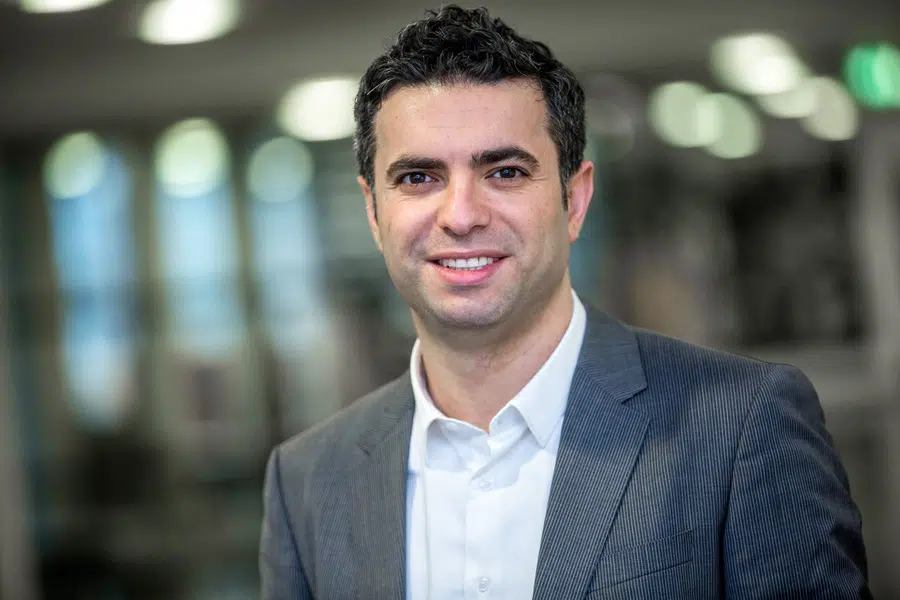
Murat Tarakci
Professor of Innovation Strategy
Murat Tarakci is Professor of Innovation Strategy at IMD. His research focuses on the social and psychological foundations of innovation and strategy, examining how organizations adapt to and shape their environments.
Tarakci’s work highlights that winning strategies stem from individuals and teams who think, feel, and care. Hence, understanding why strategies thrive or fail must consider individuals’ cognition, emotion, and motivation. His work also aims to create a positive impact by helping organizations better address societal challenges through a deeper understanding of their behavioral dynamics and mechanisms.