I by IMD Book Club

Human Resources
How to make the most of a five-generation workforce
August 31, 2026 • by Katharina Lange in I by IMD Book Club
Author Rebecca Robins and IMD's Katharina Lange explore why leaders should stop managing generational divides and start making the most of them. ...
As people live longer, five generations are now working cheek by jowl. Author Rebecca Robins and IMD’s Katharina Lange explore why leaders should stop managing generational divides and start making the most of them.
Five generations are now working cheek by jowl for the first time in history. In this IMD Book Club session, I joined Rebecca Robins, co-author of Five Generations at Work, to discuss why that’s an opportunity rather than a problem.
But more importantly, we discuss how organizations can turn generational differences into better decisions, stronger collaboration, and higher performance.
We’re going through the biggest demographic shift in history. That has really not been well talked about or has been misunderstood.- Rebecca Robins
Five generations, one workplace
Each generation is defined not just by when it was born, but by the major events that unfolded during its formative years. Broadly speaking, that means five generations: Baby Boomers (1946-65), Generation X (1966-80), Millennials (1981-96), Generation Z (1997-2010), and Generation Alpha (2011 onwards).
These generations are often portrayed as being locked in conflict with one another; Boomers versus Millennials, Gen Z versus everyone else. But Robins argues that narrative has distorted the conversation.
“We’re going through the biggest demographic shift in history. That has really not been well talked about or has been misunderstood,” she says. “Part of that has been influenced by the narrative we see in the media – the negativity, conflict and stereotyping – has misled people.”

Move beyond the stereotypes
The reality, Robins argues, looks very different to that portrayal.
“We have an aging population, where all of us are likely to want or need to work for longer,” Robins says. “The leadership mindset through which we look at this is mission-critical – less as a problem for business leaders to solve, but as an opportunity.”
That starts with challenging some deeply held assumptions. Both younger and older generations carry stereotypes about each other. The older generations are seen as being complacent, whereas older people think of the younger folks as being sometimes narcissistic, volatile, and unreliable.
And some of the media has helped entrench those stereotypes, Robins adds.
“Social media has thrived on algorithms that favor polarities and division, when what we’re talking about is human difference, and how we better understand, value, and maximize what we all bring to the workplace. We need to shift from lazy labels to leadership lenses that embed intergenerational ways of working because it results in better business – in better insights and decision-making.’
The challenge, then, is turning those different perspectives into better decisions. But bringing those perspectives together is only half the battle, Robins argues. How do you get the various generations to actually solve problems together?
“I work with hundreds of rising leaders, and we often talk about ‘good frustration’,” she says. “We have more diversity than ever to solve increasingly complex problems. But are we building workplace cultures that allow that to happen?”
Think in decades, not years
Robins points to the animation studio Pixar’s “Braintrust”, a creative forum where employees openly challenge work in progress and directors decide which ideas to run with. The goal is generating better ideas, and, as Robins puts it ‘connecting shared organizational values with shared value’.
She also points to LVMH’s “DARE” program (Disrupt, Act and Risk to be an Entrepreneur) as a good example of actively investing in collaboration across the organization. With more than 75 brands, Robins says the luxury group created a permanent platform where employees from different brands, functions, and countries could tackle shared problems together. Importantly for a group that’s in the business of creativity and innovation, it brings together people with different roles, levels of experience, and from different functions – therefore maximizing their diversity of talent for the benefit of the business. More than 30,000 now take part, according to LVMH.
Companies should bring younger employees much closer to the top table, and there’s growing use of “shadow boards” to give them a stronger voice. With the shadow board, the younger generation is bringing the energy and curiosity and holding people accountable for what they do and what they say.
That also requires a longer-term view of leadership.
“Most businesses plan no more than three years ahead,” says Robins. “One of the biggest concerns for CEOs today is whether their business will even be here in 10 years.”
One group of organizations that has succeeded in thinking this way are leading family businesses. “Family businesses think in decades,” she says. “Thinking about the generations born after us requires a different approach, where we see much more of that collaborative leadership mindset in action.”
The problem is that many organizations are still built for a different era.
Leadership needs to catch up
The problem is that many organizations are still built for a different era.
“When we look at performance systems, many still account only for what we deliver as individuals, not for how we contribute in collaboration,” Robins says. She points to Microsoft’s transformation under chief executive Satya Nadella. It was a crucial era of transition from a ‘know-it-all’ culture where knowledge was hoarded by teams who were effectively competing with one another, to a ‘learn-it-all’ culture.
The point that Robins makes for leaders is that maximizing five generations at work is not just in unlocking the full potential of their talent strategy, it’s in their business and customer strategy.
Expert
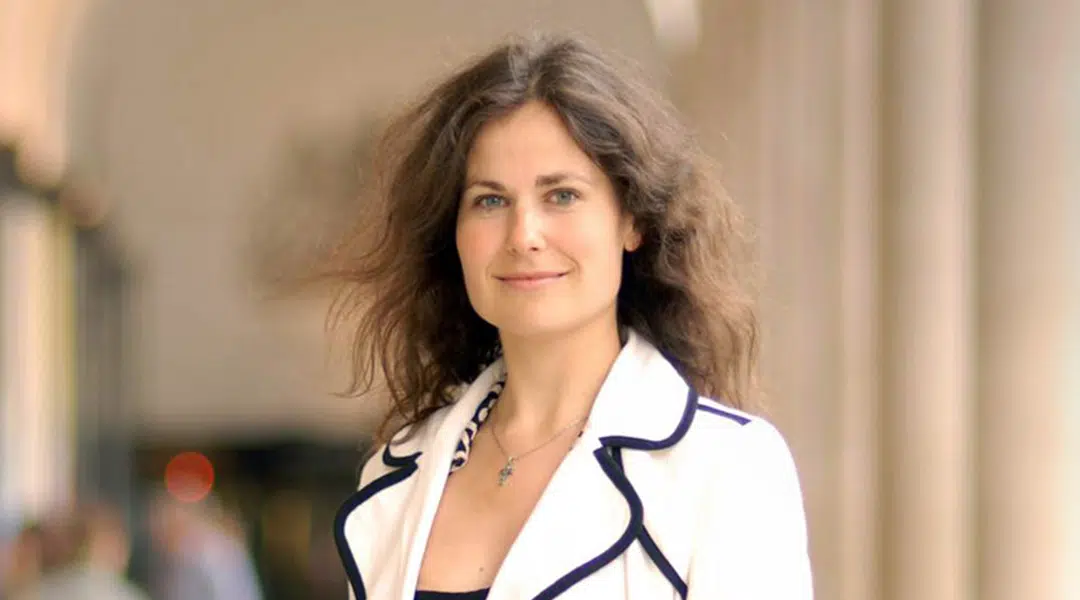
Rebecca Robins
CEO and Founder
Rebecca Robins is CEO and Founder of a consultancy specializing in the intersection of brand, culture, and leadership. With more than 20 years of international experience, she advises global corporations, founders, and family businesses on building enduring brands and leadership strategies. She is a faculty member on executive education programs at leading institutions, including the Universities of Cambridge and Oxford. A prolific writer and commentator, her work has appeared in outlets including the BBC, The Business of Fashion, The Guardian, and Quartz. Robins is the author of three books, including the bestselling Meta-luxury: Brands and the Culture of Excellence and Five Generations at Work: How We Win Together for Good. She also serves on several nonprofit and advisory boards focused on education, leadership, and AI for good. She holds two degrees from the University of Cambridge.
Authors
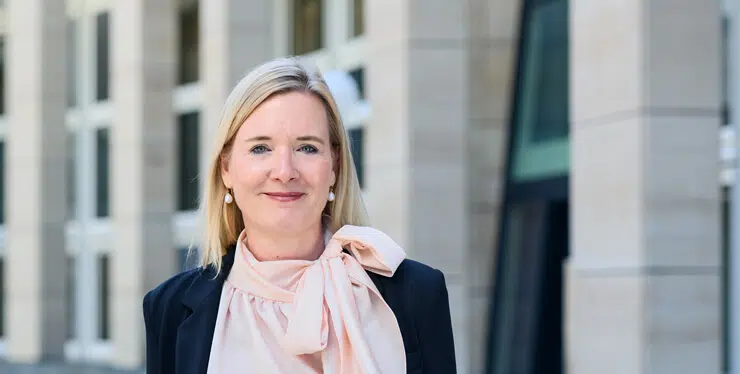
Katharina Lange
Affiliate Professor of Leadership
Katharina Lange is Affiliate Professor of Leadership at IMD. She specializes in self-leadership and cross-cultural team leadership in times of change. Before joining IMD, Katharina led the Office of Executive Development at Singapore Management University, where she directed Open Programs such as ALPINE (Asia Leaders Program in Infrastructure) and the J&J Hospital Management Program.
More to explore
Sorry, no results were found.