
The second edition of the IMD World Digital Competitiveness Ranking (WDCR) was published on June 19th. This WDCR assesses the capacity of 63 economies to adapt and explore digital technologies that advance transformations in government practices, business models and society in general. Compared to 2017, the majority of countries in the study experience a relative improvement in their level of digital competitiveness while 40% of the sample shows a decline and only eight economies remain in the same position.
The WDCR is calculated by a country’s performance in three factors: knowledge, technology and future-readiness. The latter captures an economy’s level of preparedness to address effectively the digital transformation.
Research that has taken place elsewhere at IMD stresses the importance of future readiness and its components for countries and firms alike. For instance, the IMD Digital Business Transformation suggests that one of the most important component of a business’ success is the level of agility that it exhibits.
In this edition of the Criterion of the Month we will explore what is the correlation between the Future Readiness factor and indicators of productivity.
Figure 1 presents the relationship between the overall productivity per person employed by an economy on the vertical axis and the future readiness factor ranking on the horizontal. Note that the lower the number in the horizontal axis, the higher the ranking with respect to future readiness is. Thus, the strong negative correlation equal to -0.72 suggests that countries that exhibit high levels of preparedness and awareness for future digital transformation are also countries that are characterized by high levels of overall productivity.
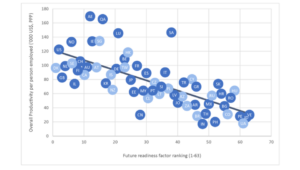
Figure 1. Overall productivity and Future readiness
Interestingly, a similar strong relationship is demonstrated when we study the responses of mid- and upper-level managers as to how efficient the Small and Medium Enterprises are in their economy. Figure 2 captures this relationship exhibiting a correlation coefficient equal to -0.80.
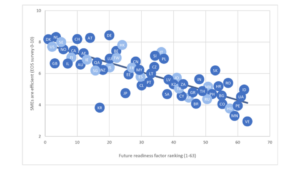
Figure 2. SMEs efficiency and Future readiness
The high correlation implies that highly ranked economies, by recognizing and confronting the implied disruptions of digital technologies, are also the ones that are characterized by efficient SMEs in the eyes of the executives of a country.
Finally, it is worth examining the above relationship at the employee level. Figure 3 provides the association between the labor productivity per person employed per hour and the adaptive attitudes sub-factor. The latter identifies the ability of individuals in an economy to accommodate new technologies.
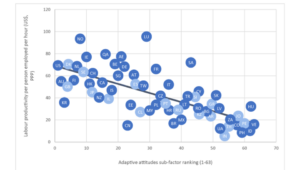
Figure 3. Labor productivity and Adaptive attitudes
Figure 3 projects a strong correlation equal to -0.70. Countries where individuals are adaptable and flexible in incorporating new technologies in their daily life, are also the countries that exhibit high levels of labor productivity.
Researchers suggest that we are in the beginning of a transformative cycle in many aspects of our economic and social lives. Even though many of these elements are yet to be determined, economies that are characterized by firms and people that are flexible and adaptable, and therefore exhibit higher levels of agility, are the ones that are more productive.



Switzerland has reached an uncomfortable conclusion: that UBS has become too large for the state to comfortably stand behind. The government’s plan to force the bank to hold roughly $20 billion more in capital is an attempt to close that gap, even...
Research Information & Knowledge Hub for additional information on IMD publications
Research Information & Knowledge Hub for additional information on IMD publications
Research Information & Knowledge Hub for additional information on IMD publications
Research Information & Knowledge Hub for additional information on IMD publications
Research Information & Knowledge Hub for additional information on IMD publications
Research Information & Knowledge Hub for additional information on IMD publications
Research Information & Knowledge Hub for additional information on IMD publications
Research Information & Knowledge Hub for additional information on IMD publications
Research Information & Knowledge Hub for additional information on IMD publications