Green or greenwashing? A 95 million dollar sustainability paradox for Michelin and BNP Paribas
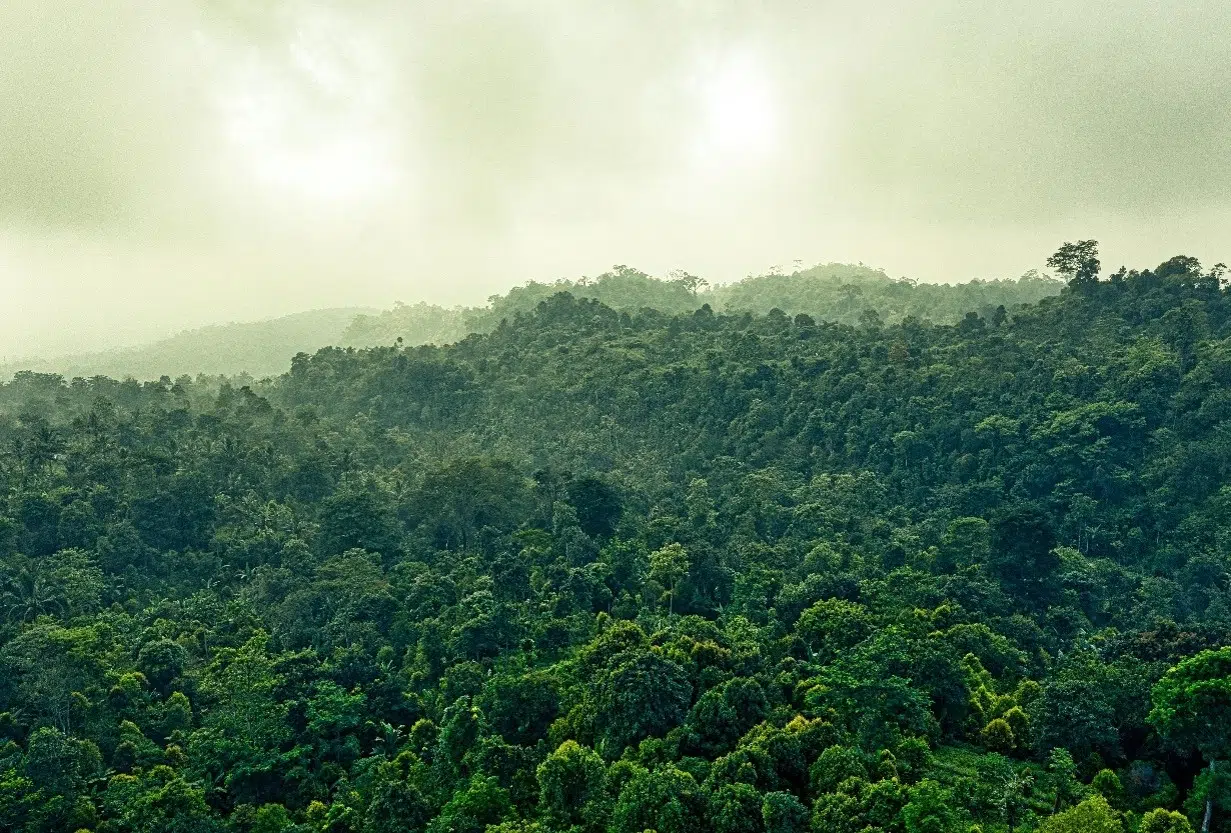
The Tropical Landscapes Finance Facility Sustainability Bond (TLFF I) was initially celebrated as a best-in-class example of sustainable finance. Issued in 2018, this $95 million financial instrument aimed to create a promising future: sustainable natural rubber plantations in Indonesia that balanced ecological preservation, local livelihoods and corporate profits. The ambitious venture sought to redefine the possibilities of transition finance and brought together several organizations: Michelin, ADM Capital and BNP Paribas, USAID, the World Wide Fund for Nature (WWF) and the World Agroforestry Centre (ICRAF). However, the promise of progress soon collided with the complexities of reality. The initiative faced mounting challenges, including allegations of greenwashing, community grievances and questions about compliance with emerging sustainability regulatory standards. In the end, TLFF I – the “climate-smart, wildlife-friendly, socially inclusive” sustainable finance facility used to finance Michelin’s Indonesian natural rubber plantation joint venture – found itself at the center of a growing controversy that threatened to unravel years of work in corporate sustainability efforts. The case examines the paradoxes in the TLFF I and challenges students to grapple with the complexities of legitimacy, innovation, accountability, sustainability transition and regulation-timing in blended finance mechanisms. While the TLFF I case focuses on natural rubber, the challenges encountered by the different players and the lessons learned are applicable to other industries undergoing brown-to-green transitions and implementing multistakeholder solutions. The case reflects the reality that many business challenges are not dilemmas to resolve but instead involve persistent tensions that demand integrative thinking. For students, engaging with paradoxes sharpens critical thinking, fosters metacognitive awareness and builds the capacity to lead amid contradiction.
- Analyze the paradoxes of reputation, innovation-risk, stakeholder governance and transition credibility in green finance by identifying interdependent tensions and exploring their systemic roots.
- Engage with conflicting stakeholder perspectives to evaluate the strategic, ethical, reputational, accountability and governance tradeoffs of blended finance.
- Reflect on how assumptions, power asymmetries and institutional trust shape your interpretation of ESG credibility and proposed solutions.
- Optional: Examine how regulatory evolution affects the ethics of judging past innovations by current standards.
- Optional: Experiment with AI-supported tools to enhance critical thinking, generate insights and help recognize the assumptions and blind spots that shape your leadership approach in ESG dilemmas.
Michelin, BNP Paribas, ADM Capital, Barito Pacific
2018-2021
Cranfield University
Wharley End Beds MK43 0JR, UK
Tel +44 (0)1234 750903
Email [email protected]
Harvard Business School Publishing
60 Harvard Way, Boston MA 02163, USA
Tel (800) 545-7685 Tel (617)-783-7600
Fax (617) 783-7666
Email [email protected]
NUCB Business School
1-3-1 Nishiki Naka
Nagoya Aichi, Japan 460-0003
Tel +81 52 20 38 111
Email [email protected]
IMD retains all proprietary interests in its case studies and notes. Without prior written permission, IMD cases and notes may not be reproduced, used, translated, included in books or other publications, distributed in any form or by any means, stored in a database or in other retrieval systems. For additional copyright information related to case studies, please contact Case Services.
Research Information & Knowledge Hub for additional information on IMD publications
For more than a decade, ESG-linked funds and corporate sustainability strategies have run on the same quiet assumption: spend more on sustainability, and the market will eventually reward you for it. The problem, however, is that this theory is mo...
The case tracks the development of Slow Forest Coffee, a company launched in 2017 on the belief that when producing food in a regenerative way, everyone benefits. Farmers flourish, nature thrives and the economy prospers. By 2025 Slow had converte...
For years, executives were sold a compelling idea: doing good would also mean doing well. Surveys suggested that consumers were increasingly willing to pay more for products seen (or marketed) as better for the planet. Consultants reinforced the m...
Indigenous community enterprises (ICEs) face intensifying civic threats, yet how they collectively interpret these threats drawing on religious principles remains theoretically underdeveloped. Drawing on an in-depth ethnographic study of one of th...
Most research on social entrepreneurship highlights the positive effect of compassion on creating wealth for beneficiaries. However, while compassion drives social entrepreneurs to take prosocial actions that benefit others, the actions it motivat...
in I by IMD
Research Information & Knowledge Hub for additional information on IMD publications
Case reference: IMD-2765 ©2026
Research Information & Knowledge Hub for additional information on IMD publications
in Journal of Business Venturing Insights June 2026, vol. 25, e00632, https://doi.org/10.1016/j.jbvi.2026.e00632
Research Information & Knowledge Hub for additional information on IMD publications
in I by IMD
Research Information & Knowledge Hub for additional information on IMD publications
in Journal of Business Venturing 22 May 2026, ePub before print, https://doi.org/10.1016/j.jbusvent.2026.106607
Research Information & Knowledge Hub for additional information on IMD publications