The Frescobaldi family tree spans bankers, politicians, entrepreneurs, artists, and poets. It also owns the oldest family business in the world and one of the biggest producers of Tuscan wine, with customers including Henry VIII and Michelangelo.
One of Tuscany’s most prestigious winemaking dynasties, the family has maintained its prominence across a remarkable thirty generations, connecting medieval banking, Renaissance culture, Florentine politics, and contemporary Italian wine production. Their story represents an unusually continuous thread through European history, illustrating how one family helped influence commerce, culture, and agriculture from the Middle Ages through to the present day.
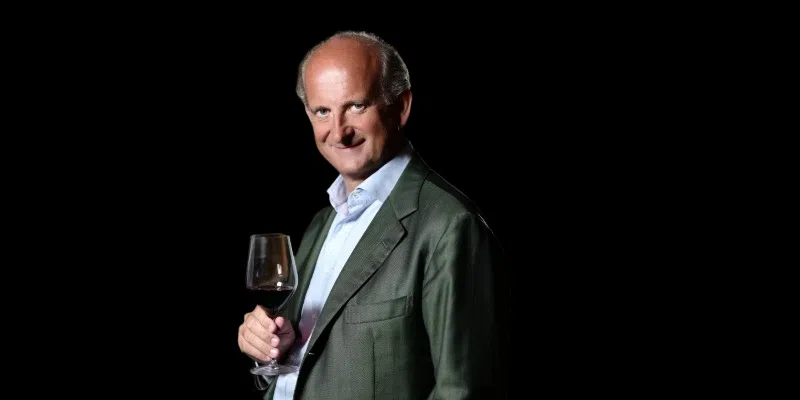
Lamberto Frescobaldi is a member of the family’s 30th generation and the current face of the Frescobaldi dynasty. I sat down with him to discuss the family recipe to surviving world wars, shifting consumption habits, and geometric expansion. For Frescobaldi, the secret is part stewardship, part reinvention, and not getting distracted by the history, beauty, or love for the product.
The family recipe that always changes
The Frescobaldi family has reinvented itself more than most. The family emerged in Florence in the 1200s as medieval bankers and cloth merchants and soon made its mark across Europe by establishing a major banking branch in London, funding King Edward I’s military campaigns, and patronizing the arts. Lamberto Frescobaldi said, “From traders to bull traders, and bankers to agriculture – producing wheat or whatever was needed to feed people in difficult times – there has always been somebody within my family who has been able to shift gears.” This ability to pivot, transition, and reinvent themselves has allowed the family to evolve for 31 generations.
During the war, Frescobaldi’s father was the largest milk producer in Tuscany, but once it ended, he realized better milk was being made in Germany at a lower cost. He also noticed that while 85% of Italy’s population had been living in the countryside during the war, they were quickly moving back into cities, and they wanted to take a piece of the countryside back with them. Frescobaldi said: “At home they had one cow, two pigs, a little bit of olive oil, and a little bit of wine. People wanted to have what they had at home and started asking for bottles of wine.” It was then that wine making became a branch of the family dynasty, and the thing that would give them the greatest success.
Knowing it was time to shift is part of the family’s philosophy, which is grounded in gratitude, agility, and education. These are the four values that guide that philosophy:



 Share
Share YouTube