Applying a systemic approach to a renewable future
Alpiq’s Antje Kanngiesser says the company’s sustainable business model is contributing to a better climate and security of supply....
YouTube
4 hours ago • by Alfredo De Massis in The Interview
The Frescobaldi formula: humility, reinvention, and stewardship across 30 generations - how to sustain a family business in changing times....
The Frescobaldi family tree spans bankers, politicians, entrepreneurs, artists, and poets. It also owns the oldest family business in the world and one of the biggest producers of Tuscan wine, with customers including Henry VIII and Michelangelo.
One of Tuscany’s most prestigious winemaking dynasties, the family has maintained its prominence across a remarkable thirty generations, connecting medieval banking, Renaissance culture, Florentine politics, and contemporary Italian wine production. Their story represents an unusually continuous thread through European history, illustrating how one family helped influence commerce, culture, and agriculture from the Middle Ages through to the present day.
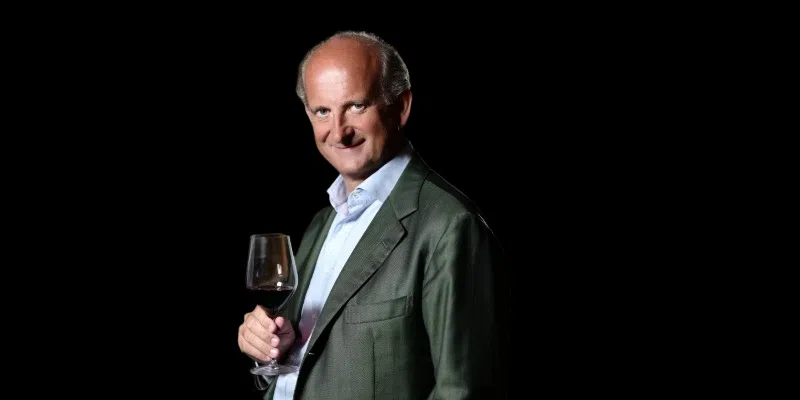
Lamberto Frescobaldi is a member of the family’s 30th generation and the current face of the Frescobaldi dynasty. I sat down with him to discuss the family recipe to surviving world wars, shifting consumption habits, and geometric expansion. For Frescobaldi, the secret is part stewardship, part reinvention, and not getting distracted by the history, beauty, or love for the product.
The Frescobaldi family has reinvented itself more than most. The family emerged in Florence in the 1200s as medieval bankers and cloth merchants and soon made its mark across Europe by establishing a major banking branch in London, funding King Edward I’s military campaigns, and patronizing the arts. Lamberto Frescobaldi said, “From traders to bull traders, and bankers to agriculture – producing wheat or whatever was needed to feed people in difficult times – there has always been somebody within my family who has been able to shift gears.” This ability to pivot, transition, and reinvent themselves has allowed the family to evolve for 31 generations.
During the war, Frescobaldi’s father was the largest milk producer in Tuscany, but once it ended, he realized better milk was being made in Germany at a lower cost. He also noticed that while 85% of Italy’s population had been living in the countryside during the war, they were quickly moving back into cities, and they wanted to take a piece of the countryside back with them. Frescobaldi said: “At home they had one cow, two pigs, a little bit of olive oil, and a little bit of wine. People wanted to have what they had at home and started asking for bottles of wine.” It was then that wine making became a branch of the family dynasty, and the thing that would give them the greatest success.
Knowing it was time to shift is part of the family’s philosophy, which is grounded in gratitude, agility, and education. These are the four values that guide that philosophy:
Your value comes from what you go on to achieve. You start from point zero, and don’t give value to what you receive, but to what you produce in your lifetime.
“Tradition is something that can trick you,” said Frescobaldi. So can beauty. Many of the family reunions are held in the family wineries in Tuscany. “People tend to enter the world of agriculture and become overwhelmed by the beauty, forgetting their daily business,” he continued. Frescobaldi’s solution is to balance that beauty with pragmatism, prompting rising generations to think about how the business is managed, and what their vision and contribution to the family are. He said, “Look how many companies have disappeared in the last year because the owners fell in love with what they were doing. It’s a tricky time for Europe, you must love what you do – the product, the item, and the beauty of it – but you also have to be very prepared for what is happening around the world.” The first lesson is to love but not blindly.
Each generation must prove itself. While many think of succession as the transfer of assets or authority, for Frescobaldi, succession is about stewarding a legacy. He said: “When my father gave me the land and the home I live in today, where my family has lived for over 1000 years, I did not see any value attached to it. Your value comes from what you go on to achieve. You start from point zero, and don’t give value to what you receive, but to what you produce in your lifetime.” This humility guides each generation to sustain what they have been given and simultaneously grow, contributing to the family ecosystem and adding to the Frescobaldi legacy.
Heritage can create a false sense of security. Constant learning and adaptation are essential to remain relevant, and the family invests both in pedagogical education and in purpose and confidence-building—ensuring every family stakeholder knows what they want to achieve and how they can contribute to the business. Frescobaldi witnessed this ambition and confidence in action as a boy, watching his uncles thrive professionally, both within the business and outside of it. One was a journalist, another a doctor, and several entered the business with passionately different interests, skillsets, and studies. Inspired, he went on to study agriculture in Italy and California in the 80s—an outward-looking move that helped the business raise its standards and remain competitive. Family members are encouraged to study and learn their craft before joining the family business to avoid ‘parachuting into the business’.
The Frescobaldi family has survived two world wars, geometric expansion, and, more recently, shifting consumer habits within a politically turbulent Europe. This has all fuelled the family to make more strategic and forward-looking choices.
People are consuming much less wine today, contributing to an oversupply, but the Frescobaldis are unsurprisingly prepared for this shift and have been slowly diversifying their wine offering by introducing olive oil, hazelnuts, and wheat to produce pasta. Frescobaldi said, “Your main business always needs to be fed financially, and your tools need to be updated. My advice to other families would be to be focused, very focused. For me, that focus sits with wine and agriculture.”

The Frescobaldi legacy rests on humility and reinvention. Despite inheriting a legacy that stretches back more than 800 years, each generation is taught to see itself not as the beneficiary of past success, but as the author of its own contribution. That mindset has enabled the family to move from banking to agriculture, milk production to wine, and now into new agricultural ventures as consumer tastes evolve.
Rather than treating tradition as something to protect at all costs, the Frescobaldi family views it as a foundation from which to adapt. They have survived wars, economic upheaval, demographic shifts, and changing consumer preferences because they have never assumed that past achievements guarantee future success. Instead, they have remained focused on learning, preparing, and evolving with the world around them.
While conventional wisdom suggests that endurance comes from tradition and preservation, for the Frescobaldi’s, endurance derives from the willingness to let go, start again, and reinvent themselves. In an era defined by disruption and uncertainty, the Frescobaldi family demonstrates that the strongest family ecosystems are built not on preserving the past, but on preparing for the future.

President, Marchesi Frescobaldi & Unione Italiana Vini
Lamberto Frescobaldi represents the 30th generation of the Frescobaldi family, whose documented winemaking history in Tuscany began in the early 1300s. Trained in agriculture in Italy and California, he joined the family enterprise before becoming President of Marchesi Frescobaldi. He also serves as President of Unione Italiana Vini, the association representing Italy’s wine industry.

Professor of Entrepreneurship and Family Business
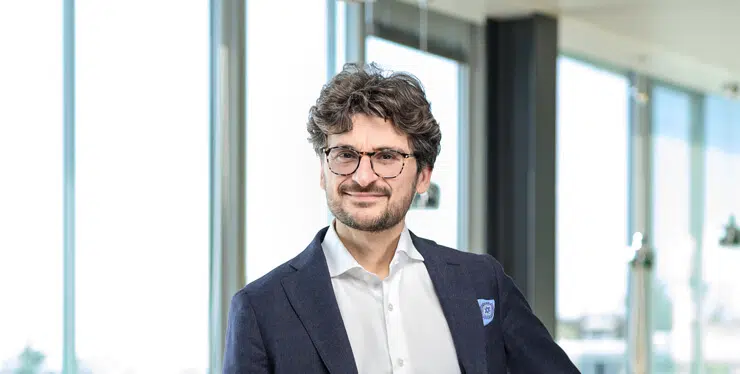
Alfredo De Massis is ranked as the most influential and productive author in the family business research field in the last decade in a recent bibliometric study. De Massis is an IMD Professor of Entrepreneurship and Family Business at IMD where he holds the Wild Group Chair on Family Business and works with other universities worldwide.
November 2, 2021 in CEO Dialogue Series • 7 min read
Alpiq’s Antje Kanngiesser says the company’s sustainable business model is contributing to a better climate and security of supply....
October 19, 2021 in CEO Dialogue Series • 9 min read
Gilbert Achermann has taken on both roles with the Swiss dental group, giving him an insight into how to make the relationship between the two work well...
October 5, 2021 in CEO Dialogue Series • 6 min read
How Lonza has combined the Covid-19 vaccine challenge with repurposing its business...
September 28, 2021 in CEO Dialogue Series • 7 min read
PVH’s Stefan Larsson on his approach to rebuilding the apparel business, sustainably...
Explore first person business intelligence from top minds curated for a global executive audience