How to build corporate advantage today
Owning multiple businesses is not, by itself, a source of advantage. Corporate advantage arises only when a company’s corporate concept, business portfolio, and operating model are coherent....

by Ralf Seifert, Katrin Siebenbürger Hacki Published April 29, 2025 in Supply chain • 5 min read
Today, we need to holistically manage a supply ecosystem: adaptive, integrated, and built on trust-based partnerships.
Magdi Batato reflects on how operations and supply chain management were once viewed narrowly – as a back-office function centered on procurement, logistics, and manufacturing, often targeted for outsourcing in the pursuit of efficiency. “The role of supply chain has progressed from a transactional support function to a strategic pillar of business continuity and long-term value,” he notes.
He stresses the need to rethink the language we use. “It’s no longer a ‘chain.’ Chains are linear and rigid. Today, we need to holistically manage a supply ecosystem: adaptive, integrated, and built on trust-based partnerships.”
Batato notes that this shift was particularly visible during the COVID-19 pandemic when Nestlé’s operational resilience enabled it to maintain its supply and support external partners with new requests. “Resilience isn’t about stockpiling. It’s about an integrated system that continues to deliver, even under pressure.”
While Nestlé was an early adopter of automation and robotics, today’s challenge remains in broader digital integration. Advanced artificial intelligence, the Internet of Things, big data, and digital twins have become more accessible and offer opportunities to further enhance forecasting and end-to-end visibility. “Consumers are not unpredictable,” says Batato. “The more connected we are to real-time data, the more precise and efficient our decisions will become.”
Still, he cautions against fragmented efforts. “Technology only creates value when embedded into an overall operating model. Running digital initiatives in isolation or parallel to core processes, like SKU rationalization, limits their impact.”
Having led global operations and supply chains through multiple cycles of disruption, Batato is clear: resilience is built through collaboration, not independence. “Agility can’t be achieved in silos. It depends on aligned goals and shared information – across internal functions and with external partners.”
Ongoing sustainability efforts are an example. You can’t drive lower emissions by pressuring suppliers – true progress only comes from collaboration. It’s about co-investing in solutions, aligning incentives, and tackling challenges together.
Batato extends his philosophy of collaboration and agility to talent development, acknowledging that the younger generation is less likely to stay loyal to one company. “Career development today requires broader exposure, not just upward progression,” he says. The best people seek roles that offer diverse experiences and opportunities for growth. At Nestlé, he introduced flexible, mission-based roles, allowing employees to contribute across multiple functions and solve meaningful problems.
Be proud of reliability but remain constructively dissatisfied, i.e., we don’t need more cheerleaders, we do need more performance-oriented leaders.
Drawing on his experience in leading complex supply chain efforts and organizations across many geographies, Batato shares three pieces of advice for today’s supply chain leaders:
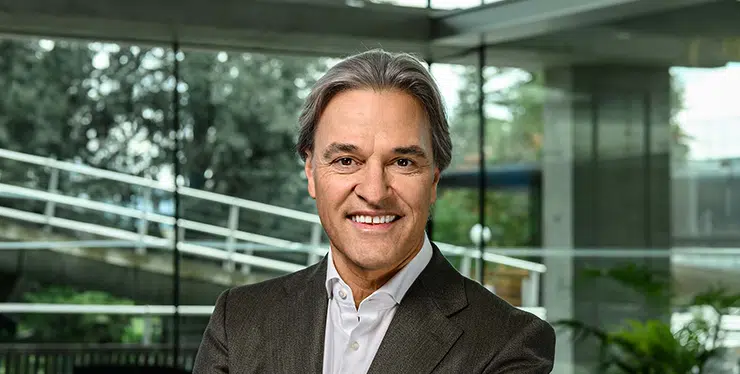
Former COO, CEO for Pakistan and Afghanistan, and executive board member at Nestlé
Professor of Operations Management
Ralf W. Seifert is Professor of Operations Management at IMD and co-author of The Digital Supply Chain Challenge: Breaking Through. He directs IMD’s Strategic Supply Chain Leadership (SSCL) program, which addresses both traditional supply chain strategy and implementation issues as well as digitalization trends and the impact of new technologies.
Independent research associate
Katrin Siebenbürger Hacki supports IMD as an independent research associate. Before founding her consultancy, she worked in the EMEA divisions of Medtronic, Intuitive Surgical, and Honeywell, focusing on sales force excellence, analytics, and commercial execution. She holds an MBA from IMD.
August 27, 2026 • by Markus Menz in Consumer Goods
Owning multiple businesses is not, by itself, a source of advantage. Corporate advantage arises only when a company’s corporate concept, business portfolio, and operating model are coherent....
July 6, 2026 • by Stéphane J. G. Girod, Yuki Iida in Consumer Goods
Lalique CEO Nina Müller on turning the French crystal maker’s disruptive artistic heritage into a platform for the future – and why, in luxury's new era, independence may be its greatest asset....
June 29, 2026 • by Stéphane J. G. Girod, Rajashree Rane in Consumer Goods
The Austrian crystal company achieved over 5% contribution to digital commerce with less than 1% of digital budget by emphasizing a value-first approach, its Chief Digital and Information Officer told IMD’s Luxury...
May 28, 2026 • by Karl Schmedders in Consumer Goods
A new book challenges the conventional belief that sustainability alone drives customer purchases. In a webinar hosted by Karl Schmedders, the book’s co-author, Goutam Challagalla, explains how companies can make sustainability...
Explore first person business intelligence from top minds curated for a global executive audience