
Access to tools, not training, is stifling AI value
Europe’s AI ambitions are stalling, but not due to a skills gap. Limited access to tools and outdated work design are holding companies back....
by Alfredo De Massis, Vittoria Magrelli , Christof Rissbacher Published July 22, 2026 in Talent • 7 min read
Why do some corporate events stay etched in the memories of employees forever, forming part of the social fabric of the firm, boosting productivity and morale along the way, while others fail to gain momentum and then quietly get cancelled?
While conventional wisdom points to execution – better planning, stronger participation, more team-building activities – organizational theory points elsewhere.
The difference between an initiative that strengthens culture, morale, and talent pipelines and one that is forgotten by Monday is not the event itself but whether the organization transforms that event into a rite. While events create experiences, rites create identity and acquire social meaning – not through the content of the event itself but through its repetition.
This article lists the four steps you need to take to elevate your event into a rite that strengthens belonging, retention, and organizational cohesion. We also unpick a recent rite in action to demonstrate just how powerful the shift can be.

Events are predictable and easily delivered. They have a date, a purpose, can be planned, reported on, and respond to the quarterly logic that governs most corporate planning.
Rites, on the other hand, are harder to justify in advance. Their value is intangible at first and accumulates over iterations – meaning the first edition rarely produces the outcome that the fourth or fifth will. You are betting on a future that current measurement tools cannot easily capture.
This is why CSR initiatives within organizations often fall flat. The first iteration generates genuine enthusiasm; the second feels like a repeat. By the third, participation is declining, and then the initiative is quietly discontinued. Whether the result of boredom or a failure to gather momentum, organizations rarely allow repetition to do its work and abandon initiatives before they have the chance to become culturally significant.
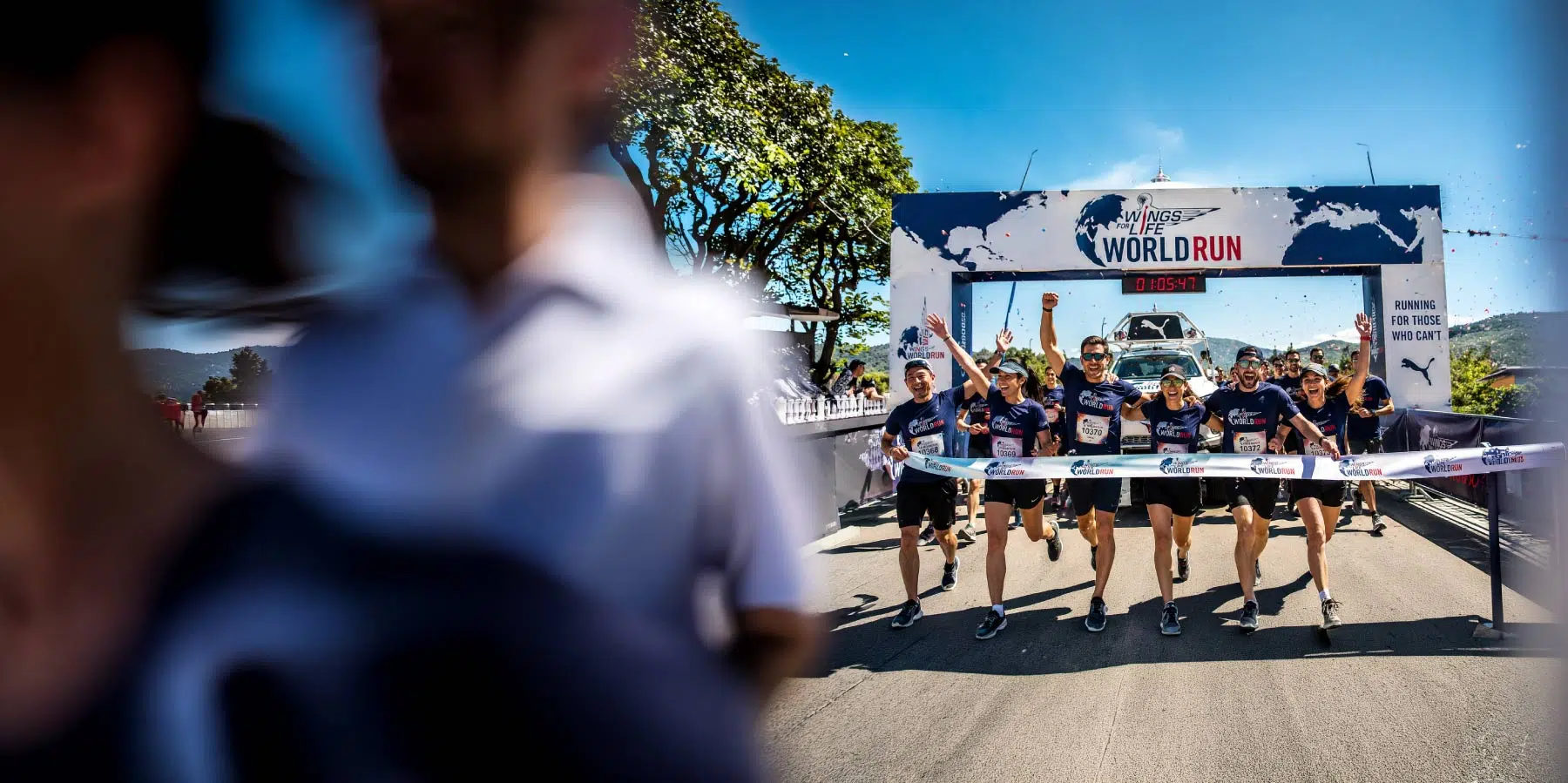
What makes the Wings for Life World Run such a compelling case study for organizational culture is the way it has evolved in workplaces across the globe from a shared participatory event into a recurring organizational rite.
Every year, Austrian energy drink manufacturer Red Bull hosts its Wings for Life World Run. Its 13th edition in May 2026 saw millions of runners and wheelchair users across the globe move simultaneously toward one shared goal: to find a cure for spinal cord injury.
What makes the Wings for Life World Run such a compelling case study for organizational culture is the way it has evolved in workplaces across the globe from a shared participatory event into a recurring organizational rite. Through repetition, collective storytelling, and the gradual accumulation of shared social meaning, employees who participate along with their firms increasingly associate the initiative with belonging, solidarity, and collective identity.
We studied a major European retailer that incorporated the run into its cultural infrastructure over two years. The initiative was never framed as a simple CSR campaign, wellness program, or corporate sponsorship exercise. Instead, leaders consistently positioned the Wings for Life World Run as a collective experience tied to a purpose larger than the organization itself: supporting research on spinal cord injury. Participation was made highly visible across stores, functions, and countries; employees were encouraged to share their experiences peer-to-peer, and the initiative was repeated year after year until it became embedded in the organization’s social fabric. The company recognized that cultural value does not emerge from excitement alone but from repetition, recognition, and the accumulation of a shared memory.
The result was not simply high engagement. It led to the gradual creation of a shared organizational narrative grounded in solidarity, purpose, and belonging.
When an initiative evolves into a rite, it creates three organizational assets that traditional events struggle to generate.
When an initiative evolves into a rite, it creates three organizational assets that traditional events struggle to generate.
In large organizations, meaningful relationships are often limited by geography, hierarchy, and function. Shared participation – in this example a shared Sunday morning run with colleagues from different functions and locations – produces a relational texture that no town hall can replicate. The informality is the point. In the Wings for Life World Run, this temporarily dissolved hierarchical boundaries and functional silos, producing a form of social proximity that traditional corporate events rarely cater to.
A shared calendar of meaning, not deadlines. Employees who have participated in the same initiative over multiple years have something that cannot be manufactured – a common past. These experiences become part of the organization’s narrative and provide continuity in periods of growth or change.
The first sign that an initiative has become a rite is that participation begins to spread organically. Employees no longer join because they are told to, but because colleagues invite them.
In the retailer we studied, 96% of first-year participants said they would recommend the experience to a colleague. The following year, participation increased by 70%. That is not a satisfaction score. It is evidence that the initiative had acquired social value and meaning.
This shift is visible in the language employees use, too. While events are things employees attend, rites are things employees belong to.
The company did not frame the run as a corporate wellness program or a sponsorship.
There are four steps organizations must take, which together convert a shared activity into a lasting sense of belonging. This is how the organization we studied approached each one:
The company did not frame the run as a corporate wellness program or a sponsorship. It framed it as a collective act of solidarity: participation was explicitly connected to something outside the organization’s commercial interests, namely, research into spinal cord injury. That link gave employees a reason to take it seriously that had nothing to do with hierarchy or obligation. When people asked themselves, “Why are we doing this?”, the answer was legible and morally coherent.
After the first run, the organization circulated a number internally: total participants and total kilometers run. Leaders did not allow the experience to remain invisible or private. Instead, they actively circulated participation data, personal stories, photographs, and collective achievements across the organization, helping employees perceive themselves as part of something larger than their local team or store. In doing so, they transformed individual participation into a shared organizational narrative that reinforced collective identity and belonging.
What followed was not a communications campaign; it was a conversation. Employees who had participated talked to colleagues who had not. They described the atmosphere, the moment of crossing the finish line, and the strange pleasure of running alongside people they had never met from other parts of the company. The narrative moved peer-to-peer, and it carried with it an implicit invitation. Participation spread less through top-down communication than through interpersonal relationships, peer influence, and shared enthusiasm generated within the organization itself. By the time the second edition was announced, 800 new participants had already decided to join because someone they trusted had described what it felt like to be there.
The organization then embedded the run into the company’s calendar as something that would happen again, not a one-off experiment. Leadership did not treat continuation as automatic. Each iteration of the Wings for Life Run was reaffirmed through managerial attention, symbolic recognition, and local conversations that signaled that participation was not only allowed, but meaningful.

Every organization runs events. Few create rites. The question for leaders is whether they are designing experiences that entertain employees for a day or experiences that employees carry with them for years.
The Wings for Life case suggests that the real power of purpose initiatives emerges not when employees attend once, but when they return year after year – and start bringing others with them. That is the moment an initiative ceases to be a corporate event and starts becoming part of the organization’s identity.
Organizations that learn to design rites, not just events, find that sense of belonging stops being something they have to explain and becomes something employees carry into the next shift, the next season, and the next year.
Professor of Entrepreneurship and Family Business
Alfredo De Massis is ranked as the most influential and productive author in the family business research field in the last decade in a recent bibliometric study. De Massis is an IMD Professor of Entrepreneurship and Family Business at IMD where he holds the Wild Group Chair on Family Business and works with other universities worldwide.

Vittoria Magrelli is an Assistant Professor in the Faculty of Economics and Management at the Free University of Bozen-Bolzano and has been affiliated with the Center for Family Business Management. Her research focuses on intergenerational dynamics, innovation, and family boundary organizations. She holds a BSc in Politics, Philosophy, and Economics from the London Metropolitan University and an MSc in Philosophy of Science from the London School of Economics and Political Science. In 2019, she earned her PhD in Management from Lancaster University Management School in the UK.

Christof Rissbacher is Chairman of the Management Board of Aspiag Service S.r.l., part of the SPAR Austria Group
Dr Christof Rissbacher is Chairman of the Management Board of Aspiag Service S.r.l., part of the SPAR Austria Group, where he leads an international food retail business employing more than 10,000 people. With over two decades of experience in a family-owned retail group, his work offers valuable insights into family enterprise research, particularly in the areas of leadership succession, governance, international management, and strategic investment.
September 18, 2026 • by Mauro Macchi, Tim Good, Dominic King, Mamta Kapur in Talent
Europe’s AI ambitions are stalling, but not due to a skills gap. Limited access to tools and outdated work design are holding companies back....

September 16, 2026 • by Shelley Zalis in Talent
Is your leadership empowering or draining? A concise guide to humane, effective transformation that sustains performance....

September 9, 2026 • by Ginka Toegel in Talent
Uncover how redesigning leadership machinery removes systemic barriers to women in leadership with measurable governance and sponsorship....

September 2, 2026 • by Julia Binder, Robert Hooijberg, Alyson Meister, Michael Watkins, John R. Weeks, Stefan Michel, Howard H. Yu in Talent
Explore career advice from IMD experts: align strengths with your purpose, play the long game, and make authentic, impactful choices....
Explore first person business intelligence from top minds curated for a global executive audience