To stay ahead of competitors, DBS knew it needed to continue to innovate and improve customer centricity. To do so, it decided to move to a horizontal organizational structure, an approach it named Managing Through Journeys (MtJs). This involved bringing together representatives from all functions that touched the customer journey from the beginning to the end. This would allow DBS to deliver a more seamless and integrated customer experience. The bank introduced a few pilot MtJs in 2021. By 2024, more than 60 MtJs were in operation, accounting for over 60% of the bank’s revenues. The MtJs had nine elements, which collectively led to a new way of working. Three foundational elements provided the initial momentum and specified how to measure impact. These were performance cells, cross-functional teams focused on a specific product or customer segment; performance management architecture, which specified the common set of KPIs for each performance cell; and performance development and compensation, which enabled MtJ members to be evaluated and rewarded for their contributions. Six interconnected elements created a flywheel effect for continuous improvement. These were the value map and control tower, which mapped the relationship between levers, drivers and outcomes; customer obsession, which drove customer research; experimentation using a structured approach; artificial intelligence/machine learning to create faster feedback loops; innovation using a structured approach to accelerate the ideation and production process; and workflow workbench which ensured information flowed seamlessly across all performance cell members. The move to MtJs allowed DBS to stay on top of the customer service rankings in Singapore’s banking sector The operational improvements from the bank’s transformation improved the bank’s business performance significantly. The bank’s leadership knew that keeping the customer front of mind would need to be an ongoing priority.


Research Information & Knowledge Hub for additional information on IMD publications
Research Information & Knowledge Hub for additional information on IMD publications



Here is a question worth considering next time you go to the supermarket: when was the last time you bought something primarily because it was sustainable? Not just sustainable along with everything else you cared about. But sustainable as the lea...
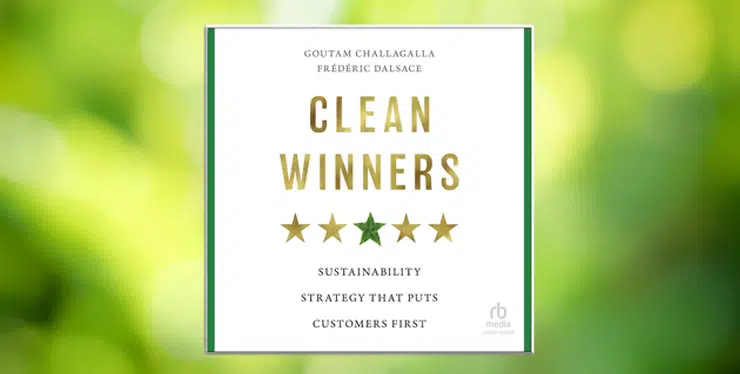
There is a belief embedded deep in most corporate sustainability strategies: if we just communicated better and showed customers the science and the stakes around our green products, more of them would come around to buying them (even if they were...

For more than a decade, ESG-linked funds and corporate sustainability strategies have run on the same quiet assumption: spend more on sustainability, and the market will eventually reward you for it. The problem, however, is that this theory is mo...

For years, executives were sold a compelling idea: doing good would also mean doing well. Surveys suggested that consumers were increasingly willing to pay more for products seen (or marketed) as better for the planet. Consultants reinforced the m...
Research Information & Knowledge Hub for additional information on IMD publications
Research Information & Knowledge Hub for additional information on IMD publications
Research Information & Knowledge Hub for additional information on IMD publications
Research Information & Knowledge Hub for additional information on IMD publications
Research Information & Knowledge Hub for additional information on IMD publications
Research Information & Knowledge Hub for additional information on IMD publications
Research Information & Knowledge Hub for additional information on IMD publications
Research Information & Knowledge Hub for additional information on IMD publications
Research Information & Knowledge Hub for additional information on IMD publications