
Globalization enhances the level of economic integration among countries. The free flow of goods, services, talent, and ideas has economic implications as well as political ramifications. Globalization has been the driving force of value creation but also of inequality; it offers greater choices of goods and services but has also caused the disappearance of domestic companies that could not adapt to global competition. The latter may result in higher unemployment and, in some cases, deteriorating quality of life in the cities where these firms are located. In turn, the negative effects may contribute to the increasing nativist political parties observed in both developed and developing countries asking for a reduction of globalization.
As many other dimensions in our social and economic interactions evolve, so does globalization. In this edition of the Criterion of the Month we will explore the perceptions of mid- and upper-level managers around the world on globalization.
There are several variables that capture aspects of globalization in the Executive Opinion Survey. Let us concentrate on four economies to examine how these different criteria evolved during the last 15 years: China, which in the last twenty-five years has expanded its trade and investments with the rest of the world; Germany, which is the strongest economy of the European Union; and United Kingdom and the USA, two countries that in the last few years have been inward looking. Figure 1 captures the response to the statement “The national culture is open to foreign ideas” in three periods: 2002, 2008 and 2018.
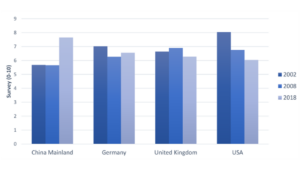
Figure 1: Is the national culture open to foreign ideas?
Figure 1 reflects an interesting result. Apart from China, the executives in the other three economies feel that the national culture has become more inward looking between 2002 and 2018. For the UK and the USA, the economy seems less open to foreign ideas compared with the beginning of the global financial crisis in 2008.
Naturally this will have an effect to how these economies are perceived by the rest of the world. Figure 2 provides the perceptions of the executives to the statement “The image abroad of your country encourages business development.”
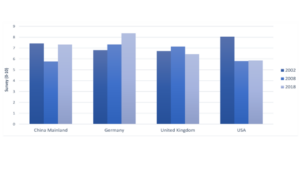
Figure 2: Does the image of your country abroad encourage business development?
Germany is the only economy among the four examined here where executives recognize a constant improvement in its image abroad. China is approximately in the same position in 2018 as it was in 2002, while the perceptions of the executives in the UK and the USA decreased in the period covered, with the latter declining by a third.
The last statement examined for these four economies is a direct question regarding globalization asking the executives to reflect whether “Attitudes towards globalization are positive in your society.” Figure 3 presents the responses.
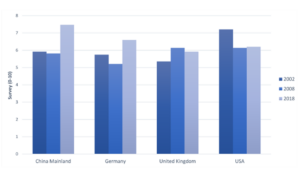
Figure 3: Is the attitude towards globalization positive in your society?
Except for the USA, the other three economies have a more positive outlook for globalization in 2018 compared to 2002. The UK still has not reached the position it had at the beginning of the economic crisis. However, the USA has a much less positive view on globalization.
An important question is whether the USA belongs in the majority of the economies we study and Figure 4 allows us to reflect upon this.
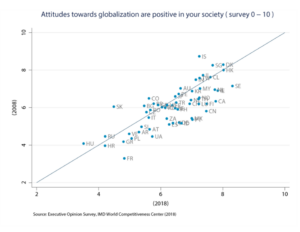
Figure 4 Changes in the perception towards globalization between 2008 and 2018
Figure 4 describes how the attitudes towards globalization have evolved between 2008 and 2018. The horizontal axis provides the ratio for the year 2018, and the vertical axis the ratio for 2008. Countries that are below the 45° red line have a more positive attitude towards globalization today compared to that of 2008. It is reassuring to note that the managers in the majority of countries have a more positive opinion about globalization. In fact, less than a third of the countries have a less positive view than a decade ago.
Still, this is not necessarily how the perceptions on globalization will evolve in ten years from now. It remains to be seen whether globalization will expand or contract.



China’s export boom is reaching its limits. The country’s next phase of growth will come not from shipping more goods abroad, but from exporting its factories, technologies and brands. China is running up against the limits of its old m...
Research Information & Knowledge Hub for additional information on IMD publications
Research Information & Knowledge Hub for additional information on IMD publications
Research Information & Knowledge Hub for additional information on IMD publications
Research Information & Knowledge Hub for additional information on IMD publications
Research Information & Knowledge Hub for additional information on IMD publications
Research Information & Knowledge Hub for additional information on IMD publications
Research Information & Knowledge Hub for additional information on IMD publications
Research Information & Knowledge Hub for additional information on IMD publications
Research Information & Knowledge Hub for additional information on IMD publications
Research Information & Knowledge Hub for additional information on IMD publications