IMD business school for management and leadership courses

One man’s harvest storm exposes the tech takeover of America’s heartland, and the fight to reclaim the keys
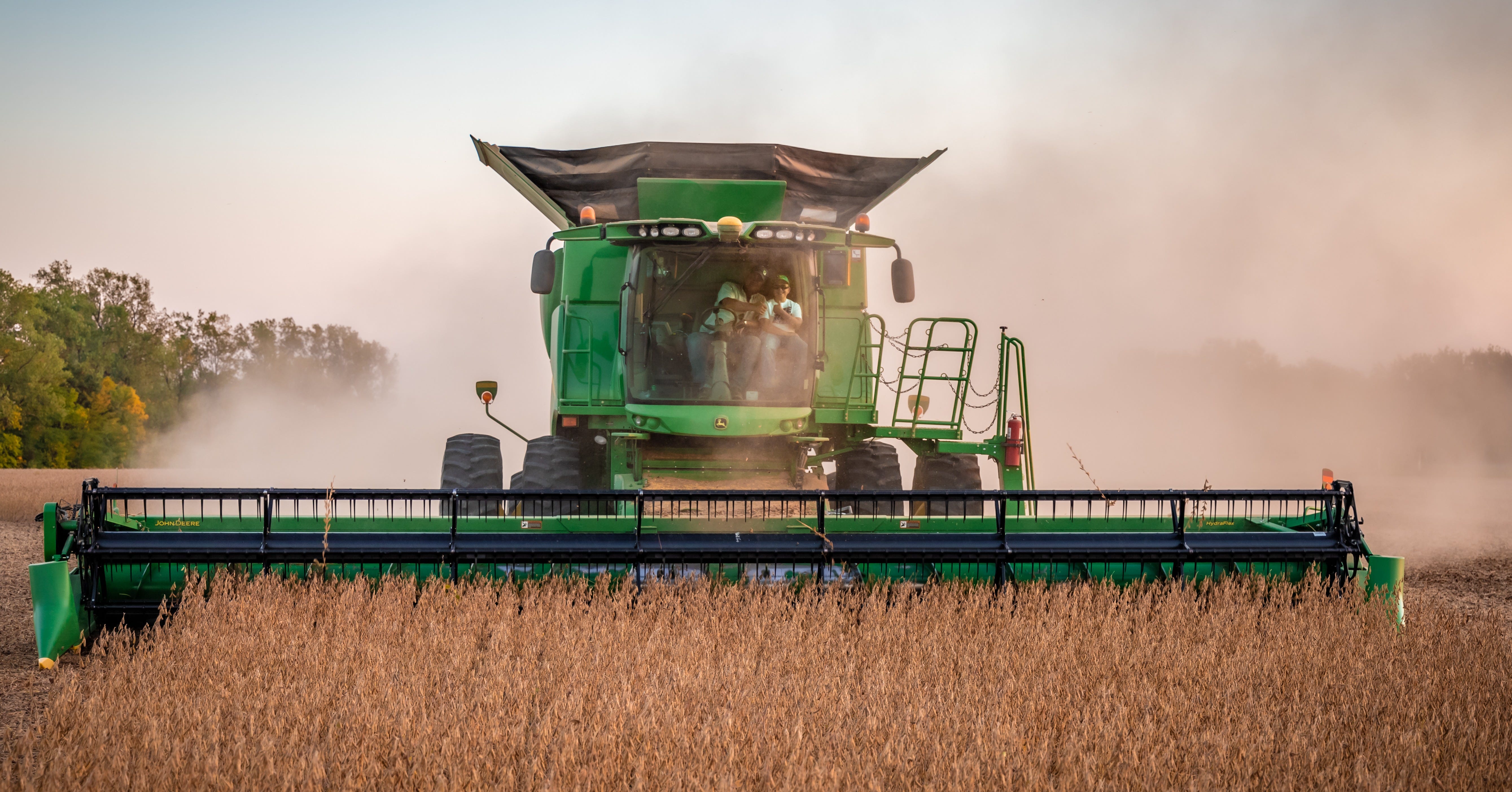
October 2023. Jake Lieb was racing a storm. He sat high in the cab of a brand-new John Deere X9 1100 combine. It was a green behemoth the size of a house, with a 690-horsepower engine and a price tag pushing seven figures. Jake had to harvest his soybeans before the clouds broke.
The machine practically drove itself, its GPS auto‑steering accurate to within an inch. Dark clouds were gathering behind him. If the rain hit before he finished, his crop would be ruined. Tens of thousands of dollars were on the line. He quickly did the math in his head. Forty minutes of cutting left, maybe fifty minutes before the rain hit. Ten minutes’ margin. Okay. Just enough.
Then, beep. A warning chime rang out. A red alert flashed on the screen.
The central computer had frozen the machine. Nothing major was broken, just a sensor, probably the grain-flow monitor. Jake had fixed sensors before. His father had taught him how to. But this time, the screen wouldn’t budge.
The software had locked him out.
Jake grabbed the radio. His wife answered on the second ring. Their only hope was the other tractor, the clunky, twenty-year-old one parked in the shed. He climbed in and fired it up. Come on, come on… The engine sputtered, then finally came to life. As lightning flickered, he finished the last pass and saved most of his crop as the first fat drops hit the windshield.
After the storm, Jake called John Deere. He told the dealer that he’d already replaced the bad part. He just needed a software reset, essentially a digital permission slip, to turn his own machine back on.
No. Only a certified Deere technician could do that. Onsite. The earliest appointment was days away. Jake would also need to pay a call-out fee of around $230, plus $130 per hour, to have someone arrive with a laptop, plug it in, and confirm that a new sensor had already been installed.
The Ownership Illusion. A man may pay a million dollars for a machine and still not own it. There’s a name for this in the automotive world: VIN‑locking. Swap the part, fix the hardware, and the machine still won’t run until an authorized technician enters an unlock code using a special tool.
That’s why the question of who holds the key matters more than who holds the deed.
Reflect: What else have you “bought” that you don’t fully control?
Jake slammed the phone down. His $900,000 combine sat in the field like a beached whale. He walked out to it, running his hand along the cold green metal. “I thought I bought a tractor,” he thought to himself. “Turns out I bought a lease.”
He wasn’t far off. In a 2015 filing with the U.S. Copyright Office, John Deere argued that farmers don’t own the software in their tractors, only an “implied license for the life of the vehicle” to operate it. The metal may be yours, but the code isn’t. And because Deere claims ownership of that copyrighted code, “repair” starts to look like “permission.” Every time Jake turns the ignition, he clicks “OK” on terms that say so.
John Deere still held the key.
A Company Man’s Heresy
I teach at IMD Business School in Switzerland. Walk into any faculty meeting lately and you’ll hear the same three words within ten minutes: AI, platforms, disruption.
By now, we all know the Silicon Valley playbook. Uber, Airbnb, and Amazon all built platforms that connect one market (drivers, sellers) to another (riders, buyers) via a digital app, and are scaling up at breakneck speed.
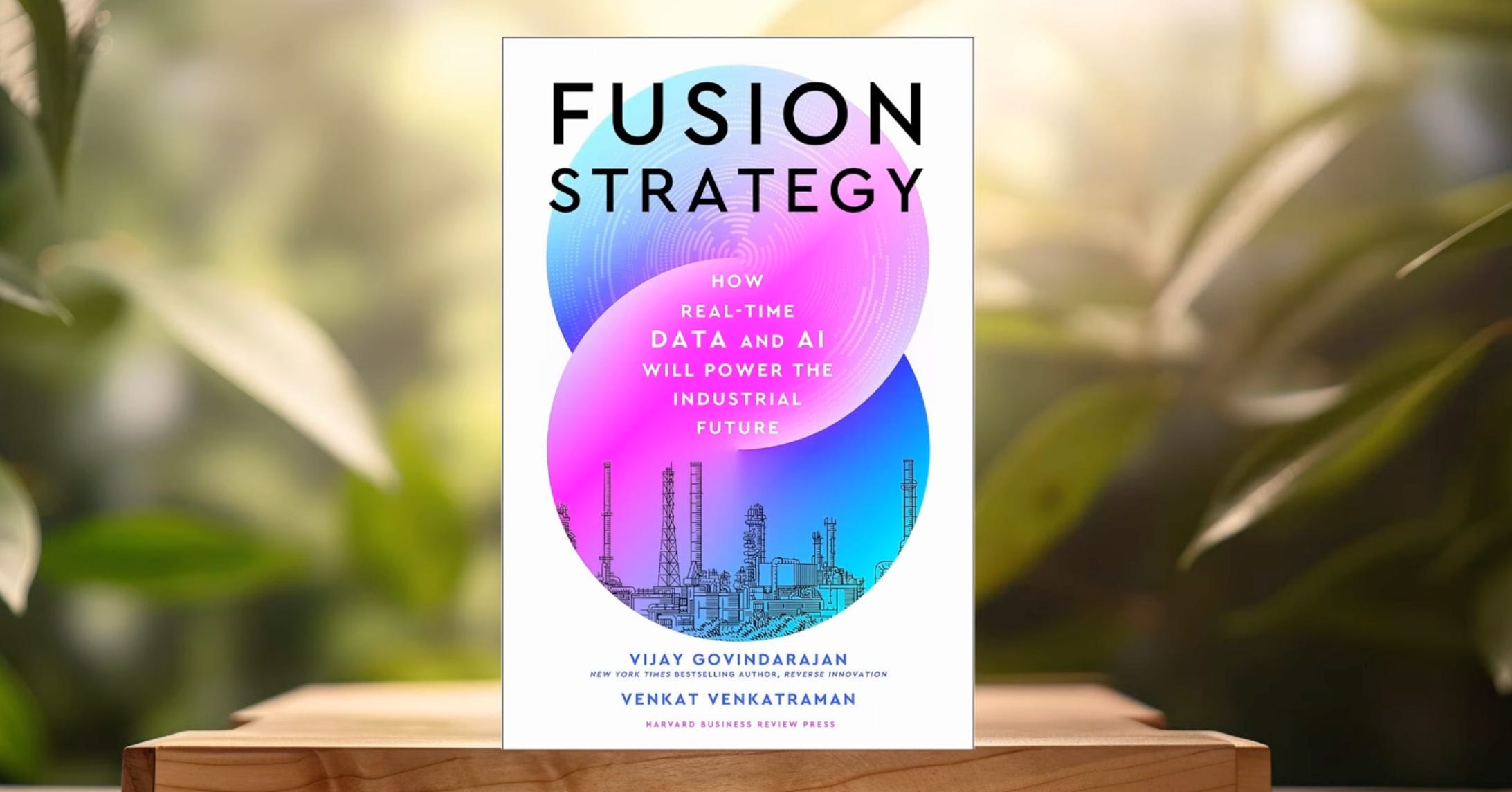
So when I picked up Fusion Strategy by Vijay Govindarajan and Venkat Venkatraman, I was curious about John Deere. They laid out how the 175-year-old tractor maker was running the same playbook, just transplanted onto farmland.
Most legacy firms only dream of applying this strategy, and few take action. John Deere did, and did it spectacularly.
The story starts 1,800 miles from Silicon Valley, in Moline, Illinois. The city’s population is 41,000, and the average January temperature is 24 degrees. This is where John Deere has been headquartered since 1848, and where a man named Sam Allen changed everything.
Allen was 23 when he showed up in Moline in 1975, a Purdue engineer with a crew cut. Over the next 34 years, he worked in every part of the company, from engineering to global operations, and gained a deep understanding of farmers’ needs. By the time he became CEO in August 2009, he had accumulated four decades of farming knowledge.
Here’s what made Allen different from every Deere CEO who came before him: he understood that the future wouldn’t be built on bigger engines or heavier steel. It would be built on data.
A farmer makes thousands of decisions every season: when to plant, how deep, where to spray, and when to harvest. Each one is a guess. Weather changes. Soil varies. Pests arrive. Every wrong call costs money. Data could turn guesses into answers. Allen realized that this should be John Deere’s business.
By the early 2010s, software and sensors were creeping into every corner of industry, and agriculture was no exception. Tractors and combines were rolling off assembly lines with GPS units and yield monitors, generating mounds of data on things like crop yields, soil moisture, and GPS coordinates.
Yet all that data was going nowhere. It got stuck on thumb drives in glove compartments, scribbled in notebooks, or lost on spreadsheets no one opened twice. Meanwhile, competitors old and new were toying with “precision agriculture” gadgets, and whispers grew that Silicon Valley startups had their eyes on farming as the next tech frontier.
The Real Product. Every farmer makes a thousand decisions a season. Most are educated guesses.
The company that turns those guesses into answers sells something more valuable than steel. It sells certainty, or the nearest thing to it.
Reflect: In your industry, who owns the data that reduces uncertainty, and who pays for it?
Now, to be fair, many leaders would have realized this. But most in Allen’s position would have played it safe. Visit Davos. Give speeches about “digital transformation.” Let the next guy deal with the hard part.
Allen did something that would prove decisive in 2012.
At the board meeting, Allen stood before a room of skeptical faces. He clicked “forward” on his visual presentation. On the screen appeared a single phrase: “MyJohnDeere.”
On the surface, it was just a smartphone app where farmers could track their equipment. The pitch was simple: see all of your equipment, each of your fields, and all of your data in one place: on your phone instead of in a barn ledger.
But Allen’s vision was far more ambitious. This would become the farm’s operating system. A digital command center linking machines, farmers, dealers, agronomists, and weather systems within one seamless network. Inside Deere, engineers had already started calling it “the central nervous system.”
To build it, Allen did something almost heretical for a manufacturing company: he scaled up its software creation. John Deere would elevate and dramatically expand the Intelligent Solutions Group (ISG), originally founded as Precision Farming in 1993, dedicating it to data science.
In truth, the migration from steel to data had already begun, step by step. Yield Monitors (1996) started scanning crop output in real time inside combine harvesters. StarFire GPS (1998) brought sub‑inch navigation. JDLink (2006) added remote monitoring and diagnostics. Machine Sync (2011) synchronized combines and grain carts wirelessly. And Field Connect (2013) would push sensors into irrigation decisions. Allen wasn’t inventing the future; he was accelerating a fuse already burning.
So when Allen hit the accelerator, the culture shock was immediate.
Deere’s product cycles once followed the ancient rhythm of planting seasons. They involved years of development, followed by a big reveal. This rhythm must now gave way to monthly software updates pushed online like iPhone patches. Factory managers who’d been kings of their domains now must share authority with twenty-somethings who spoke a foreign language of APIs and data lakes.

Skeptical lifers wondered if their CEO had gotten too many ideas from reading Wired magazine on airplanes. Veterans who’d spent decades talking about torque and horsepower suddenly found themselves in meetings about cloud architecture and agile sprints. Some adapted. Others quietly headed for the exits.
The Heretic’s Advantage. When a manufacturing company starts hiring people who speak of “APIs and data lakes,” half the veterans will head for the exits.
This is not a bug. It is a feature. Transformation requires a different crowd in the room.
Reflect: If your organization transformed tomorrow, would you be in the new crowd or heading for the exit?
Give Away the Store, Own the Town
In 2013, just one year later, John Deere did something that made no sense, unless you understood platform economics. They opened the gate on their proprietary software.
The company invited outsiders, including seed companies, fertilizer makers, agtech startups, and independent developers, to build their own apps that plugged directly into Deere’s system. Some of those “outsiders” were anything but small. It collaborated with Monsanto (now Bayer) to align Deere planting with seed prescriptions. It partnered with The Weather Corporation to pull weather intelligence into operational prescriptions uploaded to Deere equipment. And it later partnered with Sentera to add AI‑driven aerial imagery to crop monitoring.
The platform of course was free for farmers. Third-party apps also paid nothing to join. Deere didn’t mind, because every app that integrated with MyJohnDeere made the platform stickier. Every farmer who built their operation around Deere’s data grew more loyal.
It worked. Within a few years, the most common question from farmers shopping for new technology was a single phrase: “Does it integrate with MyJohnDeere?” Lock-in wasn’t about restricting choice. It was about becoming the default.
But the real gamble came in 2017.
John Deere paid $305 million for a startup called Blue River Technology. Most people in agriculture had never heard of it. They thought that a tractor company spending a third of a billion dollars on a robotics startup was either visionary or insane.
What they bought was science fiction: a system called “See & Spray.” Cameras mounted on sprayers scanned and analyzed fields in real time, using computer vision and machine learning to distinguish crops from weeds at the individual plant level.
A sprayer boom, 120 feet wide, moves through a cotton field at 12 miles per hour. Mounted along the boom are 36 high-resolution cameras. Every second, the machine scans over 2,000 square feet of earth. The images stream into onboard chips, the kind Nvidia sells for factories and data centers. In the blink of an eye, the machine notices a patch of green and figures out what it is: crop, weed, or just moss.
As the boom passes over a weed, a nozzle clicks and releases a tiny burst of herbicide with sniper precision, hitting only the weed and nothing else. Farmers who’d been drenching entire fields in herbicide could suddenly reduce chemical use by up to 90%. Millions of gallons saved. Good for the Earth and good for the pocket, too.
John Deere began offering this technological ability as a subscription. It started charging farmers only for the acres actually sprayed. It was earning recurring revenue with success-based pricing, the kind of business model that makes Wall Street salivate.
By 2019, ISG, the special unit that Allen expanded, was employing 2,000 people globally, most of them engineers. Software and robotics had become predominant skills. Computer vision and machine learning were emerging as priorities. The group that started as an experiment had become the company’s technological brain.
Digital features would no longer be treated as one-off IT projects, bolted onto physical products at the end of the development cycle. Instead, Deere started measuring farmers’ yield gains, fuel saved, and downtime avoided, not just counting tractors sold. Instead of shipping a product and moving on, teams maintained ongoing responsibility for improvement.
Selling the Outcome. The old way: sell a machine, move on. The new way: charge for what the machine achieves.
When you price by the acre sprayed, not the sprayer sold, you have entered a different business entirely.
Reflect: What would it mean to charge your customers for outcomes rather than outputs?
In November of that same year, Allen stepped down as CEO, passing the reins to John May. Deere’s stock had risen to approximately $175 per share. The company’s market capitalization had grown to roughly $55 billion.
And it didn’t stop there.
Fourteen Tons in Vegas
Four years later, in August 2021, Deere struck again, paying $250 million for Bear Flag Robotics, a Silicon Valley startup specializing in autonomous driving technology for tractors.
The labor shortage in rural America had become an existential crisis. The “hollowing out” of the rural workforce meant that farmers simply couldn’t find young, skilled people willing to sit in a cab for 14 hours a day during the harvest rush. The average age of the American farmer was creeping toward 60.
Then, at the January 2022 Consumer Electronics Show (CES), John Deere crashed the party.
The CES is the Super Bowl of the tech world. It is the domain of Samsung, Sony, and Apple. It is a place of delicate microelectronics, VR headsets, and OLED screens. Gadgets for technophiles.
And here was John Deere, rolling out a 14-ton monster: the 8R tractor, fully autonomous, with six pairs of stereo cameras, 360-degree obstacle detection, and Nvidia GPU processors running deep neural networks. It could till a field, plow through the night, and stop automatically if it detected an obstacle, all controlled from a farmer’s smartphone.
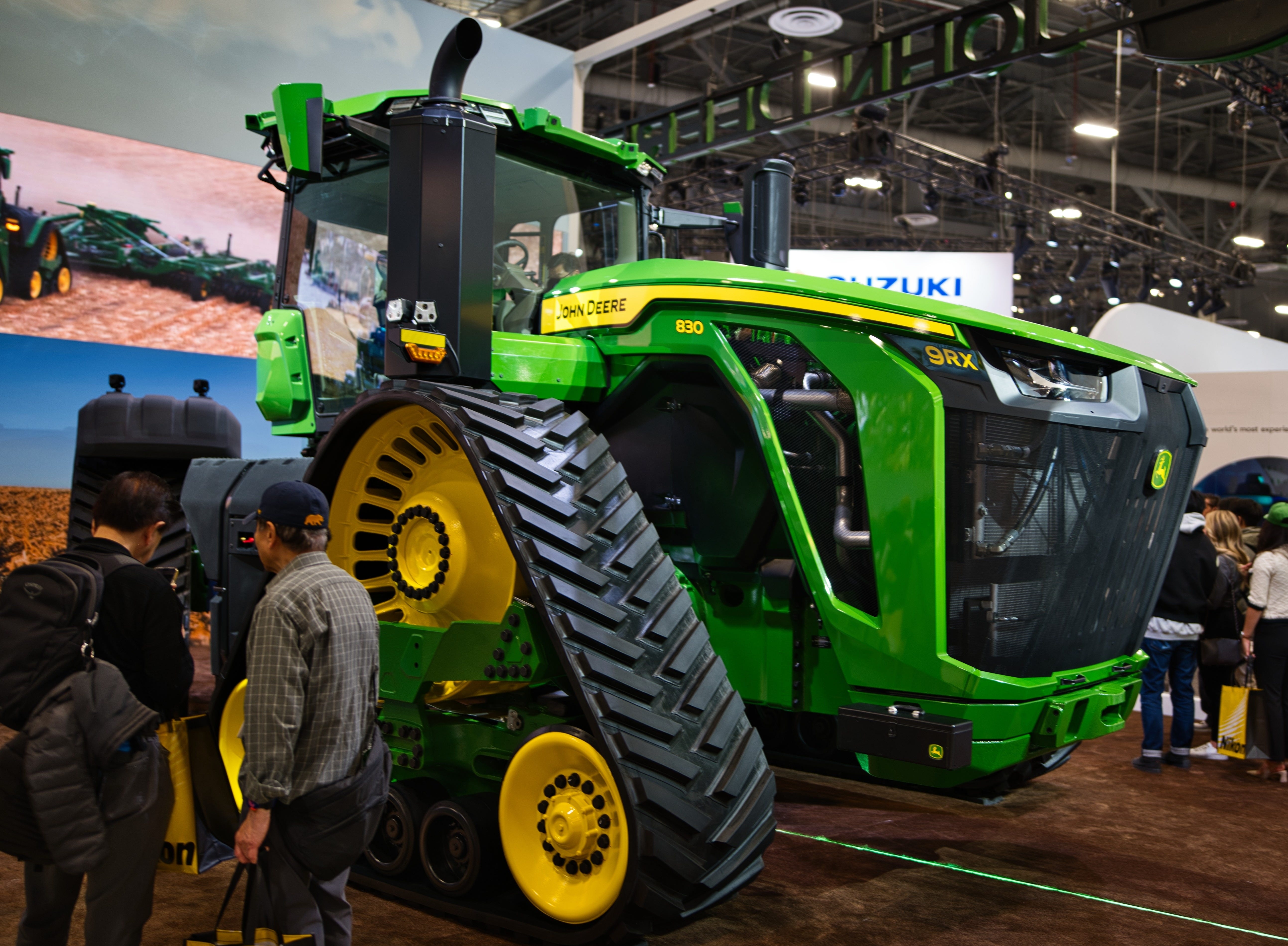
Tech journalists who had never set foot on a farm were suddenly writing about tillage patterns. Wired, The Verge, and CNBC hailed it as the arrival of real-world robotics. Deere had successfully rebranded itself. A 185-year-old tractor company was now presenting at the world’s largest technology show.
In January 2024, Deere announced a partnership with Starlink, Elon Musk’s satellite network. The goal: beam connectivity to the 30% of American farmland, and 60% of Brazilian farmland, where cell towers don’t reach. A machine in rural Kansas could now upload data to the cloud in real time, even in the middle of nowhere. The platform was no longer limited by geography on Earth.
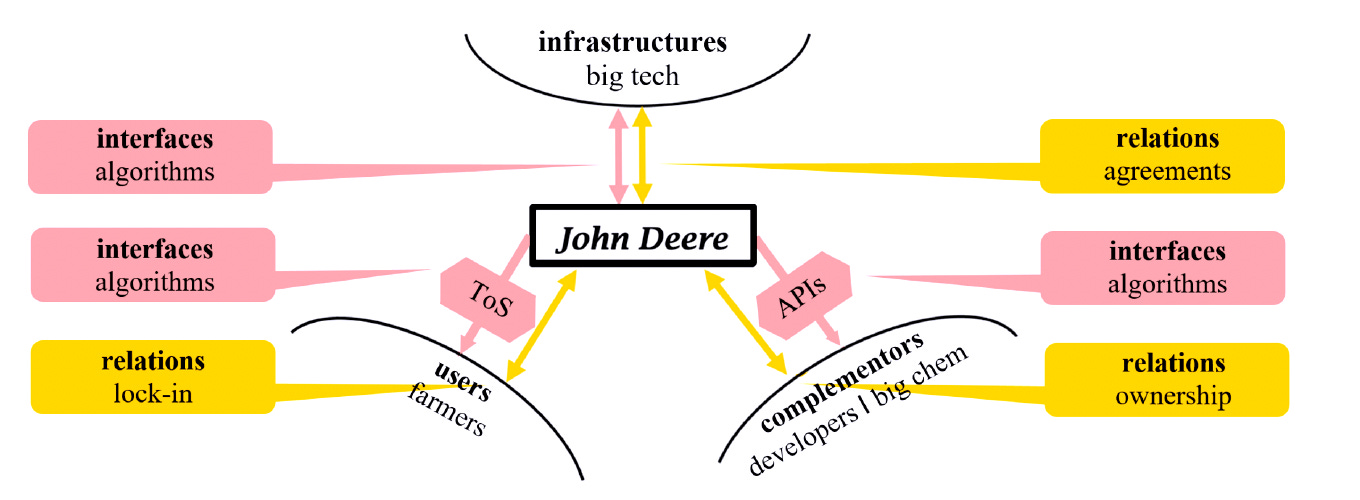
Which brings us back to Jake, the farmer. Deere’s digital and AI strategy creates a closed loop. The company builds the machine and also writes the software; now it holds the data. So, Deere can authorize only their own dealers to service a tractor’s digital brain. The farmer becomes a user, not an owner, even if they pay a million for the machine, simply because Deere’s market power can make it so.
The Closed Loop. Build the machine. Write the software. Hold the data. Authorize the repairs.
At each step, the farmer becomes a little less the owner and a little more the user. The loop closes quietly, one update at a time.
Reflect: Where in your own life is a loop closing around you?
As one skeptical agricultural engineer put it, “They’re trying to be the Facebook of farming.” In many ways, that wasn’t far off the mark.
Washington Fires a Shot
Jake’s story spread quickly through farming communities and even made headlines beyond. On January 15, 2025, the U.S. Federal Trade Commission (FTC), joined by the attorneys general of Illinois and Minnesota, took the unprecedented step of suing John Deere over its repair monopoly.
The lawsuit alleges that Deere illegally leveraged its market power to control who can repair its equipment by keeping critical repair tools and software inside its dealer network, thus pushing farmers toward Deere-authorized mechanics and driving up repair costs.
The repair battle isn’t only about tractors. It’s part of a broader reckoning across industries: smartphones, medical devices, and electric cars. Modern products come with software and digital components that manufacturers often lock down. Tesla, for example, has been criticized for making it difficult for independent garages to service its vehicles. Ownership starts to look a lot like a monthly subscription, even when the owner has paid in full.
I’ve discussed this case with executives from Europe and the U.S. The room always splits the same way. One camp essentially says, “What’s the problem? Deere pulled off the nearly impossible by transforming itself. They deserve the spoils! That’s how the free market works. Winners win. Let the market run its course, with minimal regulation.”
From that perspective, Jake made a business decision when he bought the Deere: he gained amazing technology and convenience, and in exchange, he accepted Deere’s terms of service. Caveat emptor. Don’t like it? Buy a Kubota.
But others look sorrowfully at Jake scrambling into that 2004 tractor while his $900,000 machine sat locked in the field. The imbalance of power was all too clear between a lone farmer and a $100-billion-plus corporate titan.
The more I listened to both sides, the more I realized they were asking the wrong question. The issue isn’t whether Deere deserves its success. It clearly does. The question is whether that success should come with the power to lock the door behind them.
The Interoperability Answer
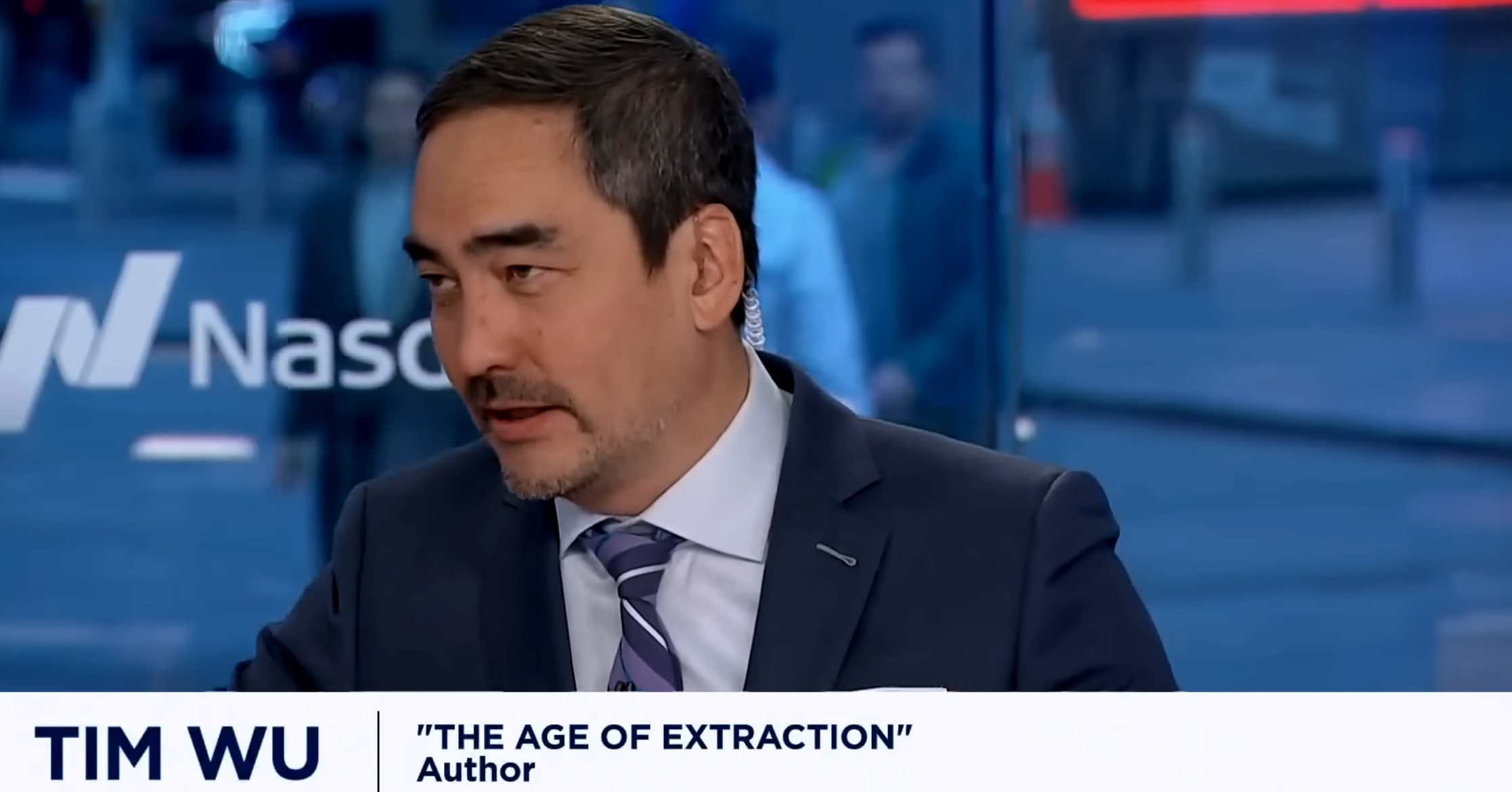
The clearest framework I’ve found comes from legal scholar Tim Wu. In his book The Age of Extraction, he makes an argument that sounds almost too simple: you don’t have to break up dominant companies. You just have to make sure the door stays open. The word he uses is “interoperability.” That means that there are rules that keep platforms open enough that others can still build, still compete, still enter.
Consider the phone charger. For years, Apple insisted on its proprietary Lightning connector for iPhones, forcing consumers to buy Apple-specific cables and accessories. Europe decided that this was a pointless lock-in. In 2022, the EU approved a common charger rule. Starting December 28, 2024, new phones and many other small devices sold in the EU had to charge via USB‑C.
Apple wasn’t about to abandon the European market, so guess what? The iPhone 15, released in 2023, quietly ditched Lightning. Suddenly, the charger for your Android phone worked for your iPhone, too.
Apple didn’t make this change out of kindness; it was compelled by standards. And Apple didn’t build “a Europe iPhone” and “an America iPhone.” It adjusted its design, and the effect went global. Maintaining two designs, one for Europe and one for everywhere else, wasn’t worth the cost.
European regulators are now applying the same standard to the EV era. Under the EU’s Batteries Regulation, from February 18, 2027, electric-vehicle batteries (along with certain other large batteries) must carry a “battery passport” detailing their health and composition, and must be replaceable in defined ways, “without vendor lock-in.” The philosophy is simple: when standards prevent lock-in, customers can walk away, and competitors can enter.
So what’s the USB-C equivalent for a tractor? I posed this question to several engineers last fall. They came back with three ideas.
- Data portability. Jake’s combine collects yield maps, soil readings, and planting records every day: that data should follow Jake. He should be able to export it to any platform, share it with any agronomist, and feed it into any competing system. It’s data about his land, generated by his labor. It shouldn’t be trapped in one company’s cloud.
- Open diagnostics. The error code that locked Jake out of his own machine should be readable by any mechanic with the right training, not just a Deere dealer with proprietary software. If the combine can tell a Deere technician what’s wrong, it should be able to tell Jake.
- Standardized repair interfaces. Just as USB-C created a standard port for charging, certain tractor components (sensors, connectors, diagnostic ports) could follow common standards that allow independent repair shops to service equipment without reverse-engineering proprietary systems.
How Bureaucrats Write the Rules of Escape
None of this is to say that John Deere is evil for trying to maximize profit. To Deere executives, everything they’ve done makes business sense. Their job is to generate returns for shareholders. And one could argue they’ve served farmers too, by giving them capabilities their grandparents never dreamed of.
But it’s the job of policymakers to ensure the market stays fair and competitive, especially when a product becomes a platform. They need to ensure that not every product becomes an unnecessary meter, always billing a relationship.
The Open Door Principle. You need not break up dominant companies. You need only ensure the door stays open.
Interoperability sounds like jargon. It means: others can still build, still compete, still enter. That’s all.
Reflect: What’s the “USB-C” equivalent in your industry, the standard that could unlock competition?
These days, everyone bemoans European regulations. Product approval is too slow. People call it red tape. But sometimes red tape is just standards. Europe figured something out: you don’t have to own a platform if you write the rules by which it runs.
USB-C wasn’t invented in Brussels. Brussels just made it universal. Making two versions of a tech product is often too expensive, so when Europe sets a standard, the world follows. Bureaucracy acts as leverage.
After all, Jake Lieb just wants to fix his own tractor. Whether he can depends on who writes the rules, and whether anyone writes them at all.