
Globalization is not dying. It is being rebuilt.
When the US and China weaponized trade in 2025, many feared the collapse of the global economy. Markets plunged, supply chains fractured, and policymakers spoke openly of economic warfare.
But the collapse never came.
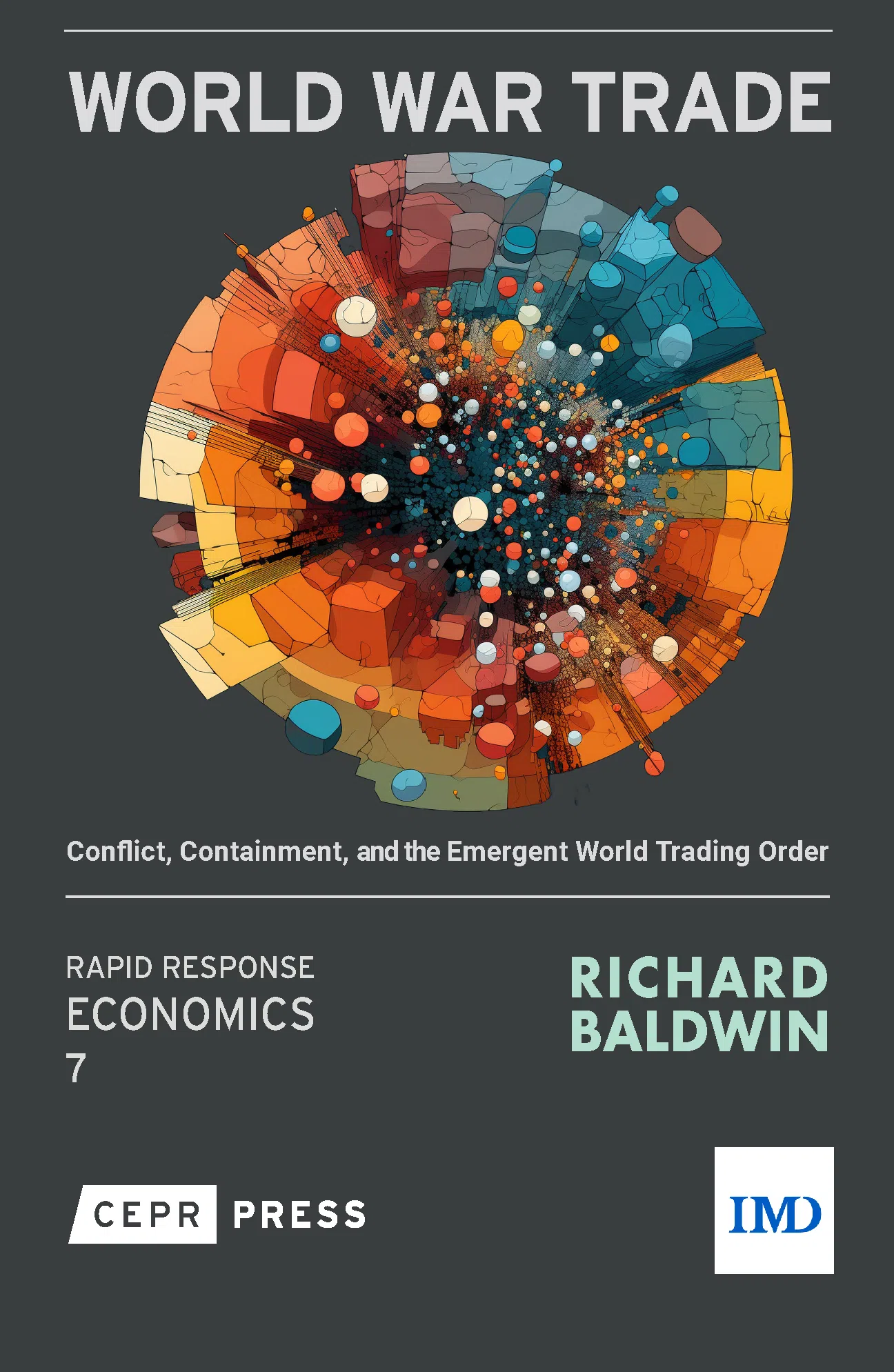
In World War Trade, Richard Baldwin argues that the real story is not the conflict between superpowers, but how the rest of the world responded. Through quiet restraint, strategic adaptation, and a wave of new trade agreements, countries representing the majority of global commerce prevented a 1930s-style breakdown.
What has emerged is a new kind of globalization: less centralized, less US-led, but still deeply interconnected. A system shaped not by design, but by the self-organizing forces of politics, economics, and necessity.
This book offers a new way to understand global trade in an age of rivalry, and a clear-eyed view of what comes next.
Download your free copy here:

Meet the author
Richard Baldwin
Professor of International Economics
Media Articles
Les Echos
« C’est contagieux » : comment l’agressivité de Trump change le visage de la mondialisation
L’Express
” Aucun candidat à la Maison-Blanche ne fera campagne sur la supression des droits de douane”
VoxTalks Economics
” World War Trade”









Research Information & Knowledge Hub for additional information on IMD publications
Research Information & Knowledge Hub for additional information on IMD publications
Research Information & Knowledge Hub for additional information on IMD publications
Research Information & Knowledge Hub for additional information on IMD publications
Research Information & Knowledge Hub for additional information on IMD publications
Research Information & Knowledge Hub for additional information on IMD publications
Research Information & Knowledge Hub for additional information on IMD publications
Research Information & Knowledge Hub for additional information on IMD publications
Research Information & Knowledge Hub for additional information on IMD publications
Research Information & Knowledge Hub for additional information on IMD publications