IMD business school for management and leadership courses

On Running, Allbirds, and Crocs reveal what separates brands that last from brands that die
Kona, Hawaii. October 12, 2013.
The air on the Queen K Highway sat at ninety-one degrees and barely moved. The asphalt, laid directly over lava flow from three active volcanoes, held the heat like a kiln floor.
There were no trees. No buildings, no structures of any kind between the airport and the Hawi turnaround. The landscape was so barren and monotonous that athletes have described a psychological effect: The mile markers crawled, and the brain, starved of input and after hours of continuous exertion, began to turn on itself. How much longer could a person hold together out here? And what was left of them when they did?
Frederik van Lierde had been racing the Ironman World Championship for seven hours already. He had swum 2.4 miles in Kailua Bay, biked 112 miles through the Kohala Coast, and was now deep into the marathon leg, the most punishing single-day endurance race on earth.
He was running barefoot inside a pair of shoes that did not officially exist.
The shoes were a prototype. Four months earlier, Van Lierde had tried the same setup at Ironman Nice and won. “The Cloudracers flew me to the finish line, barefoot and no blisters. It’s unbelievable. I love them.” Now he was doing it again in Kona, inside a shoe whose sole began, three years earlier, as a sliced-up garden hose glued to the bottom of a pair of Nikes. Riding alongside him was the man who had built them.
Olivier Bernhard was on the course, pedaling a bicycle parallel to Van Lierde stride for stride, mile after mile, just to watch.
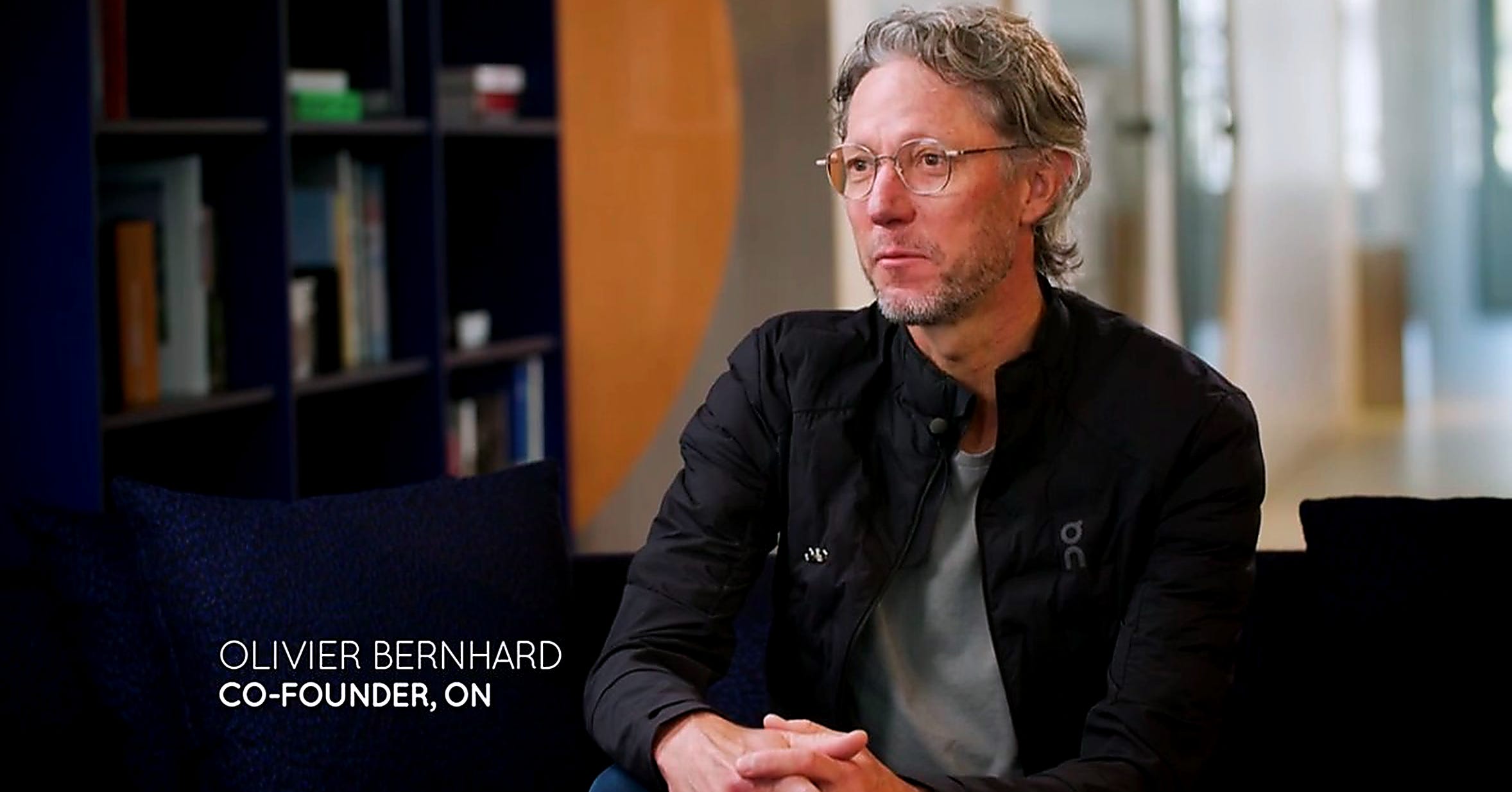
He watched the feet. At each footstrike, the pods along the outsole were supposed to collapse under Van Lierde’s weight, folding downward and sideways. Then, on push-off, they were supposed to lock together, turning softness into a platform. Soft landing. Hard takeoff. That was the theory. That was what the garden hose had promised, years earlier, in a driveway in Switzerland.
Whether it would hold here, on this road, in this heat, inside a shoe with no room for error, was the only question that mattered to the man on the bicycle.
Van Lierde’s stride stayed compact and relentless. The pods held. Each cylinder gave way at its own rate, in its own direction. The bond held. Bernhard would later describe those final miles in five words: “Praying and sweating like hell.”
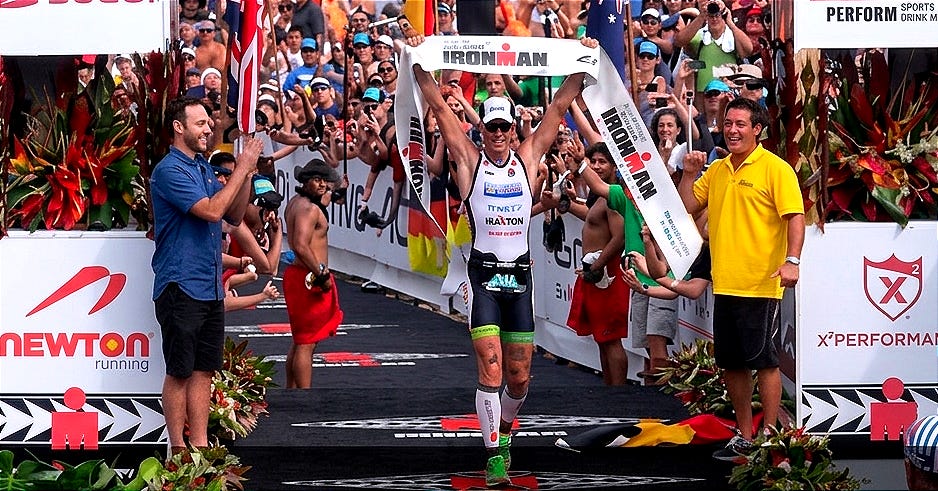
Van Lierde crossed the finish line in 8:12:29. He was the second Belgian ever to win the Ironman World Championship. In that instant, the product stopped being an argument. It became a fact. On global television. On the feet of the man who had just won Kona.
~
Thirteen years after, On Holding trades on the New York Stock Exchange. Market cap: eleven billion dollars. Revenue crossed three billion Swiss francs in 2025.
On the same timeline, in the same industry, selling into the same post-pandemic boom, Allbirds went from a four-billion-dollar IPO valuation to a thirty-nine-million-dollar fire sale. Every full-price store in the United States closed. Four hundred and nineteen million dollars in cumulative losses. The merino-wool sneaker Barack Obama wore courtside, and Leonardo DiCaprio called the future of sustainable footwear, ended up sold to a distressed-asset firm.
And then there was the clog.
In 2008, Crocs traded at ninety-four cents. TIME had named it one of the fifty worst inventions ever. Sixteen years later, the company reported $4.1 billion in annual revenue. No elite athlete. No performance technology. Just a foam shoe, with a CMO willing to say, in public: “We have been ugly since 2002 and we have no intent to change.”
Three companies. Same decade. One is worth eleven billion dollars. One sold for thirty-nine million. One turned ugliness into brand heat.
If it’s not about timing, or luck, or which founder had better taste, what separated them?
The Two-Front War for the Consumer
Let’s start with a basic question. What is a brand actually doing when it works?
There are only two games in consumer business. The first is captivation. The second is conversion. Every company plays at least one. The best ones play both.
Conversion is the science of the last step. Think about the last time you searched “hotels in Barcelona.” The screen filled with travel blogs, and above them all sat an ad for Booking.com. You clicked. Minutes later, you were scrolling rooms, comparing prices, locking in your stay. Seamless. Frictionless. In 2024, Booking Holdings spent $3.5 billion on Google ads to be there. The sangria fantasy was already yours. Booking.com’s job was to appear at the exact millisecond you were ready to pay.
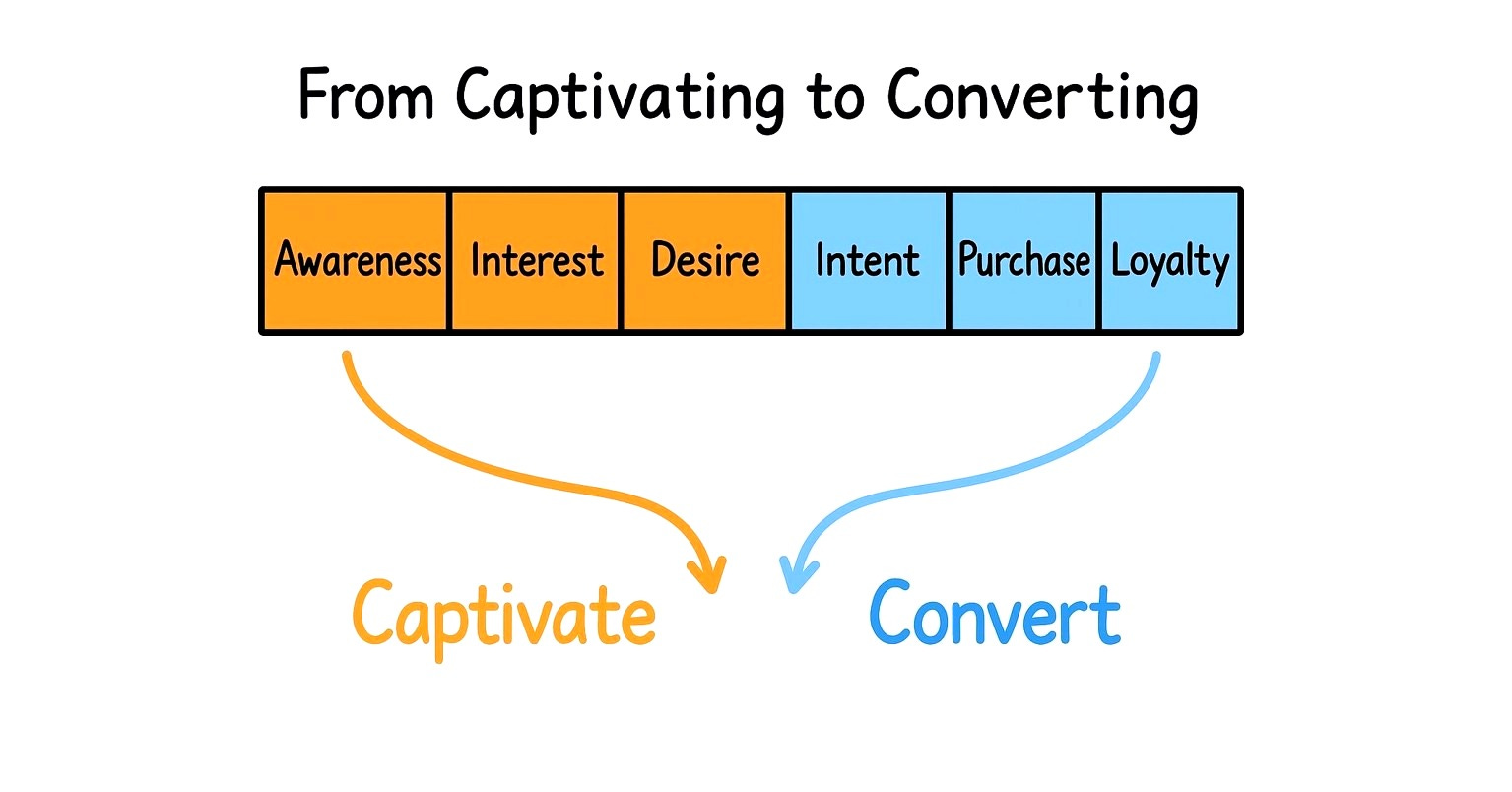
Nobody woke up in 1985 needing Air Jordans. They woke up wanting to fly, imagining Michael Jordan’s impossible dunks on a cracked playground court. People do not drink Red Bull for carbonated water and taurine. They drink it because the company owns Formula One teams, sends skydivers to the edge of space, and runs a media empire that dwarfs most television networks. Twelve billion cans a year, sold on the feeling that your own limits might be negotiable.
And L’Oréal? “Because you’re worth it.” Four words that turned a bottle of hair dye into a small act of self-respect.
Conversion requires engineers, data scientists, systems thinkers who understand friction.
Captivation requires storytellers, designers, obsessives who understand longing.
One hands you the glass. The other makes you thirsty.
The thing about captivation is that it begins with a story. Every brand worth remembering has a founding myth. Even Rome needed one, tying its birth to the fall of Troy. Belief becomes talk. Talk becomes desire. Desire becomes sales. Sales pay for the next round of proof. That is how a product becomes a flywheel.
The danger is always the same. A company forgets how to tell its own story. Or worse, it hands the story to people who do not feel it and cannot tell it like it matters.
How Allbirds Fell from the Sky
On March 30, 2025, Allbirds canceled its scheduled earnings call. The annual report filed the next day disclosed “substantial doubt about the Company’s ability to continue as a going concern.” Allbirds intended to dissolve. That is how a company once worth $4.1 billion ends.
Rewind twelve years.
In 2014, Tim Brown stood in a field outside Wellington, New Zealand, surrounded by merino sheep, and recorded a Kickstarter video on a $300 budget. He was thirty. Local farmers were switching to dairy, because shearing was costing more than the fleece was worth.
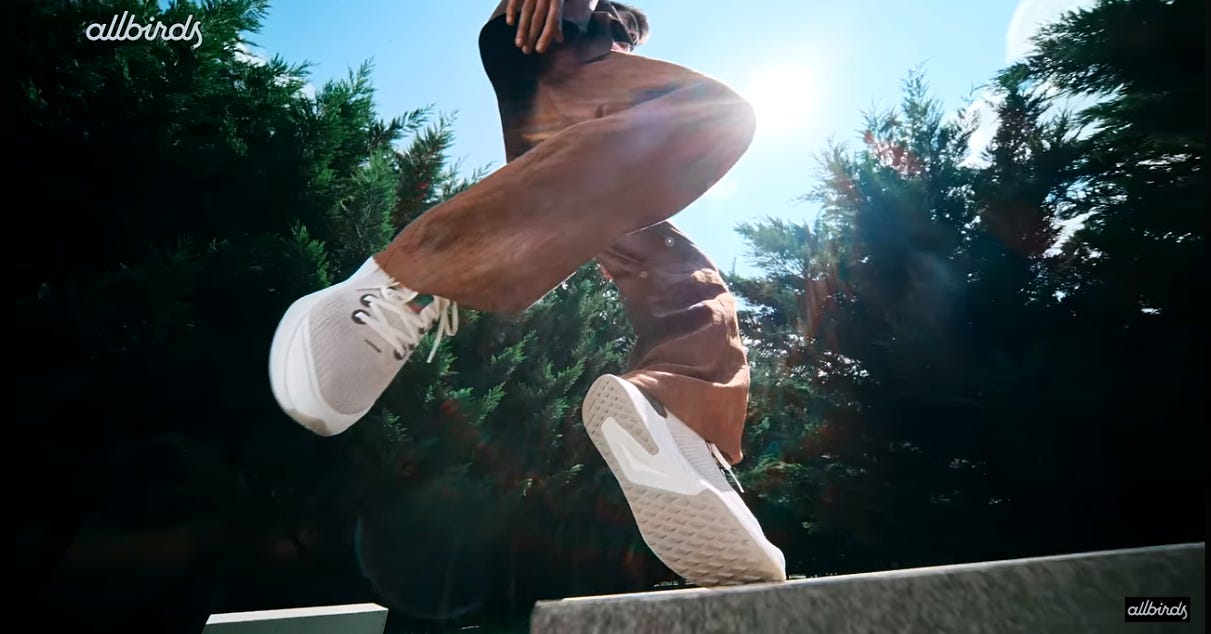
But Brown couldn’t stop thinking about the superfine merino. The 17.5-micron fiber that Armani and Gucci wove into thousand-dollar suits had never once been used in footwear. Why not? He secured a $200,000 grant, spent two years with scientists developing a knitted fabric strong enough for a shoe upper, and pitched the idea in an entrepreneurship class at Northwestern.
The professor, Carter Cast, a former CEO of Walmart.com, told Brown the concept wasn’t very good. “Why don’t you put it on Kickstarter,” Cast said, “so you can fail and get on with it.”
Brown instead sold out his entire inventory of 1,064 pairs in four days.
His cofounder arrived by accident. Joey Zwillinger, a San Francisco biotech engineer, had backed the Kickstarter and received the wrong shoe size. He complained. They became partners.
In March 2016, they officially launched with one sneaker, in five colors, priced at $95. They were operating out of Zwillinger’s mother-in-law’s house with seven employees. That same afternoon, TIME called it the world’s most comfortable shoe. The company did $1 million in sales in its first month. Brown and Zwillinger went for a drink that night. They sat there quietly, trying to understand what had just happened.
What had happened was Silicon Valley. Barack Obama wore them in public. Leonardo DiCaprio invested. The New Yorker likened their place in tech culture to Steve Jobs’s black turtleneck. When Allbirds went public in November 2021, the market valued the company at about $4.2 billion. Silicon Valley thought they had cracked the code.
The Wool Runner had worked because it was one thing done simply. But venture capital does not reward simplicity.
It rewards expansion.
So Allbirds quickly expanded. It ordered tens of thousands of pairs of wool leggings. They turned out to be see-through. Refunds followed. The line was later discontinued, and the remaining inventory was liquidated at a loss of roughly $13 million.
Its $160 technical running shoe fared little better. Zwillinger later admitted consumers were not ready to pay that much for a technical running product from Allbirds because that was not “the ethos [of our] DNA.”
How could they not know? Allbirds never sponsored a race like a real running brand. It didn’t sign athletes, hang at trailheads, or build anything that looked like a running community.
Meanwhile, the sustainability story, once their sharpest edge, dulled fast. Rivals caught up. Nike’s Space Hippie line had a lower carbon footprint per pair than Allbirds. Adidas sold twenty-seven million pairs made with recycled ocean plastic. By 2025, even Allbirds was backing away from the language. “We think the word ‘sustainability’ sounds like a chore,” CEO Joe Vernachio said. “Like sorting your garbage.”
Revenue fell from $298 million to $152 million in three years. Brown stepped down in May 2023. Zwillinger followed ten months later. The company had an ignition. What it never built was a flywheel.
How On Built the Flywheel
In a side room inside On Labs in Zurich, surrounded by foam blocks and fabric swatches and sole units in various stages of failure, Roger Federer sat at a table with his wife, sorting through prototype parts. Nobody had asked them to come. Federer visited the lab between twenty and thirty times in 2021 alone, sometimes for entire days, leaning over materials and asking questions about foam density.
The relationship started the way Swiss things often start. His wife Mirka had discovered the shoes while shopping in Zurich. Federer started noticing them on strangers’ feet, borrowed a pair, tried them on. “The most comfortable shoe ever,” he said. “And I wanted to meet the boys.”
Switzerland is a small country. Someone knew someone. A dinner happened. Then another. Caspar Coppetti, one of On’s three founders, recalled, “We went out to dinner together and had a really good time.” When the idea of working together surfaced, the founders told Federer they were too small to afford a standard endorsement deal. So they proposed something else: Federer would invest roughly fifty million Swiss francs for a three percent ownership stake. No appearance fees. Equity. Shared upside, as a co-entrepreneur.
On then used him as a stress test.
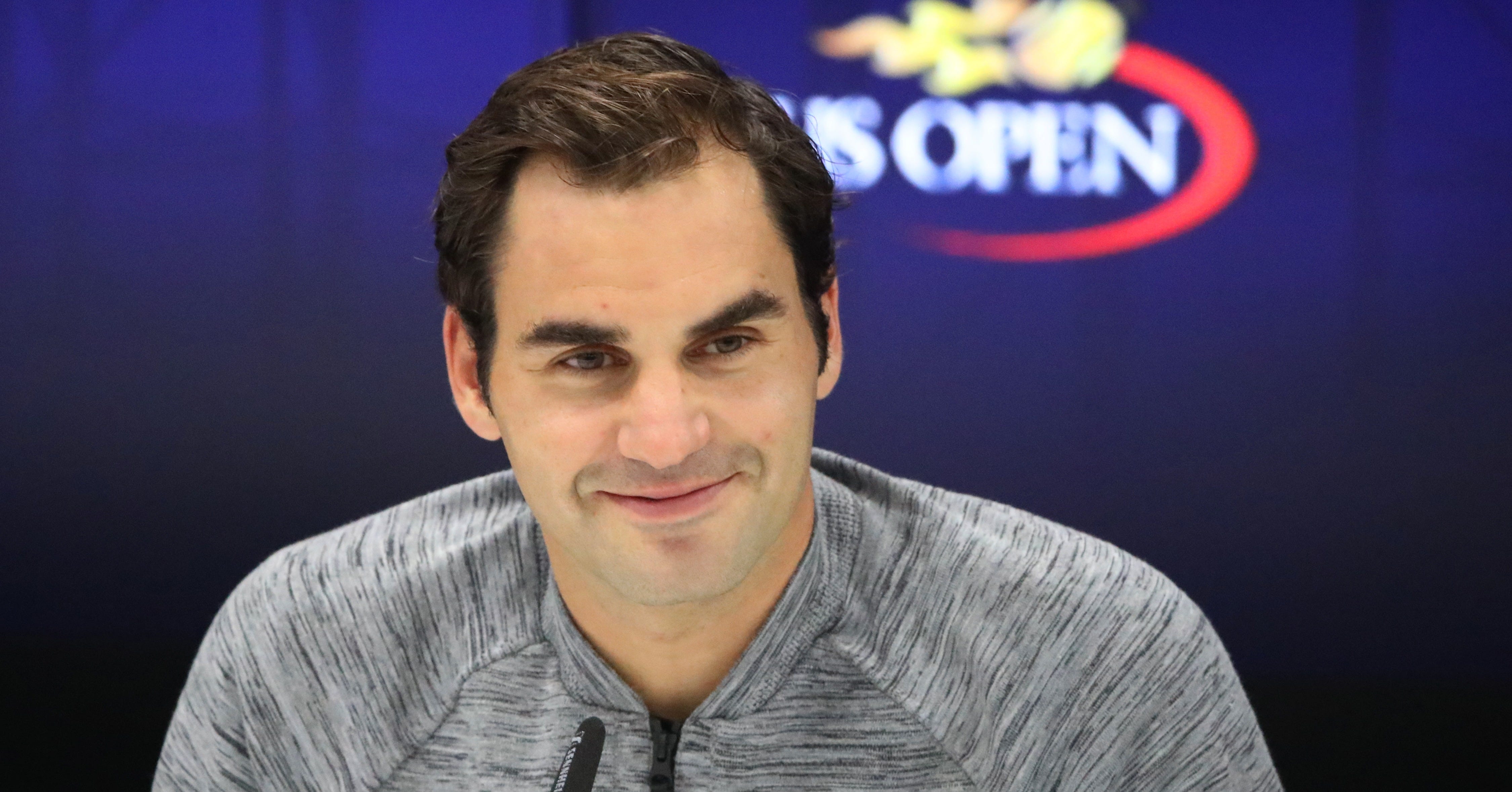
The first serious tennis prototype arrived while Federer was training in Australia, and the team flew down with it, already embarrassed. Federer took one look at the shoe. It’s very bulky. It’s not going to work. At the next practice session, Bernhard asked, “Tell me everything you feel.”
Federer said he felt too close to the ground. On knew running. That was the problem. Tennis was different. In lateral movement, players can drive up to three times their body weight through a shoe, and On had never had to solve for that before.
It took years. When Federer walked onto the court in Doha in March 2021, he was wearing THE ROGER Pro. It was the first non-Nike shoes he had worn in a competitive match since he was fifteen.
On used athletes to stay narrow. It sold through specialty shops, where the people behind the counters had run marathons. When a major UK specialty chain was bought by a discounting group, On pulled its inventory. When people started wearing its performance shoes to brunch with jeans, Coppetti was irritated. “It really bugged us,” he said. “It’s like buying a Porsche and going shopping.”
The founders understood something Allbirds never grasped: in footwear, credibility flows uphill. Don’t chase the lifestyle consumer. Start with shoe technology. Then athlete feedback. Then community. Then assortment. That is the flywheel. Let lifestyle adoption happen on its own.
The flywheel kept turning. Hellen Obiri won Boston, then in 2025 broke the New York City Marathon course record in On’s Cloudboom Strike LS. Świątek and Shelton became the next faces of the tennis line. Gross margin reached 62.8 percent. Even as revenue crossed three billion Swiss francs, Bernhard kept returning to the same idea: “We are a running brand at heart.”
On got bigger by being exact. That is what keeps a flywheel from wobbling.
It speeds up by staying true.
And then there was the shoe everyone hated.
How Crocs Weaponized Ugly
Paris, France. October 1, 2017.
At Balenciaga’s Spring 2018 show, models walked out in ten-centimeter platform foam clogs, candy-colored and studded with plastic flowers and logo pins. They were Crocs. Backstage, designer Demna Gvasalia told Vogue, “It’s a very innovative shoe. It’s light, it’s a one-piece foam mold.”
A decade earlier, Crocs stock had fallen to ninety-four cents. TIME had named the clog one of its fifty worst inventions. CEO Andrew Rees, who had halved the SKU count, closed 160 stores, refocused the entire company on the Classic Clog. “Our goal is not to make the haters love the brand,” Rees said. Don’t apologize for the shoe. Weaponize it.
The collaboration pipeline became the flywheel’s engine. Crocs hit London Fashion Week in 2016. The next year, Balenciaga’s $850 platform version, shown in Paris, sold out on pre-order. Bad Bunny’s glow-in-the-dark clogs sold out in 30 minutes. Justin Bieber’s Drew House collaboration crashed the website; one teaser post on Instagram pulled more than 670,000 likes in three hours. Chief Marketing Officer Heidi Cooley had a simple rule: “We don’t work with partners who aren’t authentic fans of the brand.”
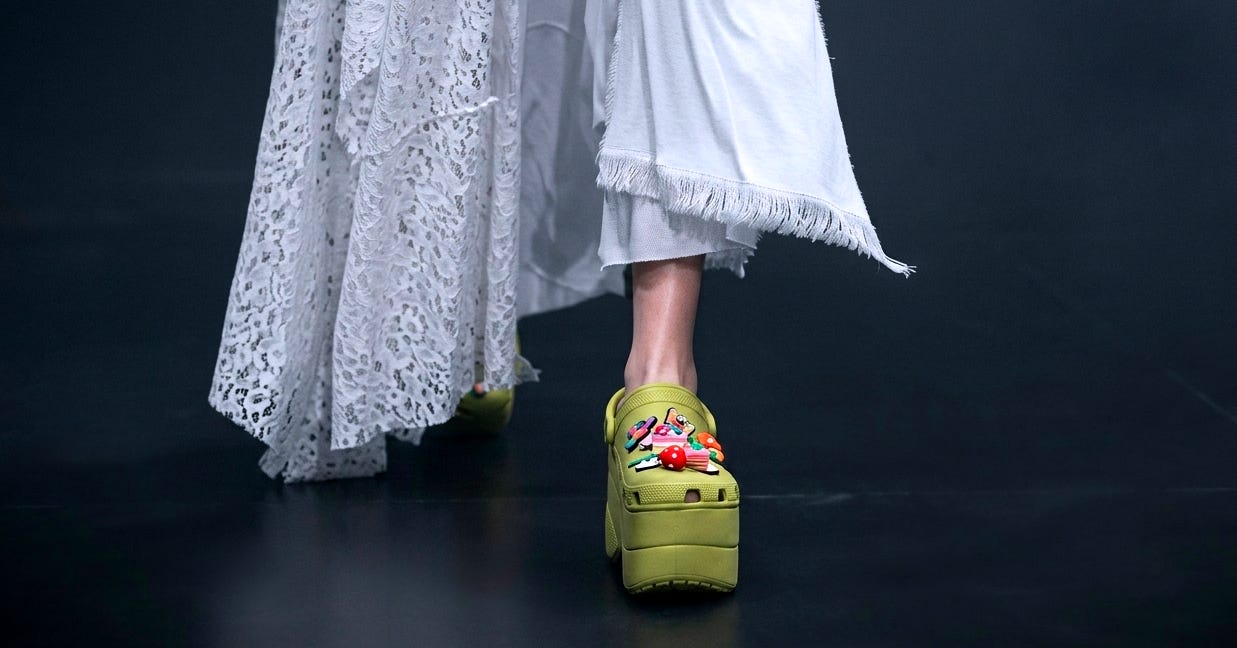
And then there were the Jibbitz. The snap-in charms Crocs acquired in 2006 for $10 million grew into a $271 million revenue stream. Three to five dollars a charm. Seventy-five percent of clog buyers bought them too. Each one was a small act of self-expression, cheaper than a coffee. They brought consumers back between shoe purchases. Nurses decorated their clogs with medical-themed charms and posted hospital-floor selfies. Young people helped turn Crocs into the number one footwear brand on TikTok, with 7.3 billion views under #crocs.
Three companies. Three stories. One framework.
Every brand has an ignition. What matters is what comes next, once the novelty wears off. If the answer is a community, a ritual, an identity that deepens with use, the flywheel starts to spin.
On’s evangelists say, “This makes me better.” Its version of co-creation was Federer telling Bernhard the outsole was too thin. On built its flywheel on performance.
Crocs’ evangelists say, “This lets me be myself.” Millions of people customized a foam shoe that let them become more of who they already were. Crocs built its flywheel on self-expression.
Allbirds never built a flywheel at all.
The companies that last grow by being exact. And they learn, sometimes painfully, that the most dangerous moment comes when the flywheel is spinning so fast that every adjacent opportunity starts to feel like destiny.
That is when it wobbles.