Every evening, after her children went to bed, Sandra Czich picked up her brushes.
By day, she was Head of Legal, Compliance and Risk within the Crédit Agricole Group, a member of both the management and risk committees, responsible for teams and decisions that carried real weight. By night, she painted.
To the outside world, Czich’s career appeared highly linear. She studied law, worked for top firms like Linklaters and spent nearly two decades in senior leadership in the Swiss financial industry.
“That was the top of the iceberg,” she said.
The thread running underneath
Long before entering the corporate world, Czich had nurtured a creative side. At first, she worked on canvases. Then, once she had built up a body of work, she organized exhibitions and took on small commissions while balancing her executive career with single motherhood.
But scaling artistic work by hand presented obvious limits. Czich increasingly found herself wondering how she could turn her creativity into something larger, more sustainable, and commercially viable.
She considered everything from jewelry to other creative ventures before a moment by the sea brought the answer into focus: her designs belonged on swimwear.
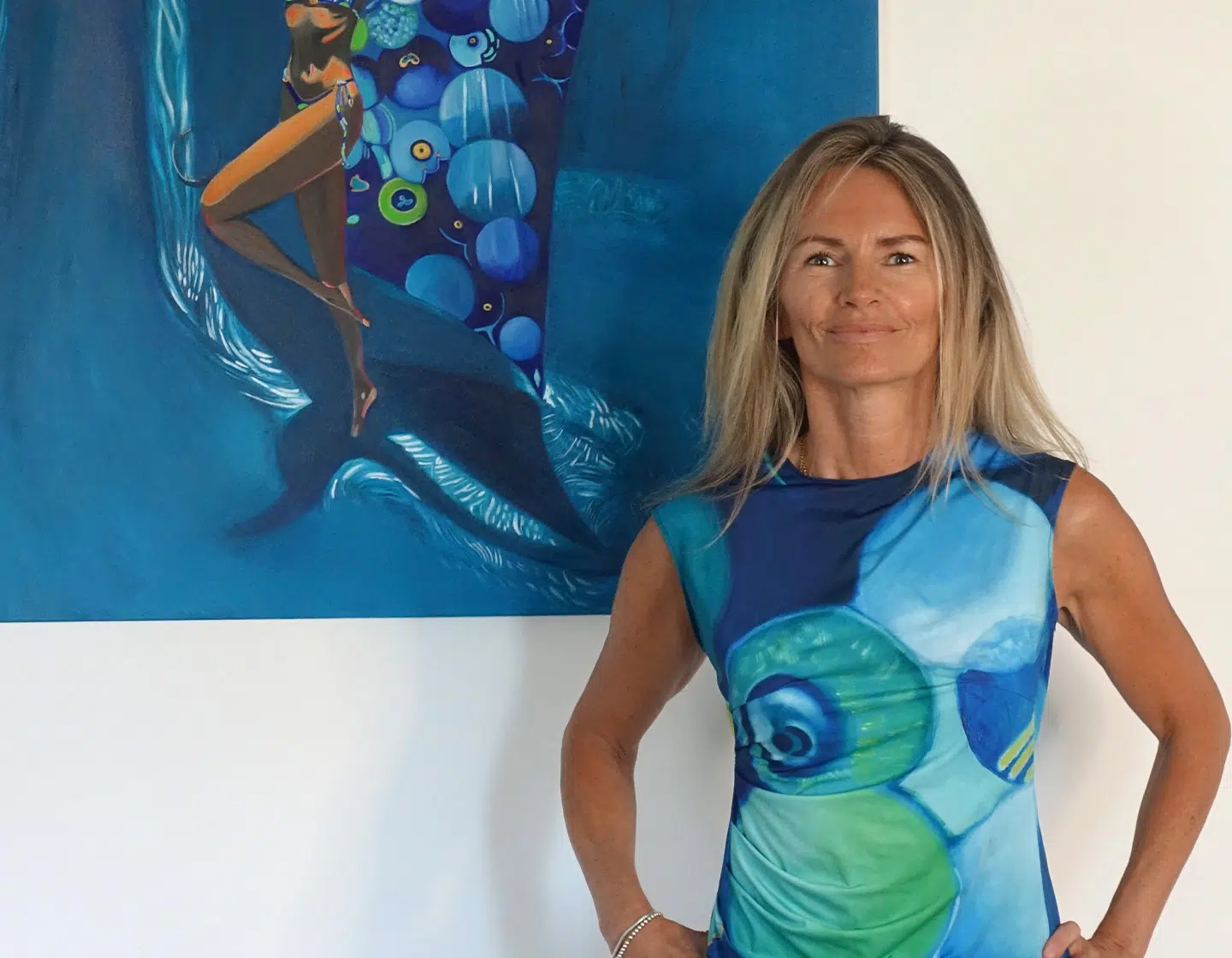
That insight became CZI Studio, a luxury brand built around her hand-painted designs. Inspired by her connection to water, the collections transform Czich’s original artworks into bold and colorful swimming trunks, shirts and kaftans.
Waiting for the right moment
Earlier in her career, the idea of entrepreneurship felt like a distant goal. Her sons were young, and she knew she was not yet ready for the sacrifices it required. “When you go into entrepreneurship, it’s a big responsibility and it’s a family journey, because it absorbs so much of you,” said Czich.
“Your business becomes an obsession,” she added. “It competes as priority number one with anything else.”
By the time she launched CZI Studio in January 2022, she was ready. Today the business serves customers across 15 countries, from Canada and Brazil to Senegal, Oman, and across Europe, selling directly through its website, social media channels, and pop-up events.
What about me?
The turning point came unexpectedly while reviewing development opportunities for her team at work. After organizing training programs for others, Czich paused to ask herself a question she had not seriously considered before: “What about me?”
She wanted something that would help shape the next twenty years of her career, not simply deepen her technical expertise. When HR suggested looking at IMD, she immediately gravitated toward the Executive MBA.
The application process itself became transformational. For the first time, she was forced to articulate clearly what she wanted from her future.
Those ambitions extended beyond entrepreneurship alone. The swimwear business she had been imagining for years was part of that vision, but not the whole of it. She also saw herself continuing to pursue leadership, governance, and board-level responsibilities.
“From that moment, it became an objective,” she said. “No longer a dream or vague project.”
Planting the seed
Looking back, Czich compares the EMBA to planting a seed. “You plant it for one purpose,” she said. “But you do not control what it creates.”
What began as a way to challenge herself evolved into something far broader. The EMBA helped her reconcile the two sides of herself she had long kept separate: the intellectual rigor that drew her into law and finance, and the creative instinct that had always existed alongside it.
Strategy and leadership modules, in particular, expanded how she thought about her future and the scale of what she might build. “You have to trust yourself in a very fundamental way,” she said. “At some point you need to stop over-preparing and act.”
Opportunities that are rare
The EMBA also expanded something Czich had not fully realized had become narrow: her world. After two decades in law and finance, much of her professional network reflected the same industries, perspectives, and ways of thinking.
“When you work 20 years in one industry, your world becomes very mono-industry,” she said.
At IMD, that changed quickly. During the Discovery Expedition to Mumbai, the IMD correspondent introduced her to a family business specializing in traditional Indian embroidery, a connection that later fed directly into designs for her swimwear brand.
A case study she co-wrote with a Saudi cohort member led to speaking at conferences on smart cities in Barcelona and Madinah, a city that had only recently opened to non-Muslim visitors. “These are opportunities that are very rare,” she said.
Trust through discomfort
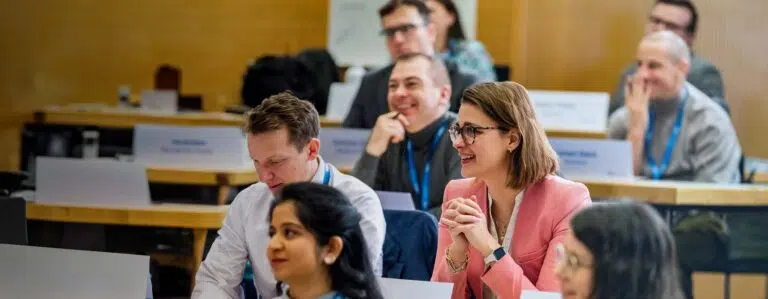
What stayed with her most, however, was not simply the diversity of the cohort, but the way the experience itself seemed designed to create trust. Looking back, Czich believes IMD intentionally creates moments of discomfort and intensity because real connection rarely emerges from surface-level interactions alone.
“Trust comes through difficult moments,” she said. “If everything stays superficial, people remain strangers.”
For her, some of the strongest bonds were formed precisely through the pressure of the experience: the travel, the unfamiliar environments, the intensity of the work, and the vulnerability that came with being pushed outside familiar professional identities.
“You need to reach a certain level of discomfort to get to something real,” she said.
Bringing vision to life
Today, Czich continues to build CZI Studio, which reached profitability in March. Her ambition is to open a concept store gallery for CZI, conceived as an immersive space to celebrate creativity and nurture meaningful human connections.