Many of us carry the same belief: work hard enough, produce something good, and the right people will notice.
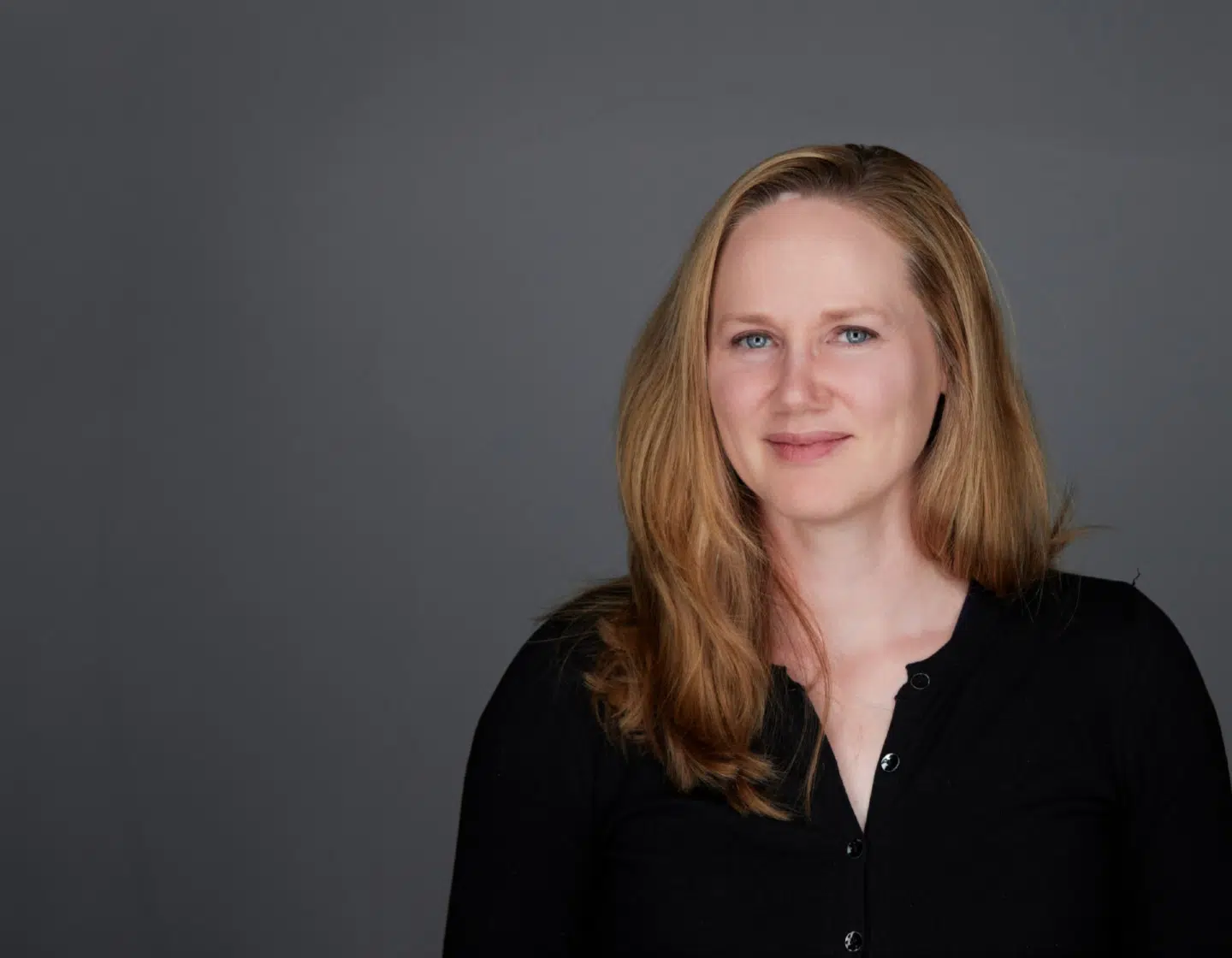
For Annalisa Pawlosky, it took moving from academia into one of the world’s largest technology companies to realize what that assumption was costing her.
“I came in as an academically minded scientist,” she said. “You do your work in a vacuum, you publish it, and the world should be amazed. When I moved into a company, I carried that mentality with me – I’m going to work incredibly hard, I’m going to do great work, and you should just be amazed.”
When she joined Google 10 years ago, Pawlosky founded and led its Accelerated Science biochemistry and molecular biology laboratory, building a 35-person team focused on integrating machine learning with experimental biology to accelerate scientific discovery.
But recognition and sustained support are different things. What she hadn’t yet learned to do was connect the science to the business around it – to explain its value to leaders balancing competing priorities.
“They’d say: ‘Yes, this is great – but how does this translate to Google? How do Google’s customers benefit? How do we improve things in the world?’ Those connections made sense in my head. I just took for granted that everyone else would be on the same page.”
A leap of faith
With a background in physics, Pawlosky completed a PhD in biomedical engineering at Harvard and MIT, followed by postdoctoral research at Stanford, before Google approached her to help build research laboratories. She took what she describes as a leap of faith and never left.
Her work focused on testing computational models against real-world experimental data. But when company priorities shifted after COVID, the labs were eventually closed down.
She moved into other roles at Google, including health modelling projects in Kenya, while waiting for another opportunity to return to research leadership.
A different part of the brain
While she was pregnant with her second child and preparing for her next step, two colleagues at Google – both technical leaders and IMD EMBA graduates – encouraged her to consider the program. She signed up for the Foundations for Business Leadership course first, to see whether it resonated.
“It was really refreshing to use a different part of my brain,” she said. “I don’t normally talk to CFOs or people who do operations. Meeting subject matter experts from completely different industries – it was just fascinating.”
She kept going.
The Executive MBA gave language and structure to something Pawlosky had already sensed but struggled to act on: that technical excellence, on its own, is not a strategy.
“It’s not that finance wants to not support your work,” she said. “It’s just that they have all these trade-offs they have to balance. If you understand that part of the picture and give them what they need, they can potentially help you out as well.”
A second chance
During the Executive MBA, a new opportunity had arrived. Google offered her the chance to build laboratories again – this time across San Francisco and Zurich, alongside new large-scale AI research initiatives.
“In life, you rarely get a second chance to do something,” Pawlosky said. “I needed to evaluate where I had failed before.” This time, the labs she has built are designed with that in mind – not just to produce strong science, but to make its value legible to the people who decide whether it continues.
As Senior Staff Research Scientist, Pawlosky is part of the team behind Google’s AI Co-Scientist, a multi-agentic AI system designed to generate and refine scientific hypotheses. Research on the system, published in Nature, explored how AI could help scientists accelerate discovery by evaluating promising new ideas at scale.
The unnecessary fight
For Pawlosky, the final year was the hardest: an international research project, constant travel between San Francisco and Zurich, and the early years of motherhood, all at once. During a call with her leadership coach, the situation was reframed simply: “You are an adult, and you signed up for this yourself.”
The observation unlocked something deeper: a tendency to keep proving and fighting for recognition she had already earned.
“In a PhD program, you’re trying to convince everyone so you can graduate. At Google, I was constantly having to convince people that this was the right way forward. I had artificially created this fight, this dynamic, in areas where it was no longer necessary.”
The resistance, she realised, was partly self-made. “I was recreating cycles that were no longer beneficial to me. I wanted to scale my work, but I didn’t always want to do the uncomfortable things required to do that. You have to decide – and sitting in between doesn’t move anything forward.”
Beneath the surface
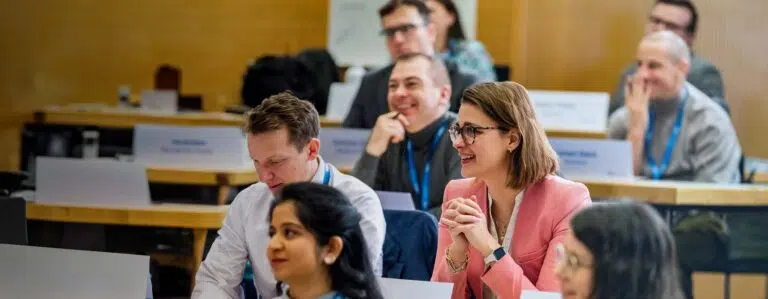
The Executive MBA cohort brought together people from backgrounds she would rarely have encountered otherwise. What struck her was how much lay beneath the surface of each person – and how much further a group could travel together than any individual alone.
“Everyone had struggled. Everyone had gone through hard stuff. And if you’re able to connect with that, jointly you could move much further than you could independently.”
What stayed with Pawlosky after the EMBA was not a single breakthrough moment, but a gradual shift in how she understood her own capacity to influence what happened next.
“IMD created for me the idea that I had a lot more agency in my choices and decisions,” she reflected. “I had more tools, more levers I could push. And if I made selective, smart decisions, things could move forward.”
Different layers of learning
The realization unfolded slowly. Pawlosky compared the experience to a flower opening in stages rather than all at once.
“You expect to finish the program and have this immediate full bloom,” she said. “But actually, there are all these different layers to it. While going through it, I didn’t fully understand why we were doing this. But now, reflecting a few months out, I can see things starting to come together.”
Unlike the binary logic of scientific training, she said, some parts of the learning required time to settle and mature. “There are these additional layers to it that need some time to ferment.”
Not a single transformative moment, but something quieter and more lasting.