Meet Albertine. She can book your hotel room, secure a table at that restaurant with the great reviews, or arrange the family holiday you haven’t had time to plan. Unlike traditional concierge services with their phone numbers and email chains, however, Albertine lives entirely in an app – always on call, and working exclusively for you. No calls required, unless you’re planning something big like a honeymoon.
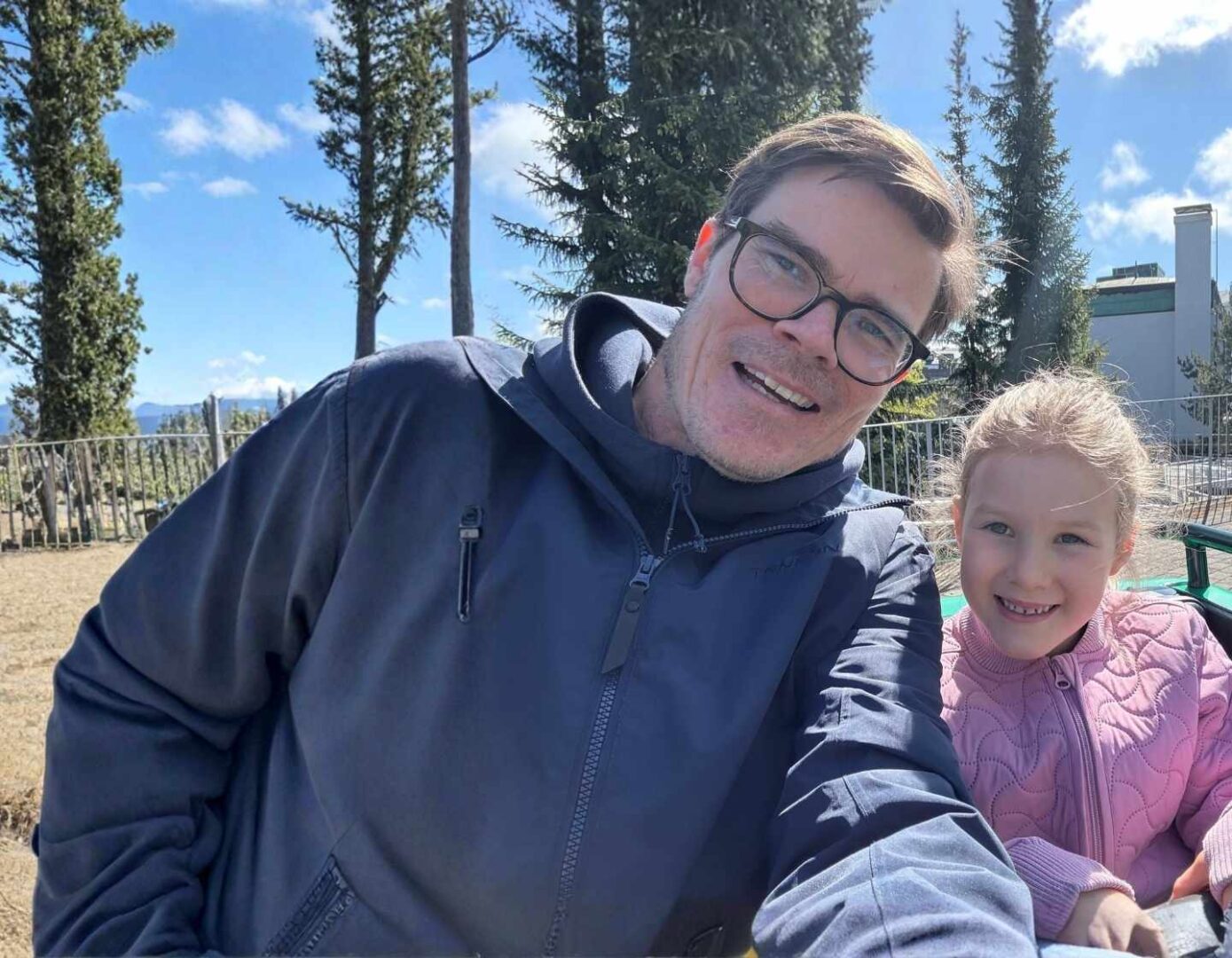
Behind her calm efficiency is Tuomas Marttila (IMD 2008), whose winding career led him to co-found this digital concierge built for modern life.
The journey to Albertine began in 2021 with perfect timing and a phone call from an old friend. Marttila was a freelance consultant at the time, and that flexibility proved crucial. “When you’re in that space, it’s easier to say yes to an idea,” he explains. “When you’re working full time, you’re more tending to say maybe, and that will be the end of it.”
Three factors, one opportunity
The call came from a business school friend from Helsinki who had previous experience with a mobile concierge app back in 2014–15. But the world was different then.
“By 2021, we thought a couple of things were coinciding that made it an attractive time to try this again,” Marttila says.
Three factors converged. First, COVID vaccines were being delivered and there was pent-up demand for travel and living life again. Second, mobile technology had evolved dramatically. Apps were no longer just “click here to call” – they could handle intuitive interfaces with voice notes and sophisticated interactions. Third, there was a generational shift. Millennials and younger affluent clients, all digital natives and comfortable using apps for everything, now represented a significant chunk of the market. They are happy “tapping and snapping.”
The name Albertine was developed with a branding agency with a track record of naming businesses. Marttila jokes that he’d like to say it’s someone’s grandma, but it was actually a thoughtful, almost scientific process. They wanted a person’s name and they wanted it softer and more feminine than the traditional white-glove butler image of concierge services.
“Historically, the concierge industry is quite masculine,” Marttila explains. “You go to Formula One races, fly on private jets, drink expensive whiskeys. We knew there was much more to it than that.”
Today, members communicate entirely through a chat-based app interface. A typical request might start simply: “I want to take a weekend in Paris in September.” From there, Albertine’s global team works through the details, drawing on the member’s history and preferences. They provide hotel options, typically at better rates than individuals could secure themselves, then build an itinerary based on past preferences and requests.
Marttila estimates that 99% of the work is handled through the app. “People who like the idea are probably not the ones who want a phone number to call,” he says. The company has scaled through referrals and partnerships. They now have members across the UK, Europe, North America, South America, Asia, and the Gulf region.
A career built on saying yes
When asked if there’s a before and after IMD, Marttila’s answer is immediate: “Almost everything. Without IMD, I wouldn’t be where I am today.”
He arrived at IMD at age 30, at a crossroads. “I realized I probably have to work for another 30 or 40 years,” he says. “I wanted it to be interesting.”
IMD appealed because of its small class size and focus on leadership and psychology – different from what he saw at other schools where the focus seemed to be on producing management consultants and investment bankers.
The irony is obvious. Even midway through his year at IMD, Marttila insisted he would never become a consultant. But the careers team at IMD gently introduced the idea that management consulting could be something for him. He still wasn’t convinced. Then he shifted his thinking: it’s all speculative if you don’t even try. “I thought, better to apply and go through the process,” he says.
His subsequent six years at Bain, which he really enjoyed, took him around the world. He started at the Nordic office, spent a year in the US, and worked extensively in the UK, Denmark, and Sweden, encompassing strategy, performance improvement, and M&A.
“At that time, the only way to get into Bain – and probably BCG and McKinsey, at the mid-level of the pyramid – was through an MBA,” he reflects.
After Bain, Marttila continued building on what he’d learned, moving through strategy roles at companies like Basware and an M&A role at Tilgmann Group. In 2020, he decided to launch his own advisory firm. That’s when his freelance consulting began – and that flexibility made all the difference when opportunity knocked a year later.
Marttila wasn’t a meticulous career planner. He doesn’t love the word opportunistic, but admits he’s been a bit like that – taking opportunities as they come rather than plotting five-year plans. The path from IMD to Bain to strategy roles to launching his own firm to co-founding Albertine is unconventional, but it makes sense in hindsight.
“IMD was definitely career-changing, and probably because of that, it was life-changing as well,” Marttila says. “Without IMD, I wouldn’t have gone to Bain. I wouldn’t have succeeded at Bain without what I learned at IMD. Without having been to IMD and Bain, I wouldn’t have gone on to do some of the things I’ve done since.”
It’s a chain reaction. Each link connected to the previous one.
Keeping the network alive
Marttila has recently become more active in the Finnish alumni club. His own class – the class of 2008 – has remained tight-knit with constant communication through group chats. But the local alumni club offers something different.
“It’s mainly about keeping in touch with IMD, the institution, and networking with the local broader group of IMD alumni,” he explains. “Getting a sense of what’s happening and how it’s developing.”
The connection runs deep. He has an affiliation with IMD and wants to see its alumni succeed. And there’s the networking – the alumni club brings together an interesting group of individuals with shared experiences.
“When I first learned I’d been accepted to the 2008 MBA class, I was ecstatic about what the future would bring,” he says. “A lot of what I imagined at the time was accurate, but the real value of my time at IMD has proven to be much greater.”
In the end, Marttila’s story mirrors the service he created – responsive, adaptable, and always open to what comes next. For him, saying “yes” at the right moment made all the difference.