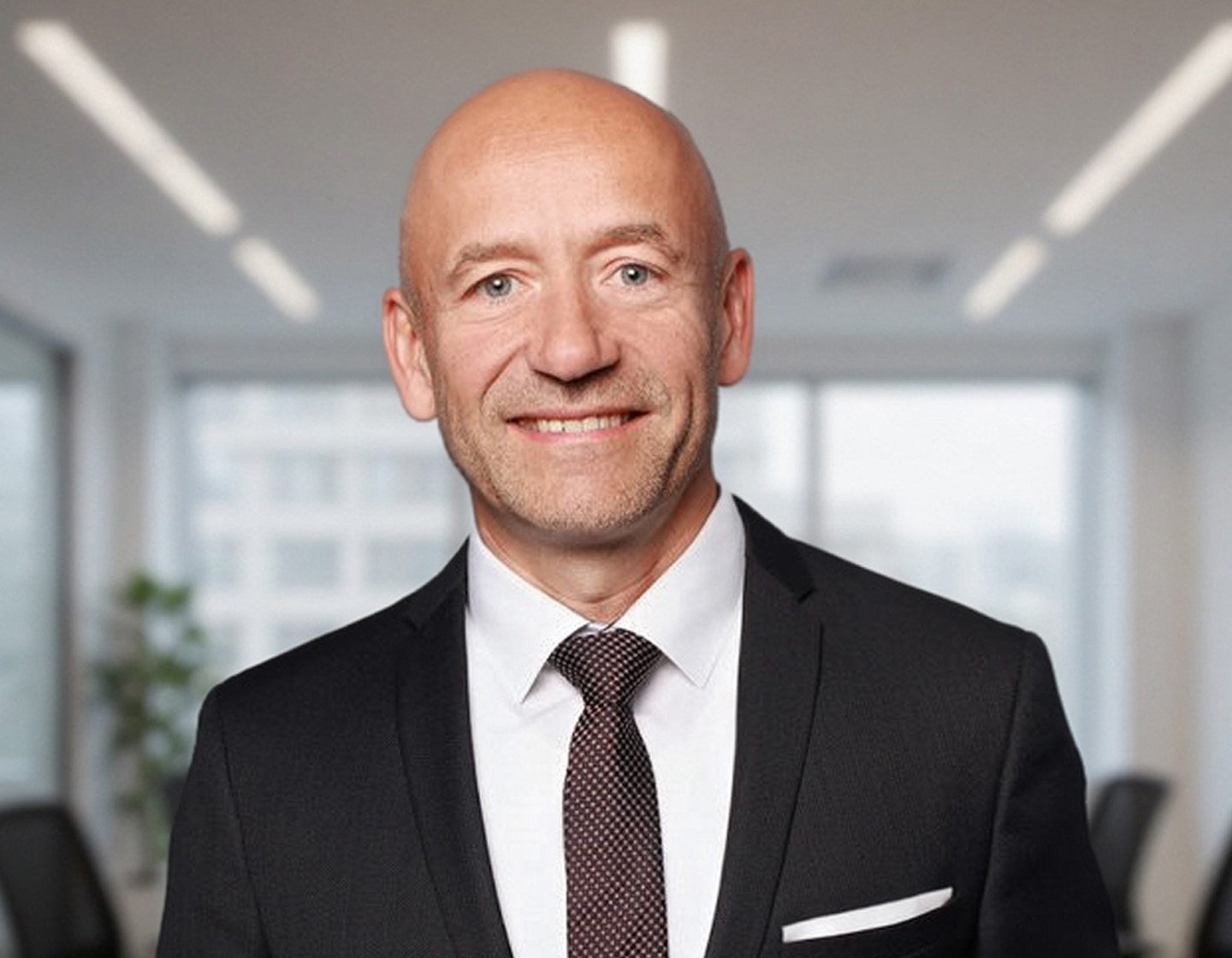
Christoph Heidler’s career spans almost 30 years in executive IT management, including four CIO roles across Swiss SMI and German DAX-listed companies. He first encountered Swiss Interim Management in 2011 while leading digital initiatives at Schindler Elevators in Switzerland. Initially a client hiring interim leaders, he later began taking on consultancy mandates himself.
“After almost 30 years in corporate life, I asked myself whether I wanted to continue steering a tanker or move to something smaller, faster, with higher impact, I realized it was time to work more independently and contribute where I could make an immediate difference.”
That decision marked his shift into interim leadership, an arena where experienced executives step into organizations facing change and deliver measurable results from day one.
Redefining readiness for a dynamic era
Heidler sees the growing relevance of interim leadership as a direct response to the speed and volatility of modern business. “Companies are operating in ever-shorter cycles. There’s less time for slow onboarding or cautious trial-and-error,” he explains. “An interim manager is chosen precisely for the moment—a transformation, a turnaround, an expansion—and begins implementing solutions after just a few days of warm-up.”
Rather than filling a vacancy, the interim leader becomes a catalyst for change—bringing specialized experience and objectivity to situations where momentum is critical. “It’s about matching immediate needs with proven expertise,” he says. “There’s no time to grow into the role.”
The IMD lens: expanding digital and leadership horizons
Heidler’s decision to attend IMD’s Leading Digital and AI Transformation program stemmed from a desire to accelerate his own impact as a digital leader.
“IMD helped me widen my horizon,” he recalls. “We explored not only the potential of digitization but also the organizational levers to make innovation succeed. Concepts like agile models, then still new, became tools I implemented immediately on my return.”
The program also reshaped his thinking about innovation and failure. “IMD made me realize that not every innovation must succeed,” he says. “Sometimes the learning from a setback is what truly transforms the organization.”
That mindset, treating learning as progress, continues to guide his approach in every new mandate.
Leading through complexity: balancing decisiveness and empathy
Interim assignments often begin in uncertainty: leadership gaps, stalled transformations, or crises requiring immediate action. Heidler describes success in these moments as equal parts analytical and human.
“You come in during tension,” he says. “People are watching closely, some are anxious, others skeptical. The first task is to bring calm and clarity.” That begins with listening.
“Before making decisions, you must understand what really matters to the people inside the organization,” he explains. “Data tells part of the story, but the unspoken dynamics, the fatigue, the doubts, are just as important.”
Balancing empathy with decisiveness is, for Heidler, the essence of effective interim leadership.
“You need the courage to act without hesitation, but also the sensitivity to sense when the organization is ready,” he says. “Too fast, and you lose alignment; too slow, and momentum is gone. The art lies in reading that moment.”
Running the show, not just advising
When distinguishing interim executives from consultants, Heidler is clear.
“A consultant shows how it’s done; an interim manager runs the show,” he says. “We take operational responsibility, lead teams, and deliver outcomes. The mandate ends only when tangible results are achieved.”
That accountability makes interim leadership both demanding and rewarding. “You can’t hide behind strategy slides,” he adds. “You live with the consequences of your decisions every day.”
Equally important is the independence that allows interim leaders to act objectively.
“We don’t carry the history of internal decisions,” Heidler explains. “That freedom enables us to decide in the company’s best interest, without the weight of politics or past loyalties.”
A career built on change—and for change
Whether guiding cybersecurity programs, restructuring IT functions, or driving digital transformation, Heidler finds fulfillment in seeing progress unfold quickly.
“In interim leadership, you see the impact immediately,” he says. “You assess, act, and within months the results are visible. That direct link between decision and outcome is deeply satisfying.”
He believes many senior executives reach a similar turning point.
“At some stage, you ask whether you want to continue navigating complex corporate structures or contribute more directly,” he says. “Interim management lets you apply decades of experience to real problems—one transformation at a time.”
Advice for leaders in transition
For fellow IMD alumni and senior leaders considering a pivot, Heidler offers grounded advice.
“In technology especially, everything you learn today may be less relevant tomorrow,” he says. “That’s not discouraging, it’s a reason to stay curious and keep learning.”
He also reframes independence as an evolution of accountability.
“When you work on your own, you live by your reputation and results,” he says. “It’s demanding—but it keeps you engaged, humble, and effective.”
Bridging practice and community
Looking ahead, Heidler sees strong potential for collaboration between interim executives and the IMD alumni network.
“We work in transformation every day,” he says. “Sharing those real-world insights with IMD peers connects academic thinking with practical execution and that’s where real learning happens.”