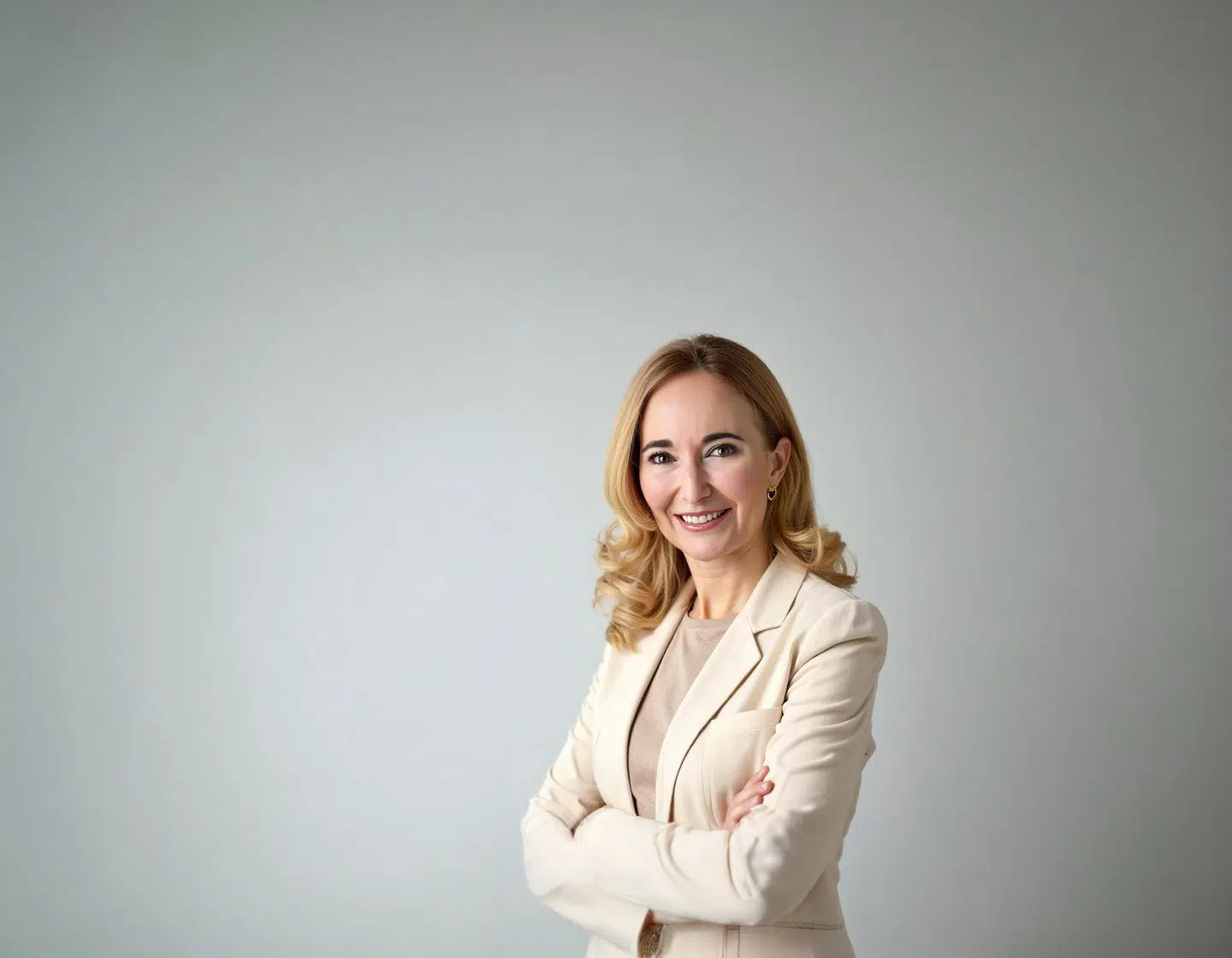
In the boardroom, the most important question is not what you know, but what you might be missing.
For Jacqueline Hess, that is not an abstract idea. It is a discipline she has developed over more than three decades of advising and governing businesses across the transatlantic corridor – and one that has become more pressing as the pace of change accelerates.
Boards today are expected to provide oversight across an expanding range of topics: technology, geopolitics, sustainability, cybersecurity, to name but a few. Yet no single person can be an expert in all of them. What matters, she has found, is knowing how to navigate what you don’t know, and being honest about the limits of your own perspective.
“I know what I know. I don’t know what I don’t know. But do I know what I should know?” she said.
In practice, that question shapes how she prepares for every board meeting. In complex situations, she may first ask: what is this really about? The follow-up is then: do I know what I should know to build a view or make a decision? If not, she goes looking; from formal and informal sources, internal and external, before the discussion begins.
A career built on firsts
Hess has built her career in environments where decisions are rarely straightforward – and where judgment matters as much as expertise.
When she first arrived in Switzerland in 1993, it was a challenging environment for international professionals and for women. She did not yet speak German fluently, and the expectation was that you had to. She learned it, sat the Swiss certified tax expert examination, and became the first American to pass it, as far as anyone knew.
At PricewaterhouseCoopers, and later at Deloitte, she advised companies moving in both directions across the Atlantic – first helping American firms establish themselves in Switzerland, then supporting Swiss companies expanding into the US market. She became a partner, and later Managing Partner of Deloitte Switzerland’s Tax & Legal business – the first woman to lead a service line at a Big Four firm in Switzerland. She also took on the firm’s Board Readiness program, which is what brought her to IMD.
“I wanted to be credible in what I did,” she said. “If I was going to run this program, I wanted to do it properly.”
From knowledge to judgment
Drawn to the challenge of what constitutes the right decision in complex situations – what she describes as questions without clean answers – Hess was naturally drawn to the Board Director Diploma at IMD, where she found an environment that took those questions seriously.
The program was outstanding in sensitizing participants to what constitutes good governance, and it opened up her perspective precisely because of who was in the room: people from different industries, different countries, and different vantage points on the same problems. Hess distinctly remembers Didier Cossin, Director of the Board Director Diploma and Chaired Professor in Governance and Finance, whose thinking about board effectiveness she describes as game-changing. “If you don’t have a mindset shift from coming together with a group of highly intelligent and motivated people, then you shouldn’t be doing a program like this,” she said. “It provoked me to think. It caused me to examine my views.”
One course that stayed with her was on board dynamics – taken online during COVID, which brought her face to face with a version of the same challenge: what are you missing when you can’t be physically in the same room?
“I learned how important it is to understand the person behind the two-dimensional screen – their interests and the messages they are trying to convey,” she said.
It is a skill that transferred directly into practice. What isn’t visible, she found, can matter as much as what is – in a Zoom call, and in a boardroom.
From operating to governing
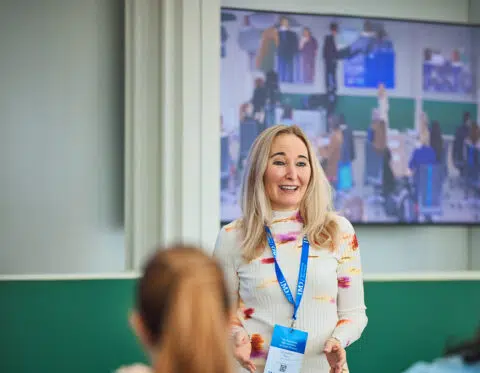
Following the merger of Vontobel Swiss Wealth Advisors – where she served as CEO – into Vontobel Swiss Financial Advisers, she joined the board, transitioning from executive leadership into board service. In the years since, she has developed a portfolio of board and advisory roles focused on companies expanding across the transatlantic corridor and has also taken on a non-profit governance role as Chair of the Boardroom Switzerland.
The executive instinct, she found, is to step in, act, and solve. The board’s role is different, shifting from driving decisions to shaping how they are made and protecting the interests of investors, shareholders, and other relevant stakeholders.
“In current times you often need to move fast, forward, and be fearless,” she said. “But at the same time, in a highly responsible manner. That is why asking questions that enable you to thoroughly understand the real issues is so important. Otherwise you are at risk that you will not get the answers to enable taking high quality decisions.”
What effective boards do differently
From her board experience, Hess has developed a clear view of what separates effective boards.
The first is the quality of the dialogue. “You don’t want your board to be a happy board where everyone’s nodding and agreeing all the time,” she said. Constructive debate – real challenge, openly offered – is what moves a company forward. Getting there requires deliberate effort, and it is something she actively works to cultivate when preparing women for board roles at The Boardroom Switzerland.
The second is process. Clear structures, disciplined agendas, and space for all voices matter. “No stone should go unturned,” she said. “You need both the process and the dialogue.”
The third is composition. She shares an example of a board where a key region was not represented, meaning decisions lacked on-the-ground insight. When that perspective was added, it opened up insights that had not previously been available and enabled better decision-making.
Learning as an ongoing practice
That discipline has continued to develop through her role as Chair of The Boardroom Switzerland, where she hosts fireside chats with board members from across the world and runs board simulations for members.
“In my role as Chair, I am bringing these learning points on good governance to our members with each and every interaction,” she said. “I show up in the boardroom with insights that I have learned from a collective of great minds.”
Since completing the diploma, she has also remained closely connected to IMD – mentoring participants on the Women on Boards program, speaking at events in Switzerland, and engaging with the board community the institution continues to build.
“Once you’re part of the IMD family, you always have the opportunity to stay connected,” she said.
For Hess, the learning is never really finished – and that, she suggests, is precisely the point. The world boards are being asked to navigate is changing faster than any individual can keep up with. The answer is not to know more. It is to keep asking better questions.

