What makes a country competitive in 2026? More capital? More talent? More computing power? More infrastructure?
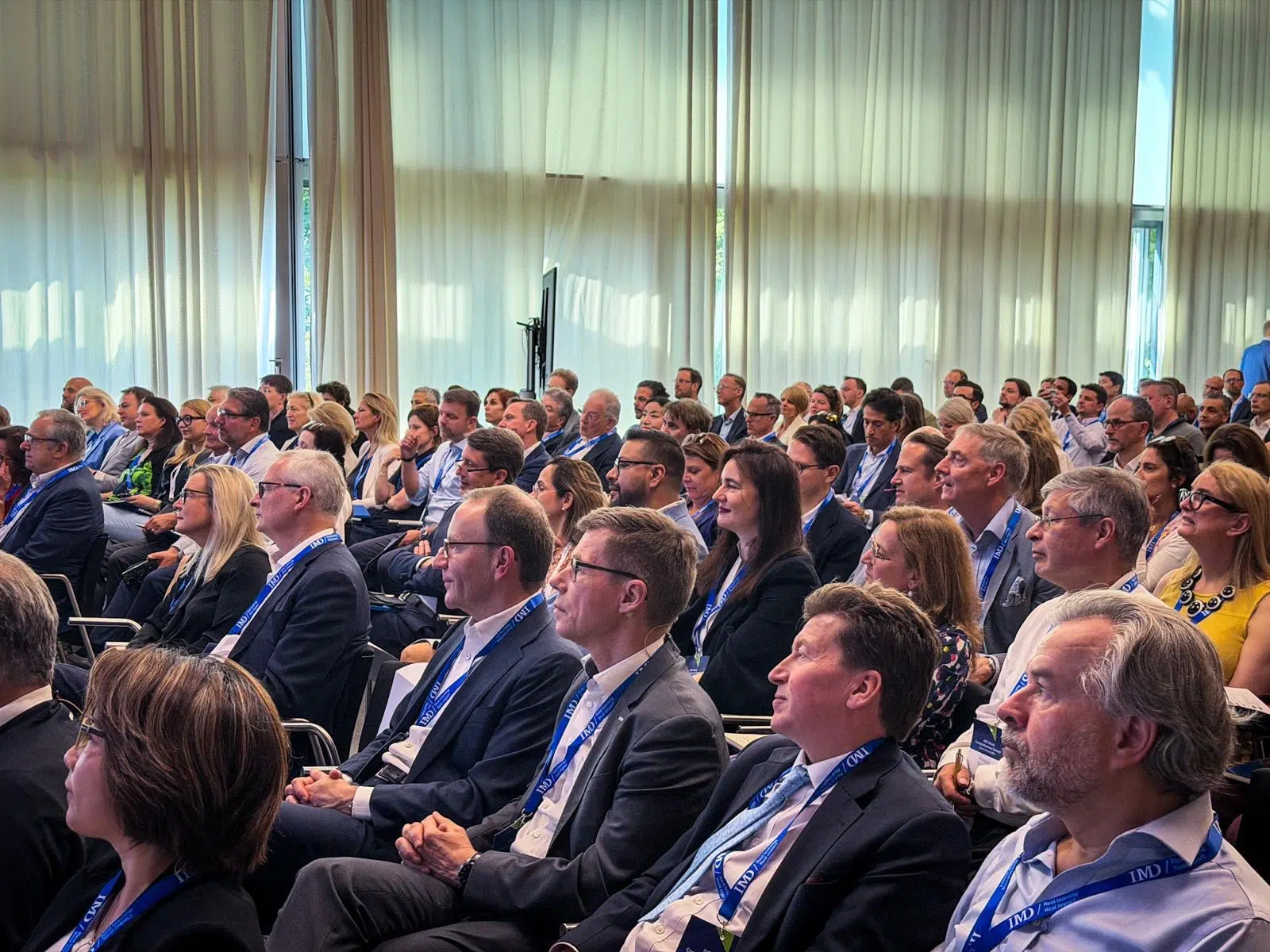
Those questions framed discussions at the inaugural IMD World Competitiveness Summit in Zurich. Yet across conversations spanning artificial intelligence, workforce skills, capital markets, and infrastructure, speakers arrived at a strikingly similar conclusion: competitive advantage increasingly depends on how effectively countries mobilize their strengths, adapt to disruption, and translate potential into performance.
Opening the Summit, IMD President David Bach challenged the notion that competitiveness is a zero-sum game. Referencing the soccer World Cup now underway, he drew a clear distinction between sport and economics. “We are not here to figure out who is the one winner because for the most part competitiveness is about competing against yourself,” he said. “It’s about how are we getting better?”
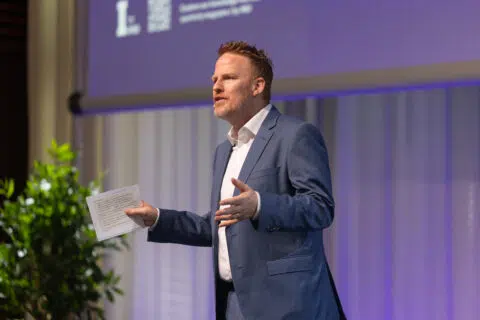
In a fast-changing world, Bach argued, the real advantage lies in the ability to learn and renew continuously while remaining open to lessons from others. “That is very much the spirit of this gathering – this is at the heart of what we do at IMD.”
Institutional credibility is the new competitive edge
Unveiling the results of the 2026 World Competitiveness Ranking, Arturo Bris, Professor of Finance and Director of the IMD World Competitiveness Center, noted that competitiveness today is no longer about cost and scale, but institutional credibility. In a fragmented global landscape, the strongest performers are those that offer businesses and investors clear, trusted rules.
The results reinforced that point. Singapore reclaimed the top spot, followed by Hong Kong and Switzerland, while many larger European economies lost ground, particularly those closest to Russia.

For Singapore, the lesson is constant renewal. As Jermaine Loy, Managing Director of Singapore’s Economic Development Board, put it, competitiveness depends on staying relevant and useful to the world rather than pursuing self-sufficiency. And as HE Hanan Mansour Ahli of the UAE observed, “Competitiveness is not something we manage once a year, but something we manage continuously.”
No single playbook for AI
The same theme surfaced in discussions about artificial intelligence. For countries outside the AI superpowers, the question is not whether they can match the largest investments in computing power, but how effectively they can apply AI to their own economies.
A panel on whether countries outside the AI superpowers can remain competitive agreed on one point: the race is not primarily about model size or GPU count. UAE Minister HE Omar Sultan Al Olama argued that what matters is the diffusion and use of AI across society. “The race today is not a race that rewards the size of your model or rewards the amount of GPUs you have, but it’s about the diffusion of AI in society.”
The implication, the panelists shared, is that countries will succeed by building on their own strengths rather than attempting to replicate the strategies of the AI superpowers.
Turning AI into value
If the previous discussion on AI focused on technological capability, the next conversation turned to a related challenge: adoption.
The panel on skills emphasized that human judgment, not automation, remains the differentiator, and that AI fluency is rapidly becoming an important criterion for advancement. “AI will transform work, but it’s people who will transform AI into value,” said Veronique Rodoni of Akkodis, the Adecco Group.
The real challenge, panelists from UBS, Helvetia, and Swiss Re agreed, is not access to AI tools but ensuring they are used effectively. UBS’s Stefan Seiler compared AI to Excel – widely available but unevenly adopted – and called for more creative approaches to learning, including gamification. Helvetia’s Esther Roman argued that traditional job descriptions and career paths are already beginning to break down as organizations adapt to new ways of working.
The question of talent resurfaced in a deep-dive session later in the day on workforce competitiveness. As AI reshapes work, organizations will need to hire for potential and invest in continuous learning, ensuring employees have both the technical skills to use AI and the judgment to use it well. Stronger partnerships between industry and education will also be needed to align talent development with future workforce needs.
Europe’s mobilization challenge
Questions of deployment and execution also dominated discussions about Europe’s economic future. Former French Finance Minister Bruno Le Maire warned that Europe risks missing the AI revolution just as it missed parts of the digital revolution, pointing to declining growth, productivity, and technological leadership.
Yet Europe’s challenge, he argued, is not a shortage of capital, talent, or industrial capability. It is fragmentation. “We are not united, we are divided,” he said, calling for faster progress toward a capital markets union, beginning with a smaller coalition of willing states.
Other panelists echoed the point. Citi’s Marni McManus argued that Europe should focus less on replicating the United States and more on deploying existing pools of capital, particularly pension funds, more effectively. First Abu Dhabi Bank’s Lars Kramer pointed to the UAE’s 20- to 30-year planning horizons as an example of long-term thinking. The broader lesson, speakers suggested, is that competitiveness increasingly depends on finding advantages beyond size alone.
New routes to competitiveness
Beyond Europe, speakers explored how middle powers and countries across the Global South are finding new routes to competitiveness.
Rather than competing on scale, speakers pointed to regional cooperation and new forms of economic engagement as alternative sources of advantage. Hajar Alafifi, CEO of OCP Africa, suggested that Europe could learn from ASEAN’s success in strengthening trade and competitiveness across Southeast Asia, while Mariam Al Aafridi of the UAE Government argued that “experiences are an economic asset” for countries that cannot rely on geopolitical weight alone.
Building resilience into the system
Beyond technology and capital, another theme ran through the day’s discussions: the shift from efficiency to resilience.
Since 2020, economies and businesses have faced a succession of shocks, from the COVID-19 pandemic and the war in Ukraine to rising tariffs and geopolitical tensions. As a result, resilience is increasingly being treated as a strategic investment rather than a cost.
Anthony Gooch Gálvez of the European Round Table for Industry said that many organizations are now willing to pay a “resilience premium” to reduce vulnerability to future disruptions. For Xavier Ducarroz of Philip Morris Switzerland, however, the real differentiator is not processes or organizational structures but the ability to respond quickly. Competitiveness, he suggested, ultimately comes down to mindset and speed.
The same principle applies at the national level. HE Hanan Mansour Ahli of the UAE’s Federal Competitiveness and Statistics Centre highlighted the role of long-term strategy in aligning government and business when crises occur. Saudi Arabia’s Dr Eiman Bin Habbas Al-Mutairi pointed to investments in logistics, ports, and AI-enabled supply chains designed to keep goods flowing during periods of disruption.
Resilience also emerged as a critical challenge in the energy transition. Hitachi Energy’s Maxine Ghavi highlighted the importance of moving power efficiently across borders, while Holcim’s Virginie Darbo pointed to the transition itself as a source of future growth.
For Swiss Re’s Andreas Berger, resilience ultimately comes down to the ability to navigate uncertainty. “It’s about creating the resilience that allows you to navigate choppy waters, uncertainty, and disruption,” he said. Looking ahead, OCP Africa’s Hajar Alafifi pointed to Africa as a major but under-leveraged opportunity, while Danish Industry’s Lars Sandahl Sørensen argued that leaders must become better at distinguishing signal from noise as change accelerates. Fred Hu, Chairman & CEO of Hong Kong-based Primavera Capital, attributed Hong Kong, Singapore and Taiwan’s competitiveness mostly to innovation. “These economies succeeded because they refused to stand still. They embraced change. They kept innovating. They kept reinventing themselves,” Hu said.
Taken together, the discussions suggested that competitiveness in 2026 is increasingly defined by how effectively countries deploy their strengths. Whether the challenge is artificial intelligence, workforce transformation, capital allocation, or infrastructure, the economies pulling ahead are those best able to adapt, build resilience, and translate potential into performance.

