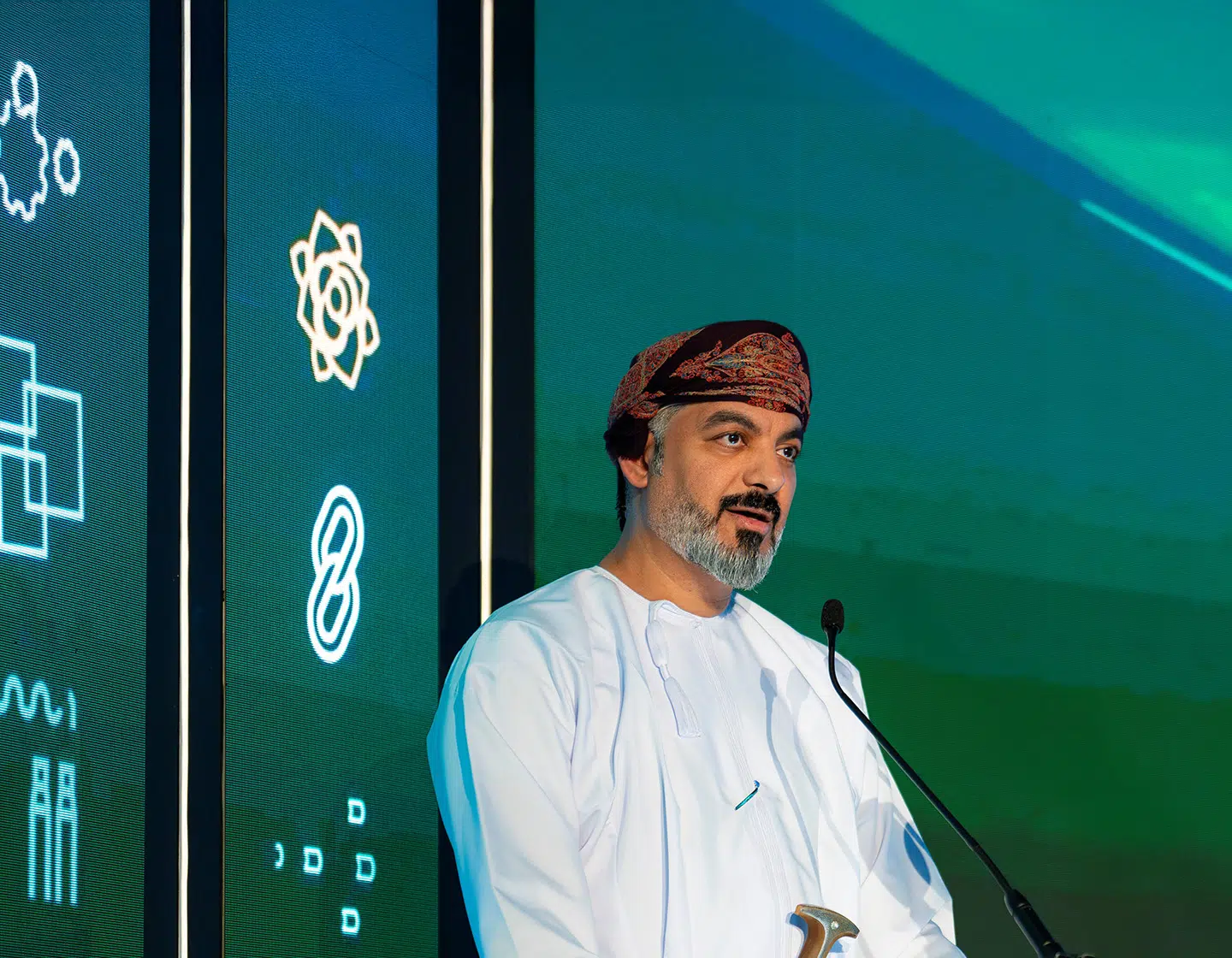
When Nadir Al-Hinai first arrived at IMD, his goal was to learn how to expand an initiative within his organization. As the National Manpower Supply Manager at Petroleum Development Oman (PDO), he worked closely on developing talent programs designed to strengthen local skills and employment. What he didn’t anticipate was how profoundly that vision would change, or how far it would reach.
That initiative was EMDAD, a workforce development program created to strengthen Oman’s pipeline of local talent by aligning graduates with industry needs. Named after the Arabic word for support, EMDAD had already become one of the country’s most significant employment engines, creating 17,500 job opportunities over the past decade.
Before joining the Transition to Business Leadership program, his focus was expanding EMDAD within the organization,” he said. “Through the program, my perspective shifted significantly. I began to understand the importance of engaging with a wider ecosystem of strategic stakeholders, including government entities, national partners, regulators, and industry leaders, and how collaboration at this level can drive sustainable impact.”
“As a result, I realized that EMDAD has the potential to grow beyond organizational boundaries and be expanded at a national level, contributing to broader economic and social objectives,” he added.
That leadership pivot would prove to be decisive. During the program, he was introduced to systematic thinking and leadership techniques designed to influence without authority. He began applying these principles by aligning ministries, regulators, and industry partners around a shared workforce vision. “When you think systematically, it’s very different. You think about the whole ecosystem you can influence,” said Al-Hinai.
What began as an internal initiative would later become the blueprint for transforming EMDAD into a nationwide skills platform shaping Oman’s future workforce.
Why Oman needs a national approach to skills
The founding purpose of EMDAD was to strengthen Oman’s pipeline of local talent by aligning graduates with industry needs. That logic has only become more urgent as the country advances its Vision 2040 agenda, expanding into sectors like clean energy, digital transformation and data-driven industries.
“There are a lot of changes due to the economy, due to artificial intelligence and clean energy. We’re trying to narrow that gap by developing frameworks that allows graduates to gain hands-on experience in order to compete in the markets.”
Each year, around 1,000 new opportunities are created. For many participants, these are stepping stones to leadership roles. “I see some of them that after three- or four-years Taking leadership positions,” he said. “Some of them, they’re CEOs. They run companies.”
The turning point: from company program to national Centre of Excellence
Its most transformative moment came in November 2025, when the government, through the Projects, Tenders & Local Content Authority (PTLC), elevated EMDAD from a single-company success story into a national platform designed to enable Oman’s future skills agenda. The national launch included 500 new internship opportunities and the introduction of sector-specific tracks, beginning with EMDAD Health. For Al-Hinai, this was a “game changer.” “All the job creation, all the programs, will be under one umbrella,” he added.
Opening EMDAD to other sectors felt like the natural outcome of more than a decade of results. When Al-Hinai presented the program’s track record, the decision was clear. “They saw that we didn’t need to reinvent the wheel,” he said. “They said, ‘Okay, let’s go. Let’s bring it in and apply it across Oman.’”
Scaling the initiative nationally required alignment across a complex ecosystem. “Probably the big challenge is the ecosystem,” Al-Hinai explained. But progress came through shared purpose. “We all agreed on the need to localize the workforce,” he said. “By engaging people not only at the top but also across middle management, everyone could see the benefit. This reinforced the importance of inclusive leadership across all organizational levels.”
A leadership shift that changed the scale
Al-Hinai’s time at IMD might not have happened at all, if not for a pen. He first discovered IMD when a senior leader noticed an IMD pen in a meeting. “I knew of IMD, but I didn’t know it in detail,” he recalled. “Then I went to search for it. I saw there were number of courses that interested me… I saw the feedback, liked what I saw and applied for it.”
He credits the systematic thinking and leadership techniques with sparking a leadership journey that ultimately shaped a national workforce agenda.
Equally valuable were the practical, immersive experiences. “We were placed in real-life scenarios that challenged us to think and respond as leaders,” he said. Participants developed their capabilities through continuous practice and exposure to global expertise.
Turning strategy into human impact
For Al-Hinai, the most meaningful part of EMDAD’s evolution remains the human impact. “Supporting all of this makes me “Supporting this work gives me real peace of mind”,” he said. “Without talent, without people, without skills, you’ll not be able to build the organization. You’ll not be able to build the industry and the economy of the nation.”
As EMDAD enters its national chapter, the mission expands, and so does the opportunity. “I have a lot on my plate for 2026,” he said, “but the launch ceremony was a defining moment.” He added, “It took a year of shaping the idea, building alignment, and bringing people together – navigating differing perspectives and gradually building consensus, others came on board later. Establishing it is a real legacy, and one I’m very proud of.”

