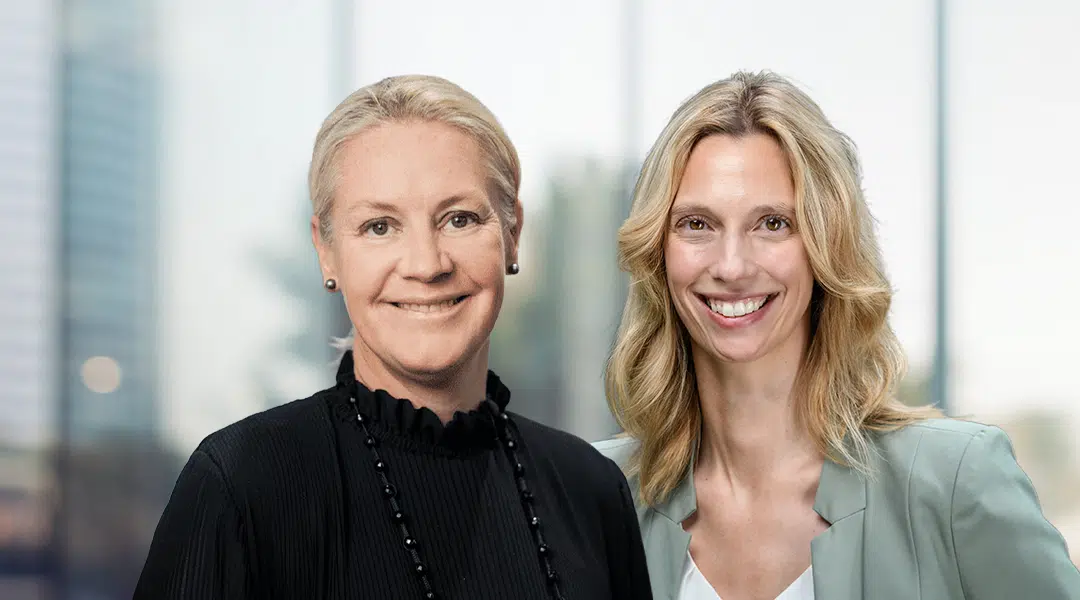
Rede Mulher Empreendedora: Navigating mission integrity and financial sustainability
The case focuses on Rede Mulher Empreendedora (RME), Brazil’s largest support platform for female entrepreneurship, and its founder, Ana Fontes. Founded in 2010, RME had grown into a significant network by 2023, impacting the livelihoods of over 12 million women in Brazil, a country with substantial gender disparities. The platform offers initiatives to empower women economically and provides knowledge and tailored content to help them manage their businesses and navigate Brazil’s entrepreneurial landscape. By 2023, RME was at a critical juncture. Although RME had clear objectives to empower women, there was uncertainty about how each initiative contributed to its mission. Financially, RME experienced a dramatic shift: In 2022, it raised US$6 million, but in 2023, fundraising efforts dropped to US$2.6 million – a 57% decrease. This decline exposed RME’s heavy reliance on corporate philanthropy, from organizations like Google.org, Visa and the Mapfre Foundation, which constituted 80% of its income. The remaining 20% of revenue came from projects funded by RME’s partners, which proved inadequate to sustain the organization’s ambitious goals. Besides, in 2023, the fundraising campaign fell far short of expectations. Reduced funds meant that new projects were postponed, and existing initiatives faced the threat of being scaled back. Fontes must ensure financial sustainability, identify new revenue streams and reduce dependence on philanthropy while staying true to RME´s mission. Her goal is to achieve self-sustainability while continuing to fulfill the mission. This involves analyzing whether RME should pivot to a for-profit enterprise, remain a non-profit or adopt a hybrid approach to balance its social impact with financial viability. Students must put themselves in Ana’s shoes and evaluate the potential benefits and trade-offs of these models to determine the best path forward.
- Evaluate trade-offs, opportunities and challenges for social enterprises balancing financial sustainability and mission alignment.
- Assess the transition from non-profit to for-profit models, considering stakeholder perspectives and impact on mission and effectiveness.
- Propose a business model that ensures mission alignment and financial sustainability, incorporating stakeholder viewpoints.
- Use AI tools responsibly, integrating AI-generated information with human insights to analyze benefits, risks, biases and limitations.
Rede Mulher Empreendedora, Services
2023
Cranfield University
Wharley End Beds MK43 0JR, UK
Tel +44 (0)1234 750903
Email [email protected]
Harvard Business School Publishing
60 Harvard Way, Boston MA 02163, USA
Tel (800) 545-7685 Tel (617)-783-7600
Fax (617) 783-7666
Email [email protected]
NUCB Business School
1-3-1 Nishiki Naka
Nagoya Aichi, Japan 460-0003
Tel +81 52 20 38 111
Email [email protected]
IMD retains all proprietary interests in its case studies and notes. Without prior written permission, IMD cases and notes may not be reproduced, used, translated, included in books or other publications, distributed in any form or by any means, stored in a database or in other retrieval systems. For additional copyright information related to case studies, please contact Case Services.
Research Information & Knowledge Hub for additional information on IMD publications
For more than a decade, ESG-linked funds and corporate sustainability strategies have run on the same quiet assumption: spend more on sustainability, and the market will eventually reward you for it. The problem, however, is that this theory is mo...
Few organizational phenomena have been acted upon as quickly—or understood as unevenly—as diversity, equity, and inclusion (DEI). Over the past decade, DEI—which encompasses the workplace practices and policies aimed at promoting diverse represent...
The case tracks the development of Slow Forest Coffee, a company launched in 2017 on the belief that when producing food in a regenerative way, everyone benefits. Farmers flourish, nature thrives and the economy prospers. By 2025 Slow had converte...
For years, executives were sold a compelling idea: doing good would also mean doing well. Surveys suggested that consumers were increasingly willing to pay more for products seen (or marketed) as better for the planet. Consultants reinforced the m...
How does early-career entrepreneurship experience of family business offspring affect their likelihood of eventually taking over the established family firm? Considering family business succession as a dual-agency process, we draw on human capital...
Research Information & Knowledge Hub for additional information on IMD publications
in Academy of Management Discoveries June 2026, vol. 12, no. 2, pp. 163-170, https://doi.org/10.5465/amd.2026.0172
Research Information & Knowledge Hub for additional information on IMD publications
in I by IMD Brain Circuits 16 June 2026
Research Information & Knowledge Hub for additional information on IMD publications
in I by IMD
Research Information & Knowledge Hub for additional information on IMD publications
in I by IMD
Research Information & Knowledge Hub for additional information on IMD publications
in Journal of Management Studies 29 May 2026, ePub before print, https://doi.org/10.1111/joms.70114
Research Information & Knowledge Hub for additional information on IMD publications