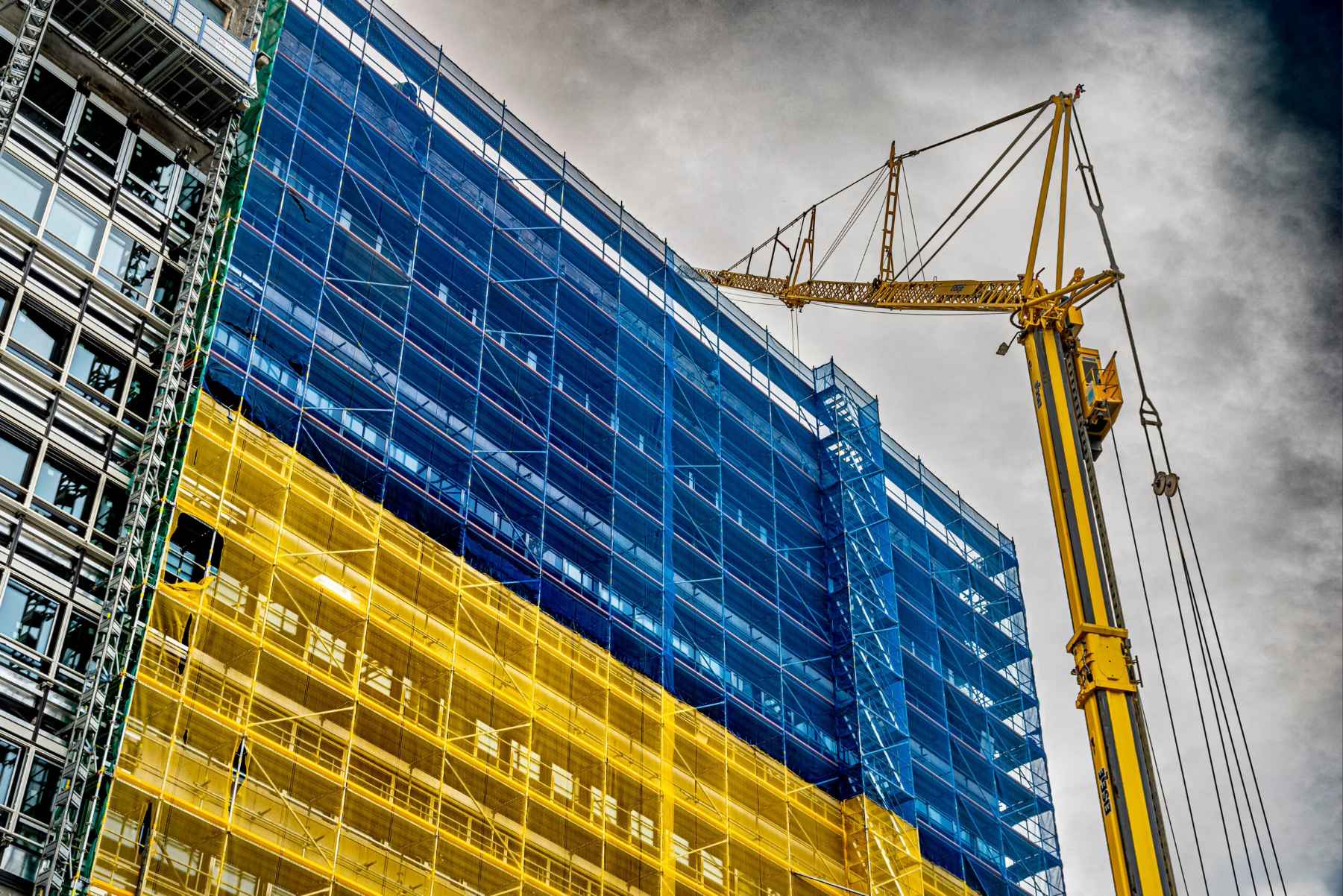
IMD announces the Accelerating Responsible Reconstruction Initiative, that asks a question other institutions have not: under what conditions can the private sector contribute to reconstruction in a manner that is both commercially viable and responsible? The Initiative is supported by the Responsible Reconstruction Fund, and established with the support of the AHL Foundation.
Demand for reconstruction is growing
Ukraine’s reconstruction needs are estimated at more than $500 billion over the next decade. The European Bank for Reconstruction and Development has deployed over €9 billion since Russia’s full-scale invasion. Switzerland has committed CHF 500 million to private sector engagement in reconstruction. The scale of capital flowing toward rebuilding is without precedent in Europe since 1945. Ukraine is not the only country that needs to be rebuilt, there are around 60 active conflicts worldwide, each creating its own urgent demand for recovery. Across the world, the demand for reconstruction is growing at the same time as government budgets are under pressure from defense spending, welfare costs, and competing development priorities.
The Initiative starts with Ukraine for three key reasons; the scale of destruction is massive, as a European country its reconstruction is receiving sustained international attention, and the EU accession process provides a structured framework in which practical recommendations can produce measurable results. However, the ambition extends beyond Ukraine. The concepts and tools developed through this Initiative are intended to apply wherever conflict has created reconstruction needs and where the private sector is expected to play a role.
Analysis already conducted by IMD, including a 2025 study examining private sector strategies in Serbia and Northern Ireland after their respective conflicts, shows that reconstruction markets operate according to their own logic. Firms that enter before institutions are rebuilt, gain advantages that persist for decades. Those that treat workforce development as a competitive strategy rather than a cost, build positions that late entrants cannot replicate. Likewise, firms that invest in transparency and local credibility gain access to financing and partnerships that others cannot secure.
“Every conflict that ends will generate demand for reconstruction. Every natural disaster already does, so does asymmetric warfare,” said Simon Evenett, Professor of Geopolitics and Strategy at IMD. “The private sector is going to be part of that rebuilding whether we prepare for it or not. The question is whether companies do it well or badly, responsibly or recklessly. This Initiative exists to help them do it well.”
“The AHL Foundation has always believed that business should contribute to improving lives in the most difficult circumstances,” said Christine Batruch, representing the Foundation, which supports IMD’s work on the Initiative. “Reconstruction is the ultimate test of that belief. It is where the stakes are highest and where the consequences of getting it wrong are borne by the people who can least afford it. We are supporting this Initiative because we believe that responsible reconstruction is possible, that it can be commercially viable, and that the concepts to guide it do not yet exist in a form that practitioners can use. We see this as the beginning of a long-term effort, not a one-time project. The ideas will be developed with those who must implement them, tested against the realities on the ground, and refined as we learn.”
A platform for engagement and a vehicle for upgrading executive expertise
The Initiative will produce actionable insights, develop practical frameworks, and convene a policy dialogue in late 2026 bringing together public authorities, financing institutions, and private sector firms. It is designed to be a platform for engagement and a vehicle for upgrading executive expertise, both resting on cutting-edge and fresh insight.
The underlying logic is straightforward. Professionals have spent a generation developing frameworks for how companies can contribute to a better world. Those frameworks were built for conditions of relative stability. In a world where conflict is more prevalent and reconstruction is more frequent, the frameworks need to evolve. Responsible reconstruction is that evolution. It takes the principles of transparency, accountability, stewardship, and social inclusion and applies them to the circumstances where they are needed most and where they are hardest to implement. IMD’s role is to make this transition practical, grounded in evidence, and useful to the firms and institutions that must act on it.
Further information on the Accelerating Responsible Reconstruction Initiative can be found here.

