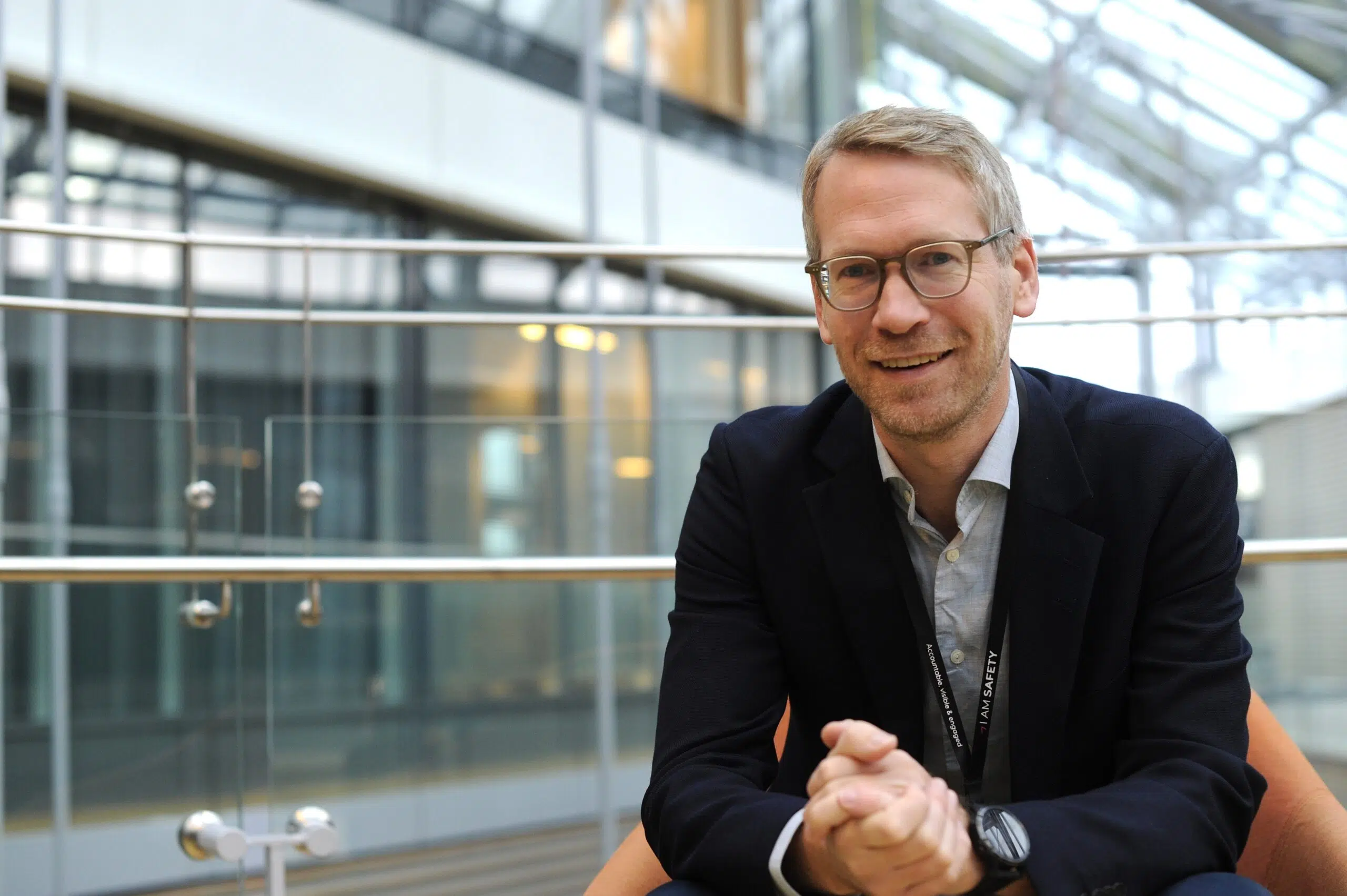
Folgerø’s journey to the top of one of Europe’s most important energy companies started on the small island of Bømlo. Home to around 10,000 people.
Bømlo sits between Bergen and Stavanger, at the heart of Norway’s offshore industry corridor. While the oil platforms are out at sea, the island has long been part of the supply chain that keeps them running – construction, maritime services, and the infrastructure that makes North Sea extraction possible.
“I had a lot of freedom growing up, and my first part-time job during school was on a salmon farm. We also had big oil and gas construction on the neighbor island. And that’s maybe why large industry, has always fascinated me,” Folgerø said.
From island roots to global perspective
Despite a part-time job on a salmon farm as a teenager, he decided to start his career in the oil and gas industry after studying engineering at university.
Folgerø has worked for Equinor since 2008. The company was known as Statoil until 2018 and remains firmly in the oil and gas business, but with ambitions beyond it.
“Equinor is still producing oil and gas, and that’s an important product for society, but we want to play a role in the energy transition,” he said. “That’s why we have been quite progressive in building what’s beyond oil and gas.”
As part of this, the company is becoming more involved in offshore wind, solar, and carbon capture and storage. The direction is clear, but the market has forced some adaptation. Profitability in renewables projects has been challenged globally – capital expenditure currently sits at around 10% – while demand for oil and gas remains high.
When Folgerø reflects on Equinor’s direction, he speaks in a measured way. The company is still firmly rooted in oil and gas, he explains, because society continues to rely on it. But at the same time, they are working steadily to build what comes next.
“For the renewable part, the speed of the energy transition hasn’t been as fast as we were hoping,” he says. “The demand for oil and gas is really high, particularly given the geopolitical context we operate in.” It’s a balance the company must navigate – staying committed to long term goals while responding to short term realities.
Building digital and AI capabilities at scale
In 2015, he was asked to establish the company’s first data science team. At the time, AI and machine learning were still new in the industry, but he remembers sensing that something important was happening. Cloud technology was opening new possibilities, and the company wanted to understand how data could improve operations.
Two years later, Equinor created a chief digital officer role and a digital innovation center, and Folgerø stepped into the position. Even with his technical background, he felt he needed a refresher. He enrolled in a week-long course on leading digital business transformation at IMD. “I learned a lot,” he says. “It was about getting a proper approach to digital transformation, and then also gaining insights from other executives who were in a similar position, leading this kind of change across European companies. I took some real learnings back from them too.”
Since then, he has been part of what he calls an “AI journey” inside the company, taking on different leadership roles as the technology evolves. When asked whether this experience makes him more comfortable with the rapid rise of generative and agentic AI, he pauses. “We are both optimistic and cautious,” he says.
He explains that Equinor has used AI across its industrial value chain for years and that this foundation helps them now. The focus today is on combining what he calls “more traditional AI” with newer generative and agentic approaches. “Technology innovation within AI is moving very fast,” he says, and the challenge is to move with it in a way that is both safe and cost effective.
The company has given Copilot licenses to all employees. But Folgerø is clear that tools alone are not enough. Real change requires looking at entire work processes – drilling, maintenance, finance – and asking how they should function in a more digital world. “It will not happen only bottom up,” he says. “It also needs attention and prioritization from the top.”
Balancing today’s performance with future ambitions
Looking ahead, he sees two major challenges in leading the company’s digital efforts. The first is protecting the company against cyber threats. Equinor provides energy to hundreds of millions of people, and Folgerø feels a strong responsibility for protecting the energy flow. The second is to utilize the opportunities from AI to strengthen the company. Equinor has already delivered $330m in value creation by leveraging AI into its operations. Accelerating responsible AI adoption across the company is a key focus area for the future.
For Folgerø, these challenges are part of a much larger story that connects technology, society, and the future of energy. And in many ways, they echo the same curiosity that captured him as a young boy on a small island off Norway’s west coast.

