Carlos Cordon
Professor of Strategy and Supply Chain Management
Carlos Cordon is Professor of Strategy and Supply Chain Management. His areas of expertise are supply chain management, digital, value chains, digital lean, and process management, all of which are particularly relevant topics in the context of the supply chain challenges that businesses face today. His research and teaching are currently focused on the reconfiguration of supply chains in the face of persistent disruptions, how supply chains are driving revenue, reshoring and onshoring, and digital strategies.
Cordon says supply chain constraints have become a driver of extraordinary growth in profits for some companies as a result of availability constraints, increased demand, and higher prices. General Motors sold 20% fewer cars in 2021 than in 2019 as a result of a shortage of microchips, for example, but still managed to record a 48% rise in profits over the same period.
He is the author of numerous articles and case studies in his specialist fields and has won various awards for his work. He was named on The Case Center list of the top 50 best-selling case authors globally in 2021/22 and was a winner in the 2017 EFMD Case Writing Competition with IMD colleagues Benoit Leleux and Beverley Lennox for a case study on Adidas.
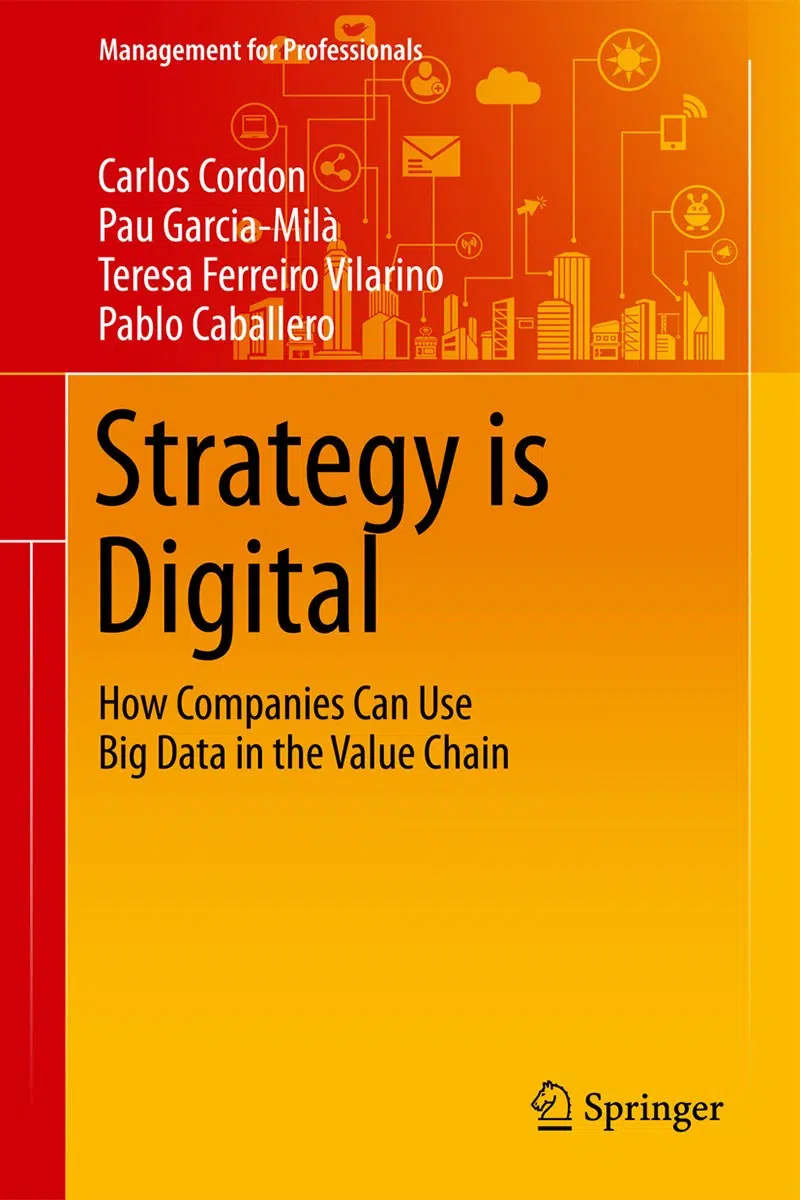
He is also the author of four books, including the 2016 title Strategy is Digital, which explores how companies can use big data in their value chains. The book presents strategies and practices to allow companies to take advantage of the huge business opportunities arising from the advent of big data and guides them through their big data journey.
Supply chains are being disrupted but they are also becoming drivers of extraordinary growth. Price increases and availability constraints have enabled some organizations to deliver record profits.
Cordon is a consultant to multinational companies in the electronics, food, chemical, pharmaceutical, and automotive industries, among others. He has designed and directed numerous executive development programs and has helped some of the world’s biggest companies to develop their supply chain and digital strategies, including Johnson & Johnson, Nestlé, Coca Cola, Merck, Mondelez, Unilever, Heineken, Philip Morris, Danone, and Reckitt Benckiser among others. He is also a member of the Coca-Cola European Partners’ Digital Advisory Board.
He joined IMD in 1993 after completing a PhD in management at INSEAD. He was previously a manager in Accenture’s manufacturing and distribution consulting group and MIS Manager at Grupo General Cable in Spain (now part of the Prysmian group).
Medacta Group SA is a rising star in the orthopedics market, achieving global success through innovative products and techniques, with a particular emphasis on minimally invasive techniques that br...
The case explores the principles and challenges of operational excellence through the experience of Magdi Batato, former EVP of Operations at Nestlé. It examines how he implemented Mission-Directed...
Few companies nowadays match the ambitions of the early Ford Motor Company in America, which vertically integrated to control nearly every product it sold. It owned not just car part factories, but...
Case A explores the transformative role of data analytics in the sports industry through the lens of Infosys, an innovative tech company. Infosys aims to showcase its AI and analytics expertise by ...
The ATP Leaderboards evolve to provide real-time insights for fans, players and coaches, while the Second Screen capability aids players in refining strategies. Innovations like MatchBeats, Rally A...
Infosys collaborated with the International Tennis Hall of Fame (ITHF) to create a metaverse-based digital twin, bridging tradition and innovation. The post-Covid drive for sustainability prompted ...
To maintain its position as the category leader in process mining and execution management, Celonis needed to be able to facilitate – or even automate – corrective measures on these processes to ed...
Avaloq, headquartered in Switzerland, is a market leader in global digital banking. It was acquired by the leading Japanese IT conglomerate NEC Corporation at the end of 2020, despite COVID-19 pand...
The case describes two major dilemmas for Amazon’s expansion in Europe. First dilemma is about options to expand: Sweden has a sizeable and mature market, but Amazon is already #1 retailer through ...
This paper builds on an integrated framework of digital opportunities, based on information theory that was initially proposed by Claude Shannon: 1) providers of infrastructure for transmitting inf...
The case presents the impact of the digital disruption coming from the sharing economy from the perspective of the largest American auto manufacturer, General Motors (GM). The car-sharing business...
The Gulf’s search for influence beyond oil now runs through Africa. Sovereign wealth fund the Qatar Investment Authority is investing $500 million in Ivanhoe Mines, a Canadian company that produces...
German delivery giant DHL’s move to acquire a stake in Saudi logistics group Ajex last month underscored a paradox at the heart of global trade. Even as Houthi attacks and rising insurance costs th...
For years, multinational companies operated in the Middle East with the belief that while politics could flare up, trade would largely continue. That assumption, while once reasonable, is now under...
Multinational businesses are recalibrating their global supply chains, with one eye focused firmly on Washington. As the Donald Trump administration reignites the use of tariffs as a blunt instrume...
GenAI is generating buzz across industries, and supply chain management is emerging as one of its most promising frontiers. While early experiments may have left some underwhelmed, advancements in ...
The Trump administration’s recent tariff threats have increased uncertainty over the business model of Temu and other large ecommerce groups. The White House reversed its initial closure in 2025 of...
We describe the need for resilience in supply chains given the recent stream of disruptions that the world has experienced. Based on recent events, we identify different types of disruptions that h...
From a focus on manufacturing to broader responsibility for the entire supply chain, Tetra Pak’s former head of Supply Chain Operations Eric Baudier discusses the highs and lows of supply chain man...
In the midst of the COVID-19 pandemic, while most physical retailers were scrambling to avoid bankruptcy, remarkably, one company recorded its best performance ever and a few others returned to pos...
Multiple sourcing and proximity sourcing are taking shape as long-term trends as global firms hardwire resilience and agility into their supply chains. Less developed countries face considerable ri...
The emergence of omnichannel means that the age of the circular economy – where materials and energy are reused to minimize the negative impact of economic activity – is within grasp. For companies...
Blockchain is a technology with two ingredients: the first is a distributed ledger, meaning a database with identical copies held by everyone in a network. There is no intermediary, no central data...
This case is based on extensive semi-structured interviews with key adidas Russia/CIS executives who were in charge of implementing the radical IT, supply chain and omnichannel initiatives that tra...
For the past decade and a half the decision around outsourcing has been a relatively straightforward one: it allows companies to cut costs, to make better use of their resources and to focus on gro...
In this article, the authors present a tested process to transform traditional customer/supplier relationships into superior collaborative ones. It starts by managing the drivers, not the outcomes,...