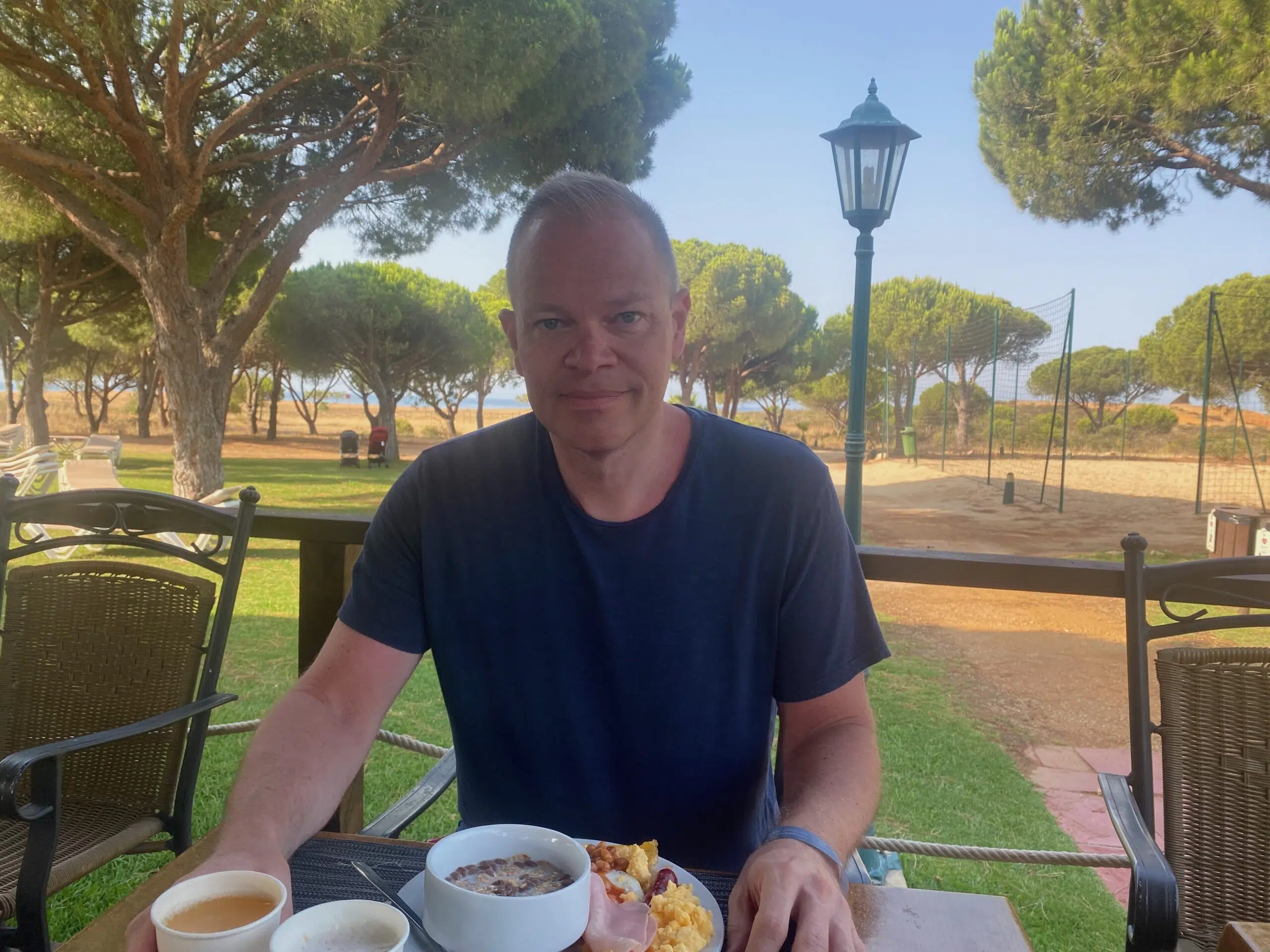
Transformation typically encompasses a wide range of strategic initiatives and projects, while organizations are simultaneously facing external shifts such as new technologies, geopolitical issues, and market changes – a sea of constant change that people are trying to make sense of while delivering on their targets. For Jens Christian Foged (MBA 2004), the real challenge isn’t designing the plan – it’s helping people navigate this complexity and empowering them to learn their way through it.
“The changes are so many, and you have to deal with so many things at the same time,” he explains. “It’s more complex than ever and unlikely to become less complex going forward.”
At its core, Foged continues, succeeding with transformation isn’t just about having the right strategy. “Often, there is a gap between what you want to do and what the organization can do. The right mindset, skills, and behaviors aren’t always there.”
From shipping to shaping minds
After completing his military service at 19, Foged joined A.P. Moller–Maersk. He earned his shipping qualification through the company and stayed for 13 years, opening and expanding local offices in Africa and Northeast Asia. A solid foundation, which he later built on with his MBA at IMD – but that’s not where the story ends.
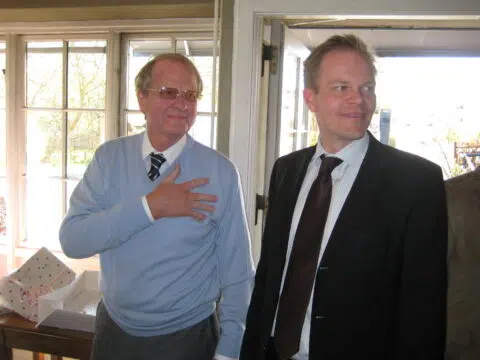
Nor is it where the story began. In fact, going to IMD, he followed in the footsteps of his father, Jens Tækker Foged, who also graduated with an MBA from IMEDE (before it became IMD) in Lausanne in 1969. “My father has always been a role model of mine, and I cannot tell you how proud we both were on my IMD MBA graduation day. Meeting one of his old professors, Jan Kubes, who was still an IMD professor at the time, made it extra special.”
After graduating from IMD in 2004, he moved into consulting – interesting work, where he applied what he had learned. But consulting wasn’t what truly drove him. He remembered what the IMD Admissions Director had told them: 80% of the class would probably change roles within 18 months of graduation. “That actually turned out to come true,” Foged recalls. “Many of us needed to learn our way to what we truly wanted to do.”
For Foged, that meant shifting into an advisory role working primarily with venture companies and startups – helping smaller firms get started, grow, secure financing, and build new competencies. 10 years later, the pendulum shifted towards advising larger corporations on how to innovate and build new businesses, at which time he became part of a training and advisory company, The Business Model Excellence Institute (BMEI). This is where he has now trained many highly qualified professionals and teams to get more out of their efforts and succeed in complexity.
The ‘a-ha’ moments
To close the gap between the company’s strategy or ambitions and what its people and organization are actually able to deliver, the existing competencies and capabilities aren’t always sufficient; there is only so much new talent you can source externally, and a limit to what consultants can do for you.
So somehow, you need to upskill people and get them on board. That typically requires a change in mindset, skills, and way of working. Talking to or trying to demonstrate a new way of working isn’t always enough. People need to unlock the reasoning behind it and realize the benefits themselves, to find their own balance and motivation in moving the ship forward.
“Ultimately, it’s about finding out how to deal with things differently, allowing you to handle that complexity,” he says. This is where he and his company concentrate their efforts: working on people’s mindsets to create those crucial insights and ‘a-ha’ moments. “For me, succeeding with change and transformation is very much about realizing that things are not black or white, accepting the ‘gray’ and non-linear reality, and then asking: ‘Okay, what can I do to work and learn my way through it?’”
Moments of magic
When asked about memorable breakthroughs, Foged doesn’t hesitate. There isn’t just one, nor two – there are quite a few. “These are what I call ‘moments of magic,’” he says. “We see people light up and they’re like: ‘Wow, now I know how to get a better balance in my working life.’”
One moment in particular springs to mind. It involved a project manager at a life science company who had been working on highly complex challenges across the value chain for more than 15 years. Foged even calls these kinds of challenges “wicked problems.” While you sometimes know the problem but not the solution, with wicked problems, you don’t even know what the problem is.
During a session, something shifted. He could see it in her face and in her eyes. She lit up, and her body language changed – she visibly relaxed. “All of a sudden, she said: ‘Now I understand that it’s not me who’s the problem. It’s that the problem is complex,’” Foged recalls.
It sounds simple, maybe even simplistic, he admits. But for someone who had spent 15 years wrestling with complexity, constantly telling herself there was something wrong with her approach – that she was the reason things weren’t always succeeding – the realization was profound. “That took a weight off her shoulders,” Foged says. “When things are really complex, you need to learn and work your way through. Otherwise, you risk reducing the complexity prematurely, solving the wrong problem and creating a new one – or worse.”
For many core employees – individual contributors, project leaders, and middle managers, caught between their teams and senior leadership, needing to perform while keeping stakeholders motivated – this kind of insight can be transformative. It’s a balancing act, Foged explains. “When you constantly think that it’s your problem or that you are the problem, or that you’re feeling insecure, whether you’re performing or not, that realization can be helpful. It certainly was for her.”
Continuing the IMD connection
Foged’s commitment extends beyond his clients’ work. He has been actively involved with the Danish Alumni Club since 2005 and joined the Board of the Danish Alumni Club some years later. “Primarily it was to give something back to the community, but it’s also a strong network for me professionally and personally,” he says. Over the years, he has become close friends with Alumni Club board members – relationships that now include their families. He values the ongoing learning opportunities when IMD professors visit to hold seminars. “For me, it’s a way of keeping up with the latest academic thinking, but also a way to constantly gain new perspectives on what I’m doing across my different roles.”