
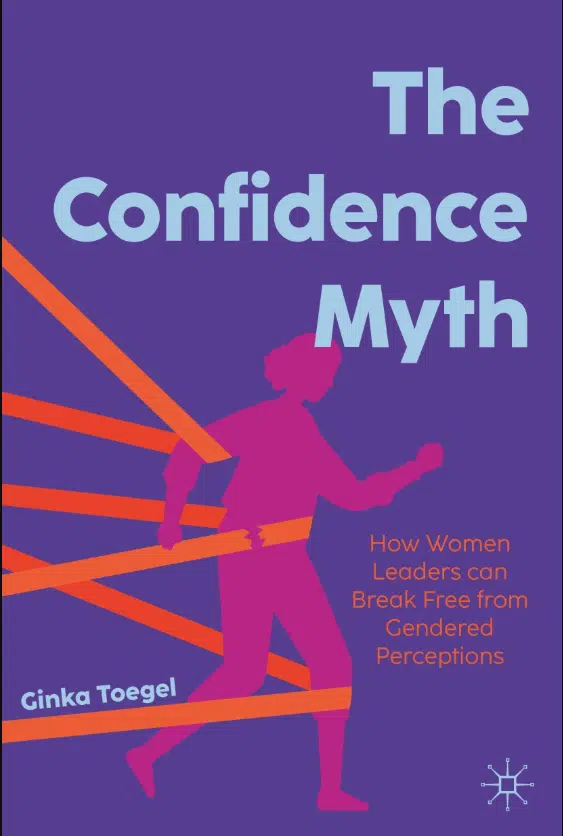
As more women take up corporate leadership positions, the idea that they lack confidence no longer holds up. And yet, as old stereotypes are challenged by new realities, some crucial misconceptions remain. Do women really lack confidence? Or are we more prone to think that others have less confidence in our abilities?
Based on years of research and practice in leadership and psychotherapy, Professor Ginka Toegel critically examines how the “lack of confidence” myth took hold and argues that it deserves to be challenged. Research, in fact, does not consistently support the notion of significant gender differences in self-reported self-confidence. Instead, the author takes a fresh look at persistent myths in self-help literature, such as the ideas that women “don’t ask,” are “risk-averse,” or are especially prone to “imposter syndrome”, and provides both tools and evidence to empower women to challenge these outdated beliefs and take the next steps in their careers.
Covering topics such as gaslighting, mastering challenging conversations, ‘overconfidence,’ benevolent sexism, motherhood, menopause, dealing with stress and anxiety, and micro-aggressions, all seen through the lens of confidence, this book gives you the tools and strategies to succeed throughout the entire length of your career. It is an indispensable guide for women who want to succeed, and the men who want to support them.









Research Information & Knowledge Hub for additional information on IMD publications
Research Information & Knowledge Hub for additional information on IMD publications
Research Information & Knowledge Hub for additional information on IMD publications
Research Information & Knowledge Hub for additional information on IMD publications
Research Information & Knowledge Hub for additional information on IMD publications
Research Information & Knowledge Hub for additional information on IMD publications
Research Information & Knowledge Hub for additional information on IMD publications
Research Information & Knowledge Hub for additional information on IMD publications
Research Information & Knowledge Hub for additional information on IMD publications
Research Information & Knowledge Hub for additional information on IMD publications